
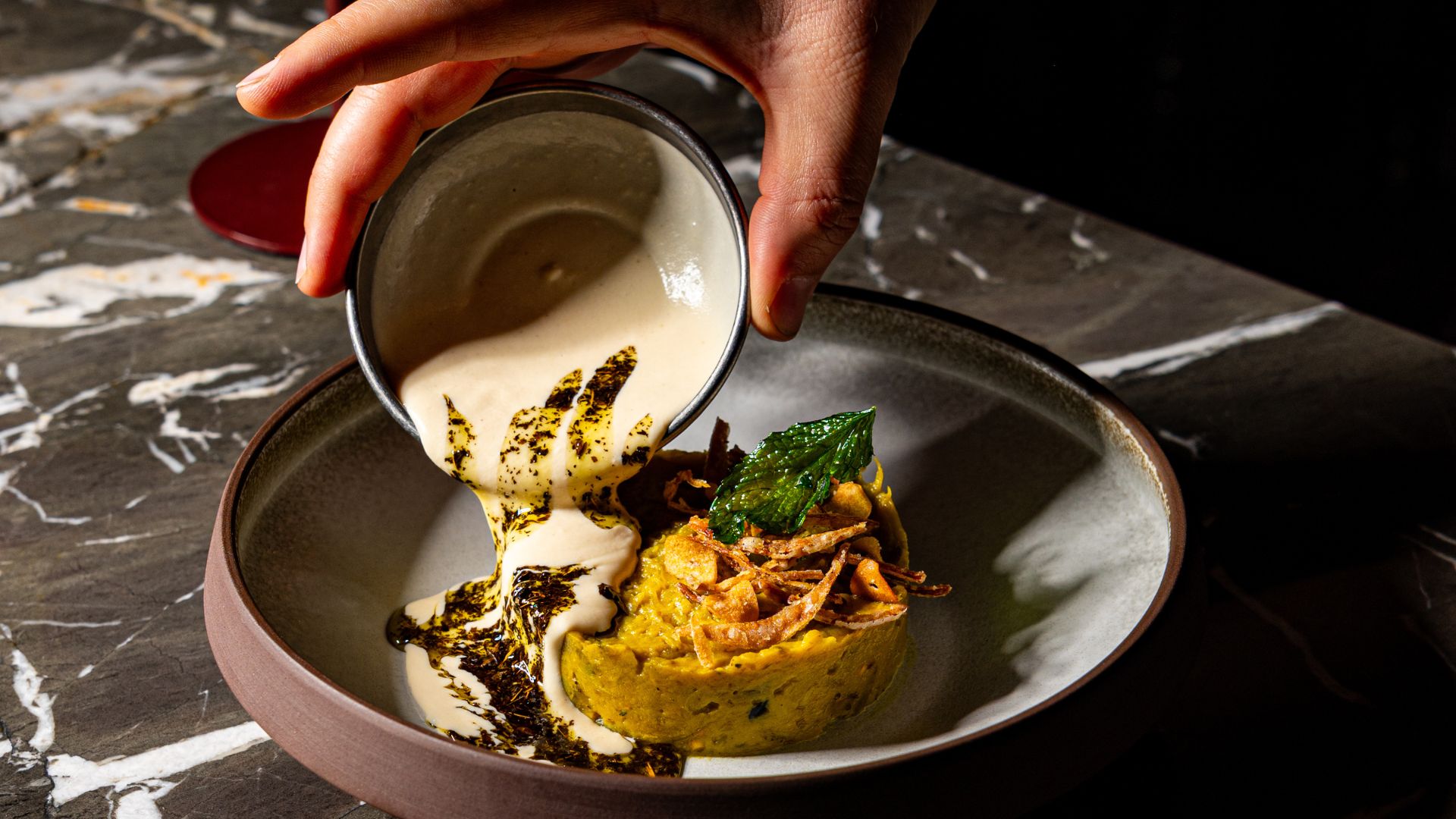
Co-founders Hamed Masoumi and Saba Heravi on taarof, tables shipped from Iran, and the fesenjoon recipe they're sharing with the world.
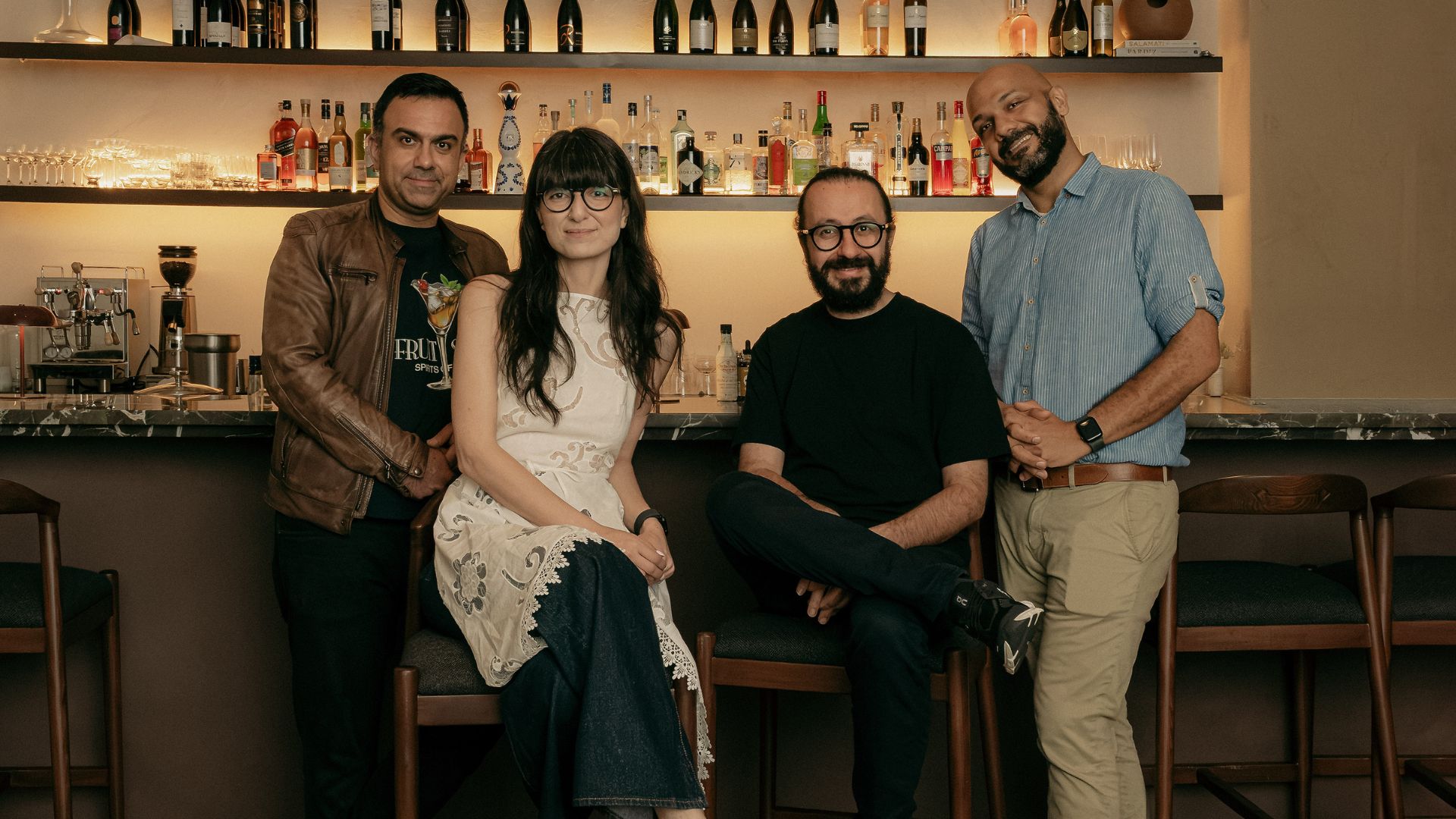
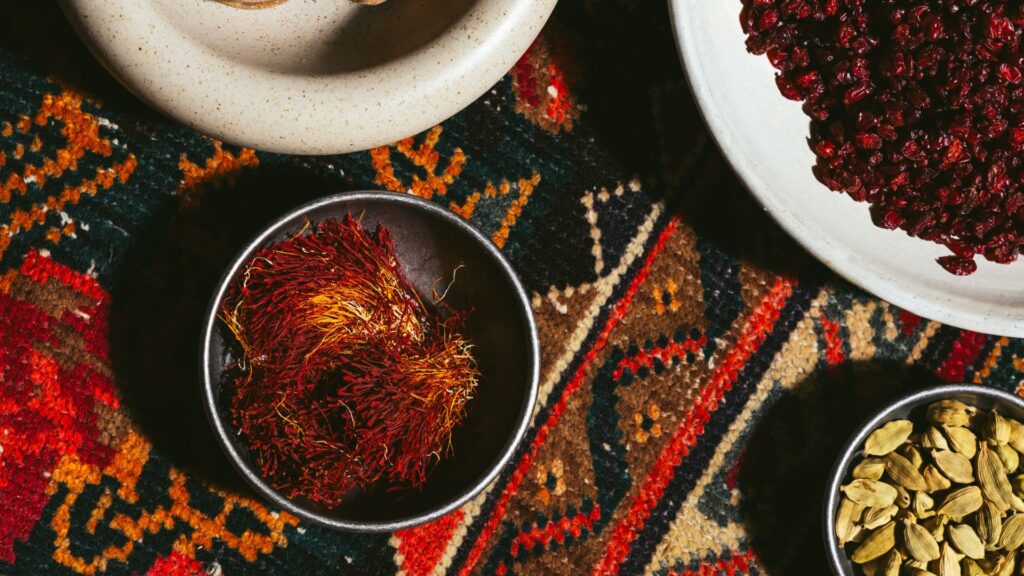
This past May, five friends from Iran opened a love letter to the food they grew up on and named it BOUS, the Farsi word for “kiss.” The Montreal restaurant’s custom wooden tables made the journey from Iran just as the Strait of Hormuz was closing behind them, arriving hours before the doors first opened. Since then, the team have been plating colourful dishes of golden saffron rice cakes, walnut-dark fesenjoon, and slow-cooked meats that smell like home, with mixologist Tao Zrafi behind the bar creating cocktails with the same Persian staple ingredients. Here, co-founders Hamed Masoumi and Saba Heravi share their take on heritage, hospitality, and the dishes that bring us together.
You traveled through Iran tasting and refining classic dishes before building the menu. What were you actually searching for on that trip?
We were looking for reference points. Persian cuisine changes enormously from one region to another, and even from one household to another. A dish you think you know can taste completely different depending on where you are, who is cooking it, the herbs being used or even a small technique that has been passed down through a family. One of the most interesting things was realizing how difficult it is to define one “correct” version of many Persian dishes. Authenticity doesn’t necessarily mean that there’s only one recipe.
Cultures across the region share versions of the same dishes (hummus, baklava, even coffee). Can we see that as connective instead of divisive?
Food rarely respects modern borders. Ingredients, techniques and dishes have travelled for centuries through trade, migration and empires. What’s interesting is not asking who owns something, but understanding how each culture has made it its own. The same ingredient or dish can carry a completely different memory, preparation or meaning from one place to another. There’s enough room to say, “This is how we make it in Iran,” while also being curious about how someone else makes it in Lebanon, Türkiye, Armenia, Iraq or elsewhere.
Iran is mostly in the news for reasons that have nothing to do with food. Does it feel political to be serving Persian food right now?
Food can certainly be affected by politics, especially when it comes to access, the movement of ingredients, or the way food traditions travel with people. But food itself doesn’t necessarily have a political position. Even when governments are in conflict, people can still sit around a table, share a dish, discover a flavour, and appreciate something from another culture regardless of nationality, religion, or political views. For us, putting Iranian culture on the plate in Montreal today isn’t about turning Persian food into a political statement. It’s about showing another side of Iran: its beauty, generosity, history, hospitality, and culinary traditions. A culture is much larger than its politics. Food can create a human connection where politics has created distance or division.
BOUS draws on the sofreh, or gathering without watching the clock. How do you promote that feeling in a fine-dining room?
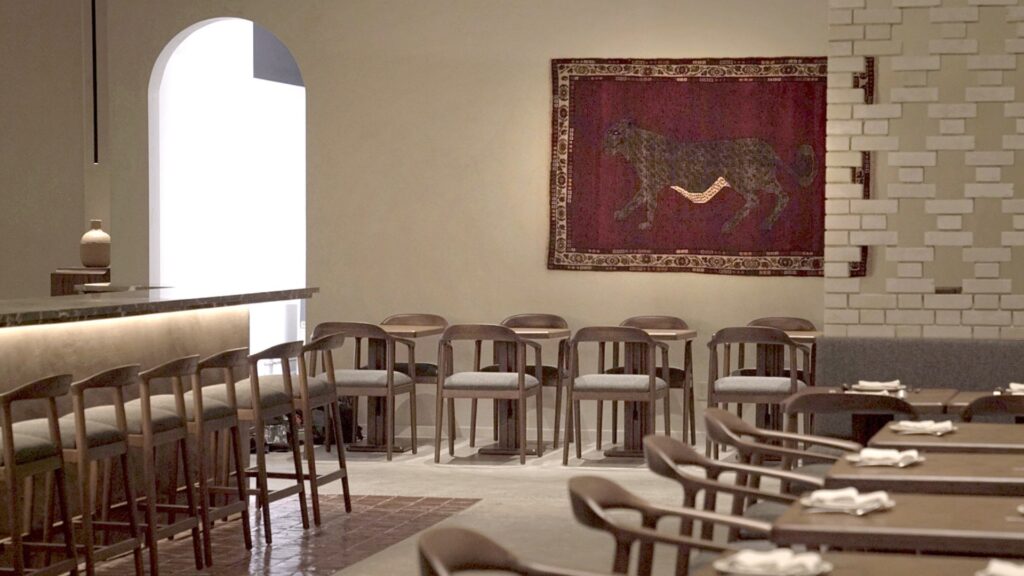
For us, fine dining doesn’t have to mean formality or distance. The Iranian table is generous. Dishes arrive together, people share, conversations continue, and there’s usually a feeling that nobody is rushing you out the door. The sofreh is really about presence. You sit together, you share food and you give the meal time.
What does genuine hospitality look like to you? Is there an Iranian idea that doesn’t translate?
There’s an instinct to take care of a guest, sometimes almost excessively. You offer more food, you insist they stay longer, you make sure they have everything they need before they even have to ask. There’s also the concept of taarof, which is difficult to translate because it includes generosity, respect, etiquette and a kind of ritual of offering. Of course, taarof can be complicated, but there’s something beautiful at the heart of it: the idea that your guest should feel considered and honoured. At BOUS, genuine hospitality means trying to create that feeling without making it theatrical.
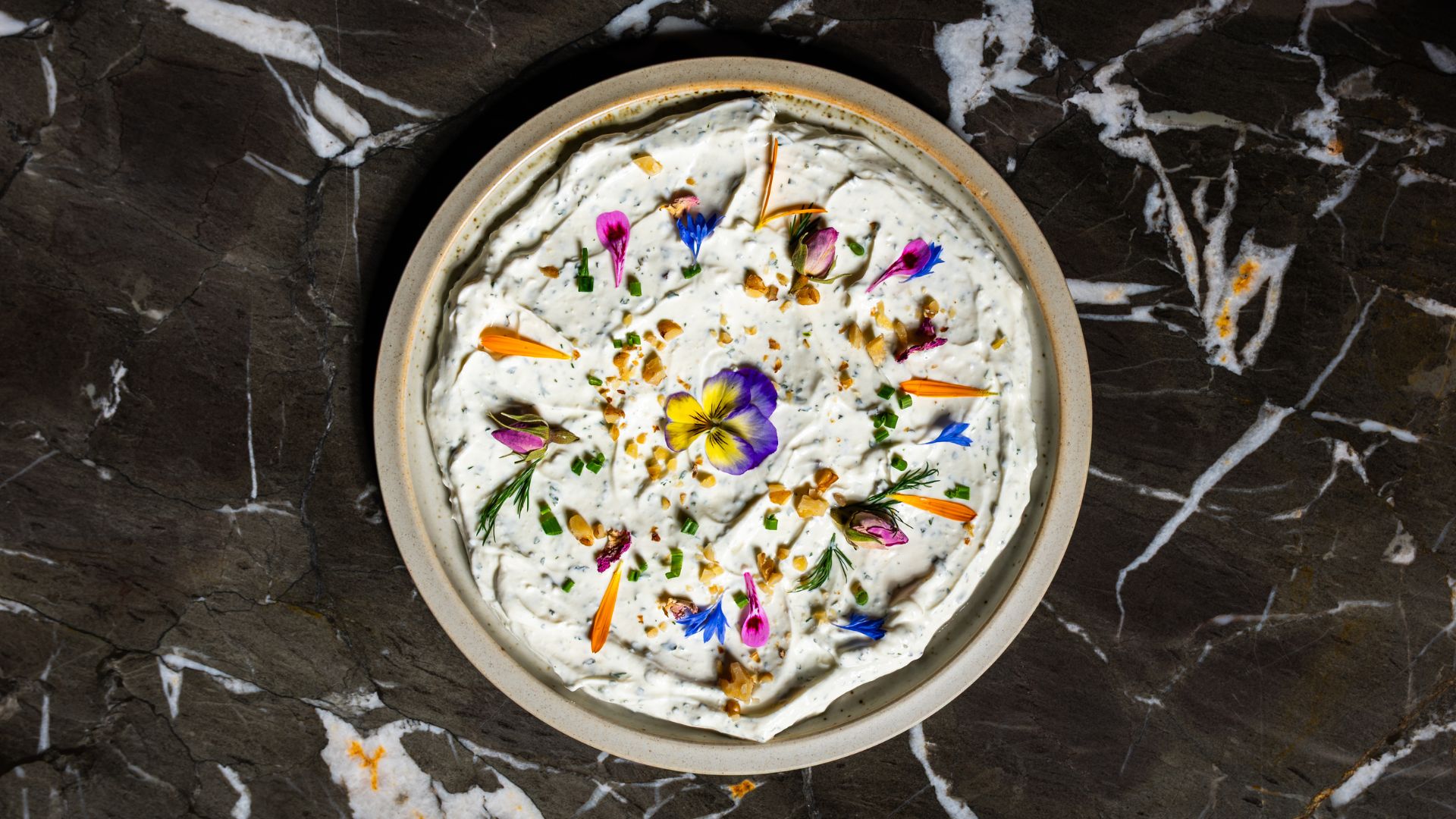
You’ve reinterpreted some classics. How do you decide when to honour tradition and when to bend it?
We begin with tradition. Before changing anything, we need to understand what makes that dish what it is: its flavour profile, technique, texture, ingredients and cultural significance. From there, we ask whether a change improves the dish or simply makes it different. We’re not interested in changing something for the sake of creativity. There are elements we can play with, but there are also things we consider non-negotiable. Particularly for someone who grew up with that dish, there should be a moment of recognition. Authenticity gives us the framework. Creativity happens within it.
You’ve shared a recipe for fesenjoon with our readers. Why that one?
Fesenjoon is a beautiful example of what makes Persian cuisine so distinctive. It’s made with relatively simple ingredients, primarily walnuts and pomegranate molasses, but the result is incredibly layered. It can be sweet, sour, rich and savoury at the same time. It also shows something important about Persian cooking: balance. The cuisine often works through contrasts rather than one dominant flavour. It’s comforting and familiar to many Iranians, but it can also be completely unexpected for someone tasting Persian food for the first time.
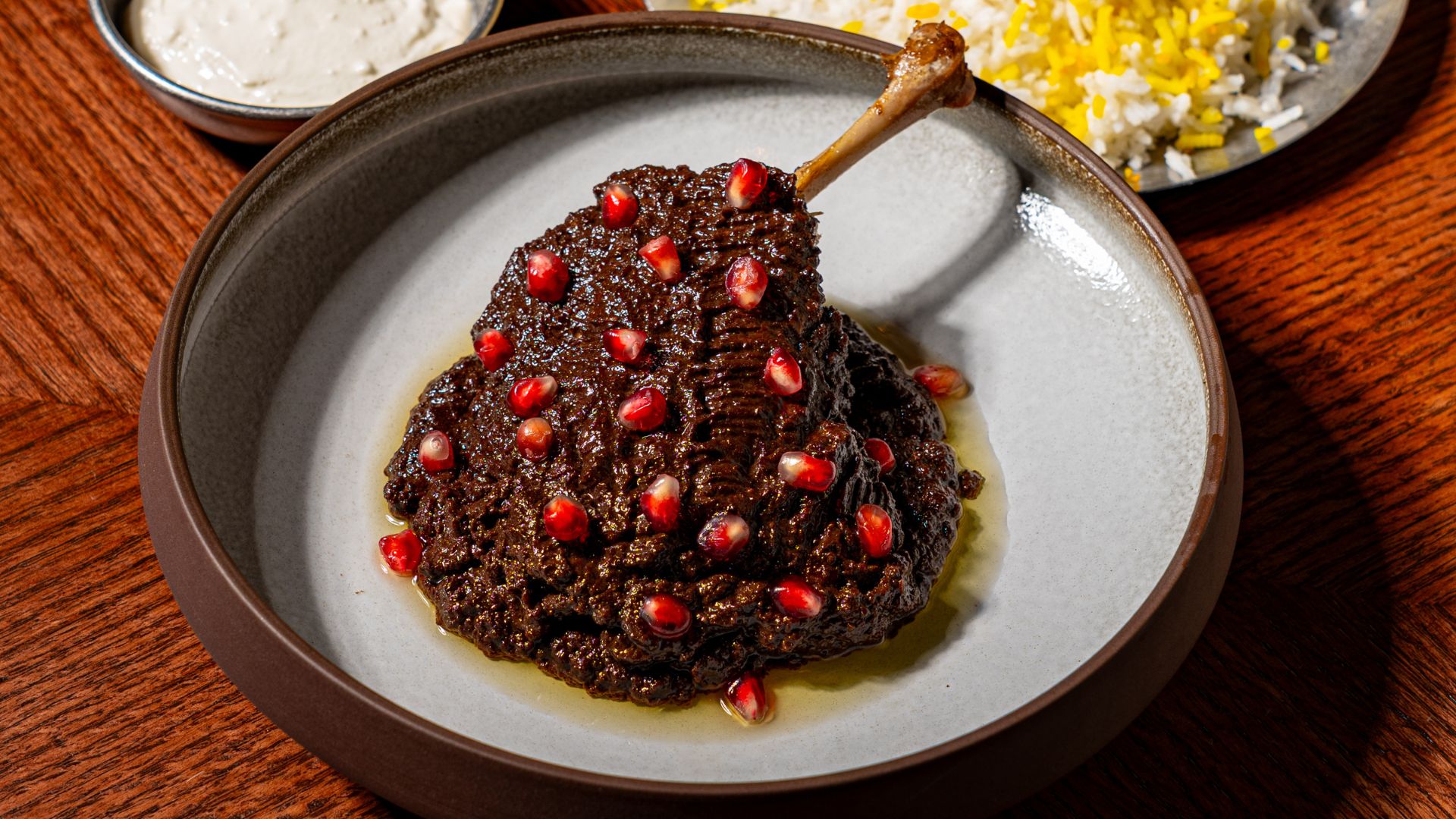
Recipe: Fesenjoon (Persian Walnut and Pomegranate Stew)
A slow-simmered northern Iranian classic that balances the richness of walnuts against the bright tang of pomegranate.
Serves 6-8
Ingredients
300 g walnuts
30 g onion, finely grated
150 g pomegranate molasses
27 g sugar
9 g butternut squash purée
½ tsp salt
¼ tsp black pepper
420 mL cold water, plus more as needed
Fresh pomegranate seeds, to serve
Directions
Grind the walnuts in a food processor to a thick, dough-like paste that still has a little texture when rubbed between two fingers. Transfer to a pot and warm gently over low to medium heat, stirring often, until hot but not browned.
Pour in the cold water and whisk until smooth. Bring to a gentle simmer, reduce the heat to low, and cook very gently for about 4 hours, stirring occasionally so it doesn’t catch. The walnuts will slowly release their oil and the stew will darken to a smooth, velvety texture.
Meanwhile, cook the grated onion with 5 tbsp water in a small saucepan over low heat for 15-20 minutes, until soft and translucent but not coloured, adding a little water as needed so it doesn’t fry. Separately, cover the butternut squash with water and simmer until soft, then drain and blend to a smooth purée.
Stir the pomegranate molasses, onion, squash purée, sugar, salt and pepper into the walnuts, and continue simmering gently for another 1½-2 hours, until thick, glossy and deep chocolate-brown, with the walnut oil rising to the surface. Taste and adjust – a little more sugar for sweetness, or more pomegranate molasses for brightness. Serve over Persian rice, traditionally with duck confit, braised duck legs or chicken, and scatter with fresh pomegranate seeds.