Privacy, freedom and a new horizon every morning explain why the world’s most discerning travellers are trading resorts for yachts.
By Erica Commisso
When Louis Vuitton unveiled its cruise collection at The Frick Collection in New York City, the brand was, in a way, nodding to the travel trend of the moment: luxury brands making waves in the world of cruising.
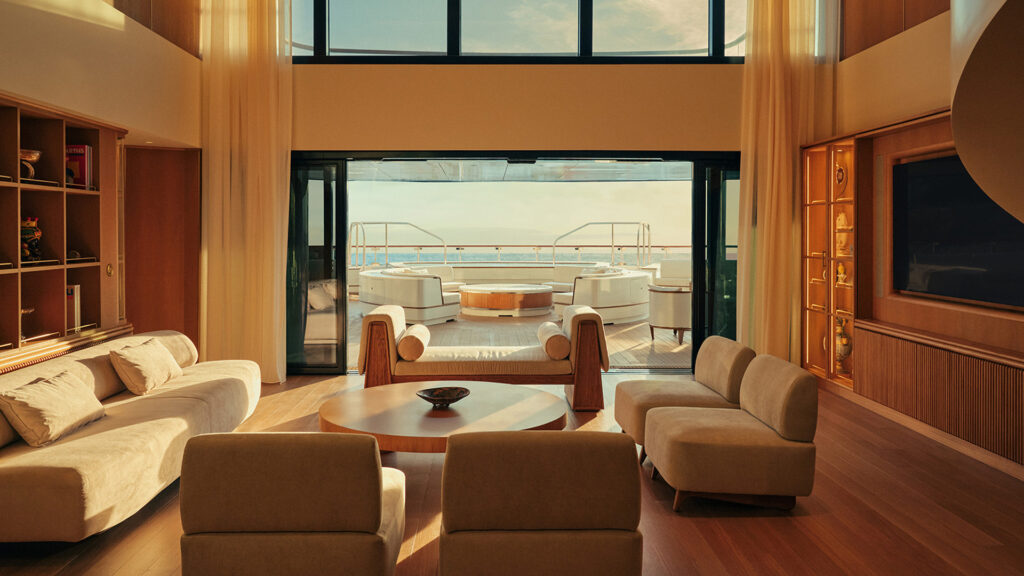
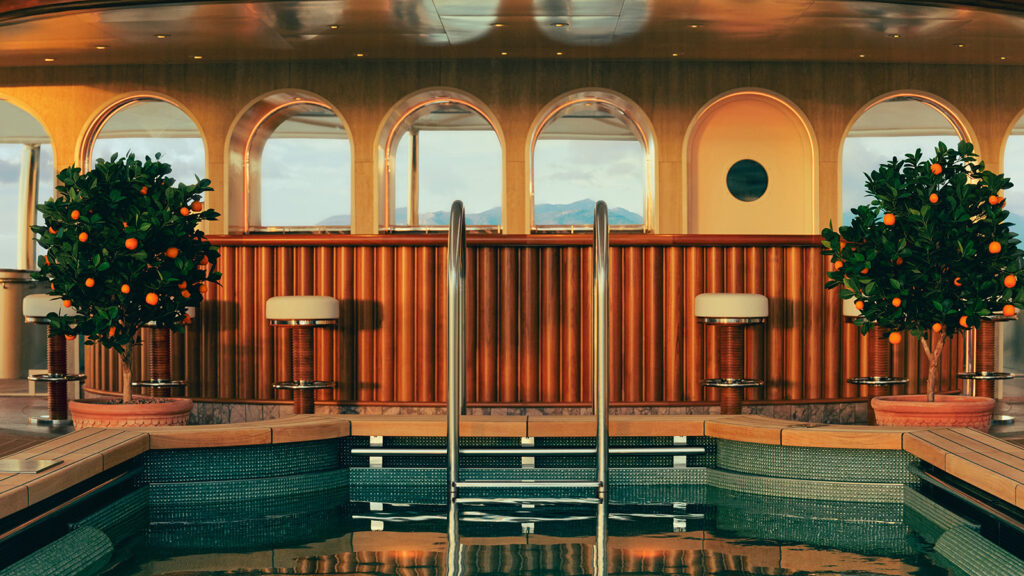
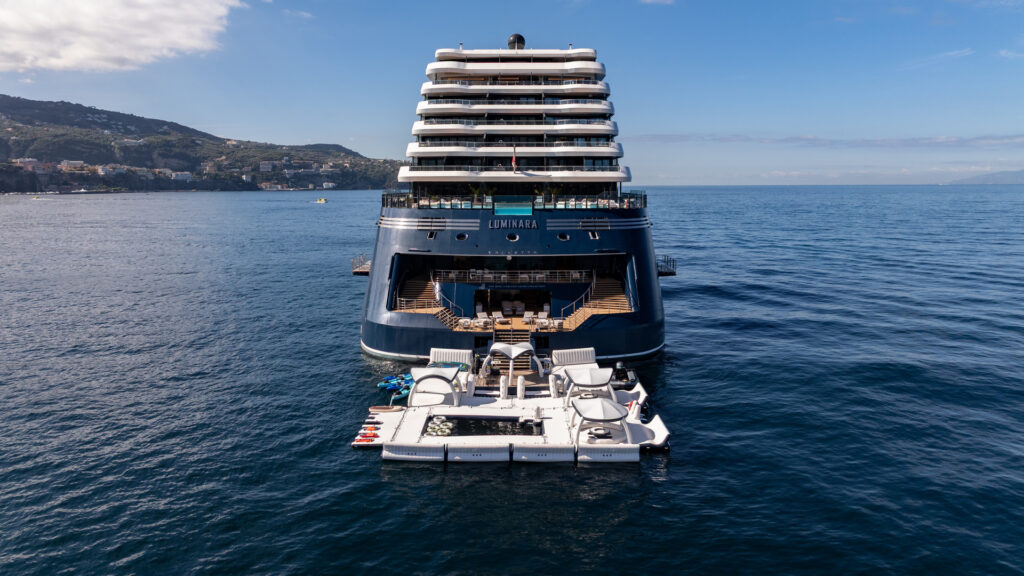
Brands like Four Seasons are expanding into luxury hospitality at sea, with white-glove service on state-of-the-art yachts that travel between breathtaking destinations, from the Italian Riviera to the Greek Isles, offering unparalleled privacy and peace on the open water. Other heavy-hitters have joined them, too: Orient Express took to the sea in May 2026 with terrace jacuzzis in its penthouse suites, two-storey duplex suites and a restaurant helmed by Michelin-starred chef Yannick Alléno; Ritz-Carlton took its signature wellness and world-class culinary experiences aboard its yachts and tailored them to specific destinations; and Aman at Sea’s Amangati is set to launch in 2027 with a two-storey spa facility that boasts a Japanese serenity garden and ocean-facing treatment rooms.
Four Seasons Yachts
Four Seasons Yachts
German Liubitch, the founder of Ritzy Yachts, says the market for luxury yacht experiences has expanded because yachts come with fewer limitations than a resort. “It’s usually people who’ve hit the ceiling of what a resort can give them. They know the routine: the cocktail on arrival, the suite with the view, every amenity handled. It’s lovely, and after enough of it, it’s also the same trip every time,” Liubitch says. “What a yacht offers that a resort can’t is control of the journey. Don’t like a spot, you move on; fall for a quiet cove, you stay an extra night. And none of it is shared with a few hundred other guests. For clients who are reachable every hour of their working lives, that combination of privacy and freedom is what they’re really paying for.”
Mistral, Ritz-Carlton Yacht Collection
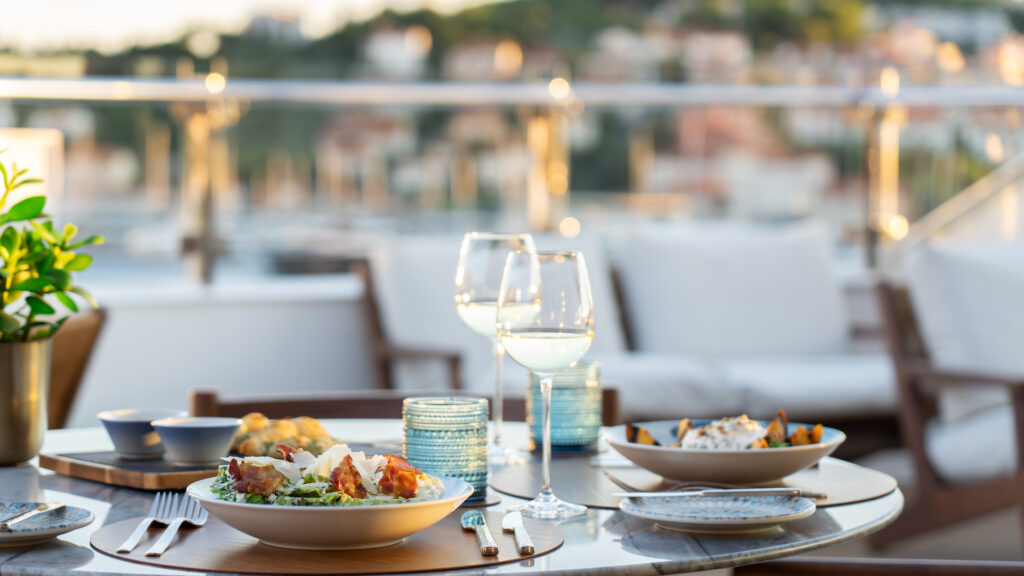
Luxury yacht travel also offers what traditional resorts don’t: flexibility and customization. “At a resort, even a brilliant one, you’re still racing to reserve a sunlounger, queuing at the buffet, booking the good table for eight o’clock. A yacht removes all of it. While the menu is tailored to guests’ preferences, it’s not like a restaurant where you can order anything you want at any time,” Liubitch says. “Before the charter, guests complete a preference sheet outlining their dietary requirements, likes, dislikes, and special requests. The chef then plans the menu around those preferences, with some flexibility throughout the trip. That crew is the underrated part: by the second day they know how you take your coffee, your wine, the snack you like on deck. And the view isn’t fixed. A hotel room shows you the same horizon all week. A yacht gives you a new one every morning, in coves no resort can put you next to.”
Ritz-Carlton Yacht Collection
Türkiye, in particular, is leaning into the rise in travellers looking for cruises. “In 2025, the country welcomed more than 2.1 million cruise passengers, marking one of its strongest years on record,” says a Go Türkiye representative. That momentum has continued into 2026.
“Luxury cruising, in particular, appeals to travellers who value curated itineraries, personalized service, and immersive cultural experiences over traditional sightseeing. Many travellers are also seeking slower, more meaningful ways to explore destinations, and small ship cruises offer that balance of relaxation and discovery.”
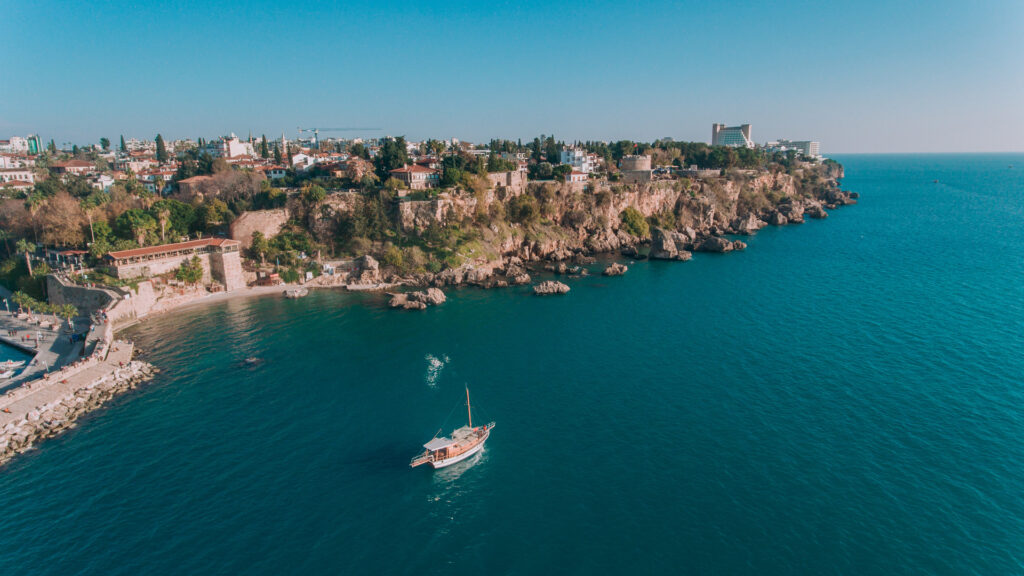
Kaleiçi, Antalya (Blue Voyages)
What makes Türkiye particularly distinctive is its coastal blue waters and the ability to combine breathtaking views with historical and cultural details. “The luxury of Türkiye’s blue voyages lies in the experience itself, with guests stepping onboard handcrafted Turkish gulets, wooden sailing vessels that have been part of the country’s nautical legacy for generations,” says the representative.
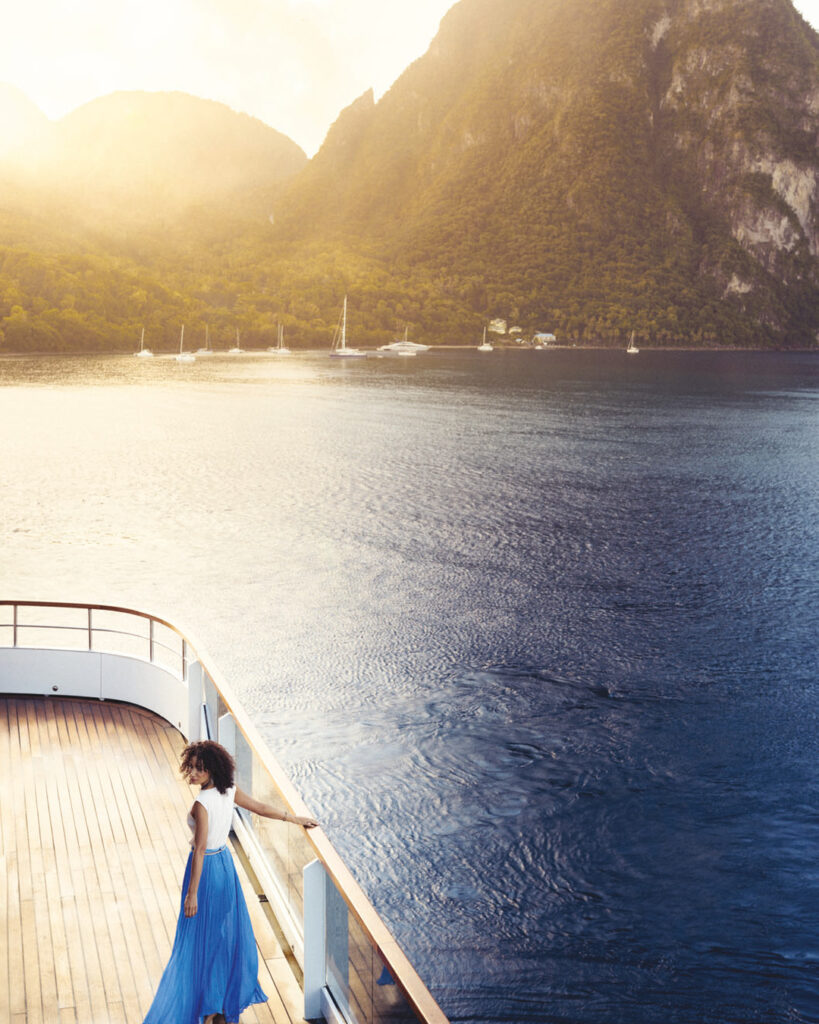
Ritz-Carlton Yacht Collection
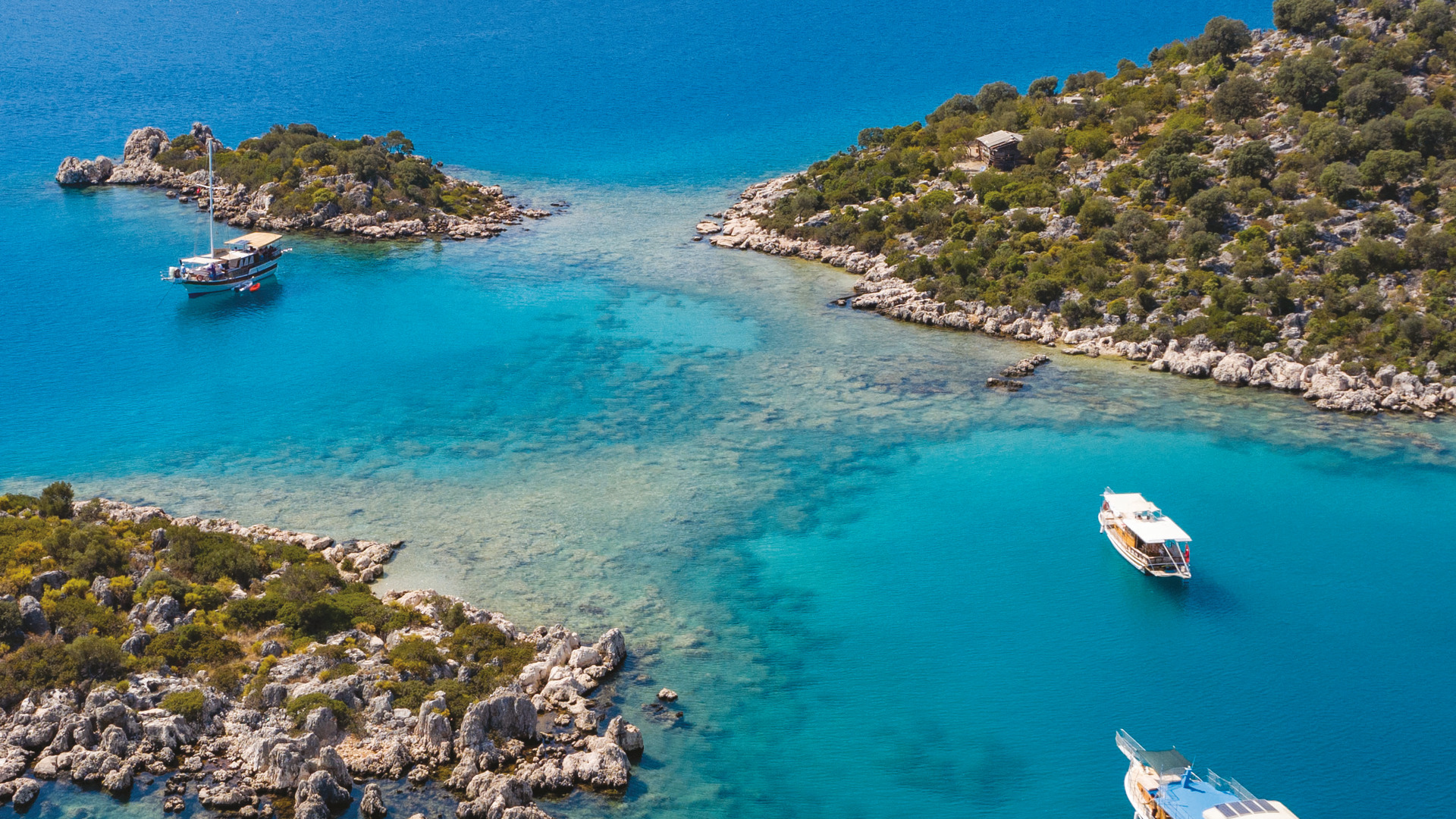
“Unlike larger cruise ships, gulets can access private bays, hidden coves, and picturesque coastal villages, meaning visitors can swim in crystal-clear seas, uncover ancient ruins, eat fresh Aegean and Mediterranean cuisine, and see Türkiye’s coastline at their leisure.”
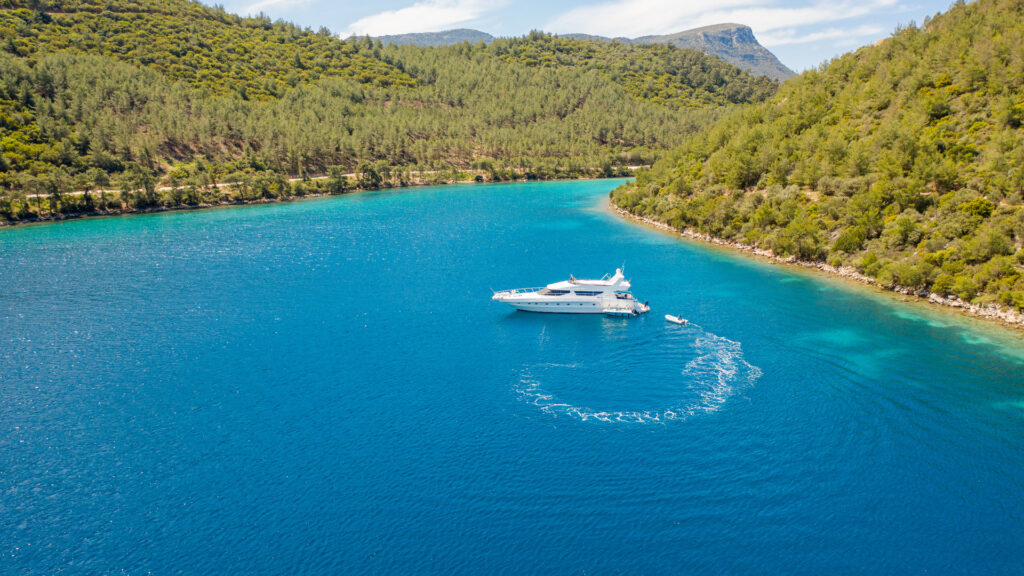
Türkbükü, Bodrum
Small ships and gulets also offer a less crowded, more distinctive way to travel. That means almost no interaction with strangers, both because the boat is occupied entirely by your party and because it sails to lesser-visited destinations.
Of Türkiye, the representative says: “It isn’t overrun the way other Mediterranean destinations can be, so you’re experiencing it, not battling through crowds. It gives you everything people love about the Mediterranean, just quieter and more personal.”