This Cartagena Food Tour Serves Up the Flavours of Gabriel García Márquez

A walking tour through the walled city brings the street food of Gabriel García Márquez’s novels to life.

By Cathy Senecal

In Cartagena’s El Centro, I take a big bite of happiness, a sticky-sweet ball of millet and coconut that tastes a bit like Cracker Jack. As an avid reader and foodie, I find a walking tour that marries the market food of Márquez’s novels with the real thing too tantalizing to pass up.

Colombia’s street fare inspired Gabriel García Márquez – or Gabo, as he is called in the country that reveres him – to fuse those flavours into his celebrated, nostalgia-filled stories, making it clear that Márquez’s imaginary places were always rooted in Colombia’s Caribbean coast.

We pass under the golden gate of the Clock Tower, entrance to the UNESCO-recognized historic centre, to meet with Foodies for García Márquez’s Literary Menu Tour.

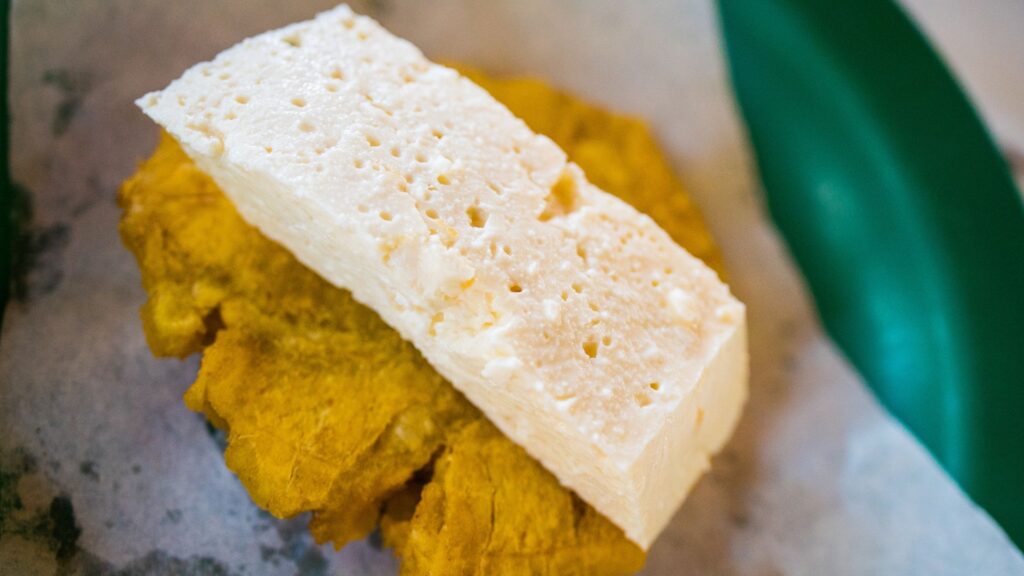
At nearby Palito de Caucho, or Little Rubber Tree, so called because it stands in the shadow of a noticeably big rubber tree, we start with a slab of salty Costeño cheese atop a twice-fried plantain pancake.

Love in the Time of Cholera
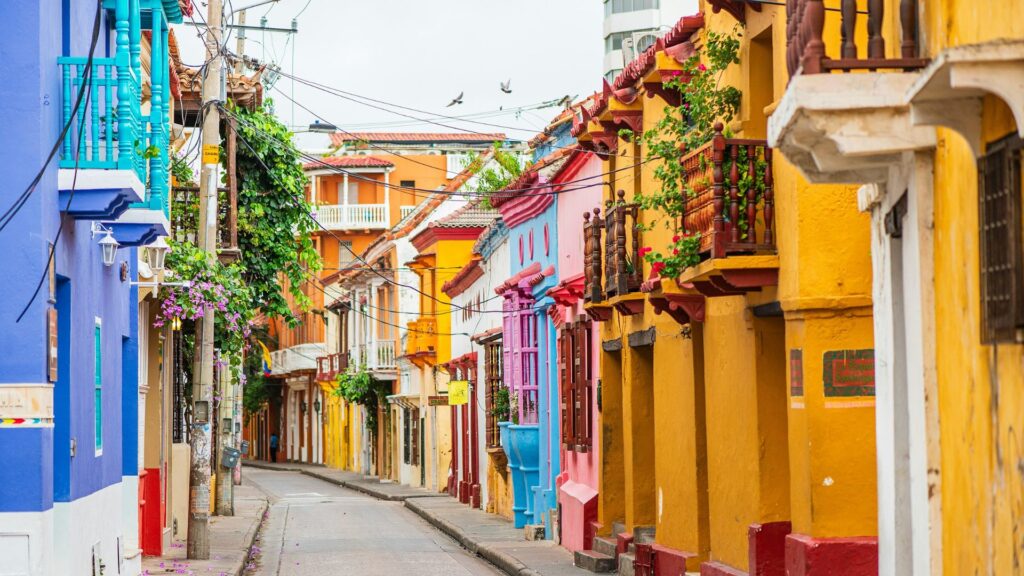
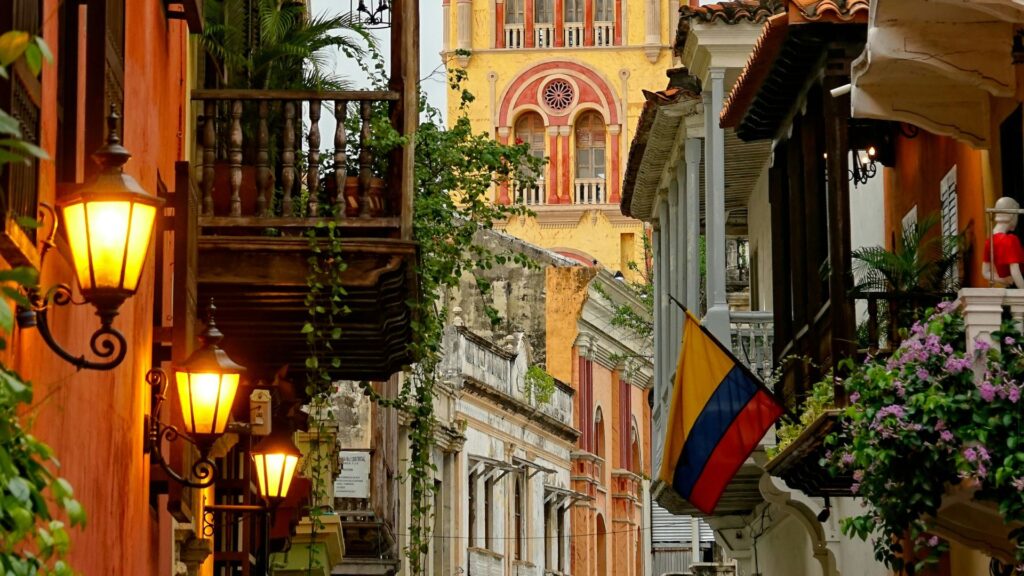
Cartagena's Old Town

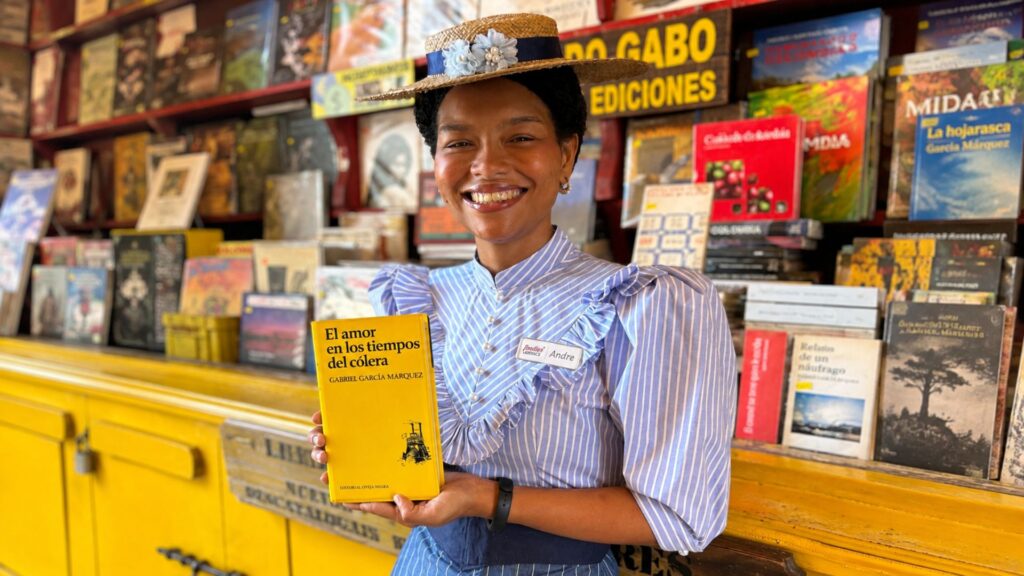
We learn that in Love in the Time of Cholera, a ship captain devours a patacón which “he chewed with savage delight.”

“Just like me,” says Andrea de la Hoz Gaviria, our 11th-generation Cartagenera and Foodies chef concierge, as she bites into her patacón. I do the same, savouring the sweet-salty combination of one of the Colombian Caribbean’s most distinctive bites.

Like many Colombians, Andrea considers Márquez a source of national pride, not only because he is a Nobel Prize winner, but because he captures the essence of Colombian culture, its oral traditions and the extraordinary within the everyday.

Cartagena, Colombia
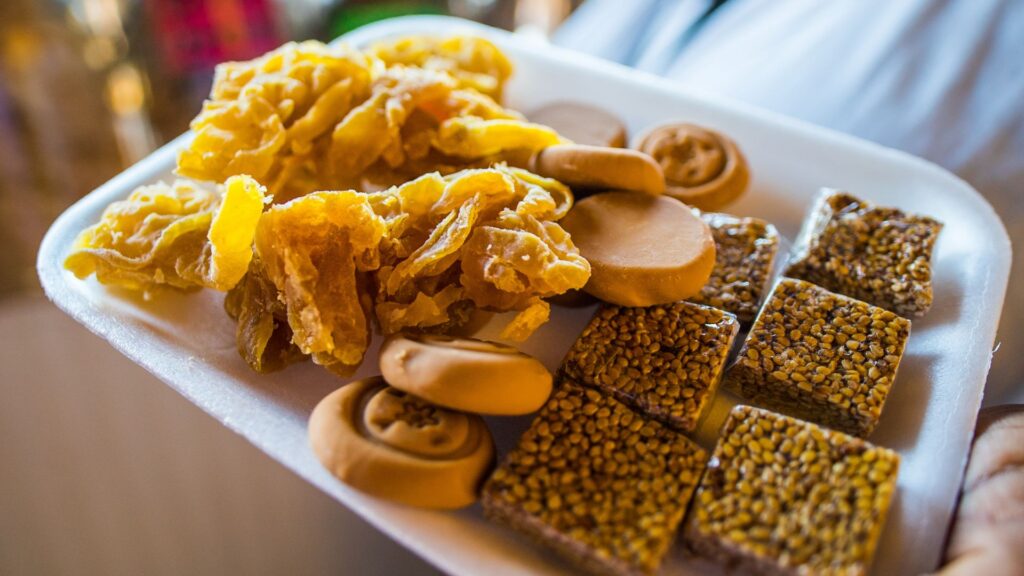
Sweets at Portal de los Dulces

“His work connects me deeply to memories of the readings I shared with my grandfather,” she says, adding that she has read more than ten of his books and cherishes her signed first-edition copy of one of his earlier novels.

Andrea’s great-great-grandmother was from Andalusia, a lineage shared by many families in Cartagena – where African, Indigenous and Spanish influences intertwine. She wears a long, delicately laced dress inspired by Love in the Time of Cholera, conveying a nostalgic Belle Époque sophistication that runs through García Márquez’s universe.

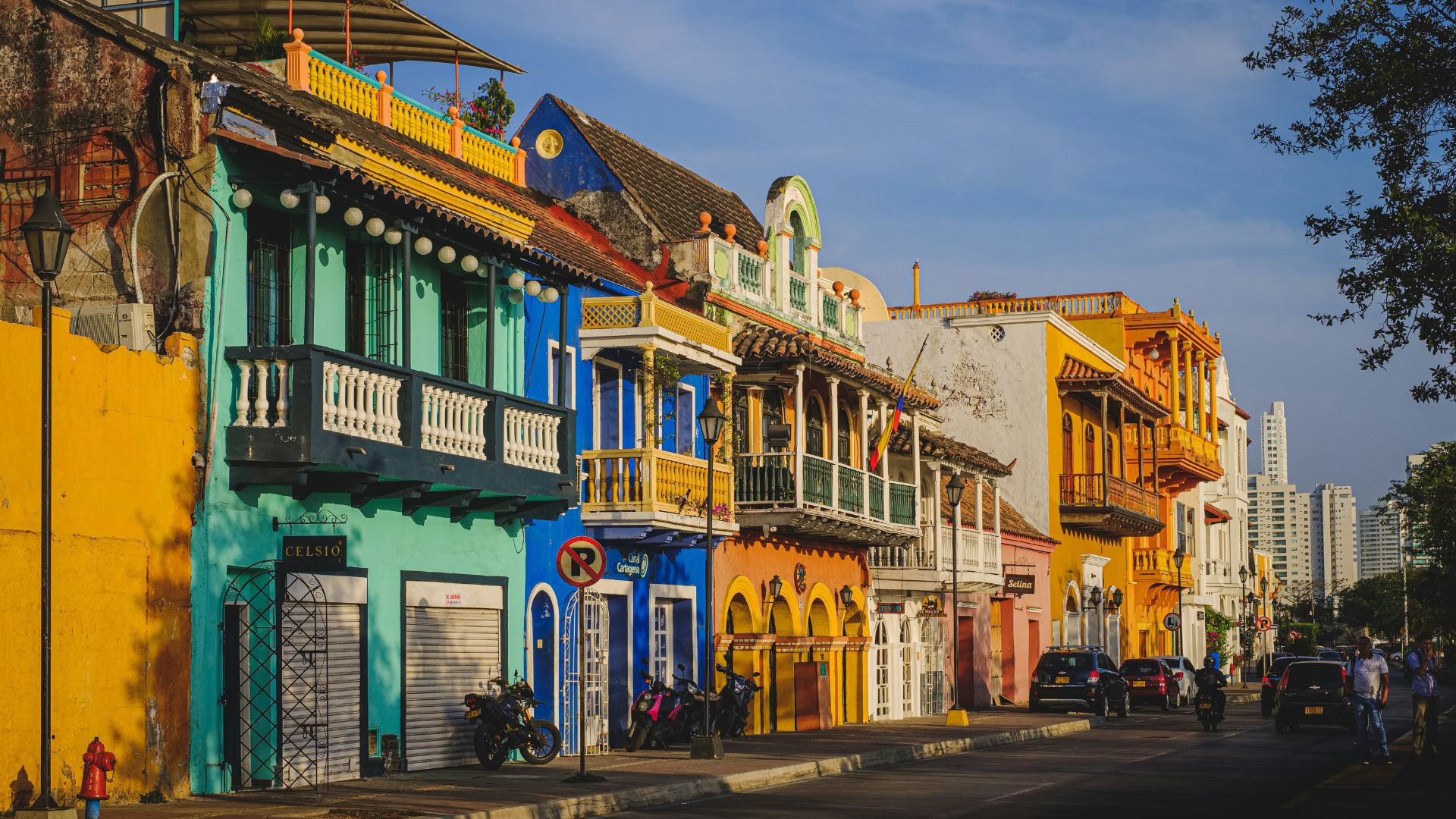
We follow her through the historic Plaza de los Coches, lined with yellow and orange balconied buildings and colonial arches, to the Portal de los Dulces, or sweets market, where jars line the stalls, brimming with rolled balls of coconut, guava, sugarcane, passion fruit or pineapple. Besides the ball of happiness, I taste a few tiny desserts, a mere sampling of the sweets that Fermina Daza loaded up on in Love in the Time of Cholera.

“. . . she went to the candy sellers sitting behind their big round jars and she bought six of each kind, pointing at the glass because she could not make herself heard over all the shouting: six angel hair, six tinned milk, six sesame seed bars . . . six of this and six of that, six of everything and she tossed them into the maid’s baskets with an irresistible grace.”

Angel hair is a crispy, light, heavenly bite of caballito de papaya. Panelitas de Leche, or tinned milk, a teaspoon-sized cookie made from condensed milk and Colombian caramel, makes me happier than happiness.
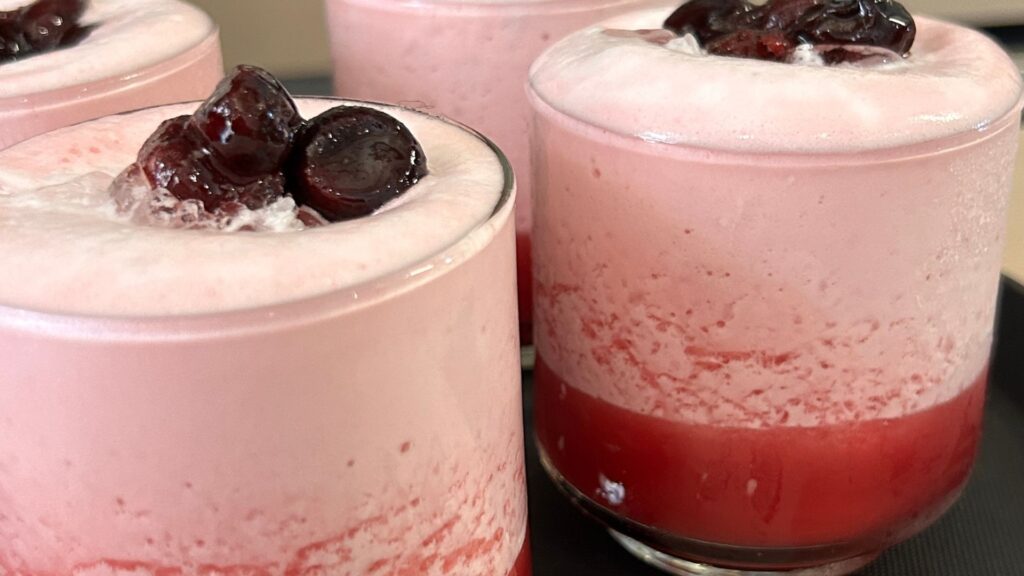
Corozo juice
Patacones con queso

We continue down the bustling streets inside the walled city, into a shop where Andrea cranks a large coffee grinder, twists a key, and magically opens a massive secret door into a restaurant called La Garza, a cool reprieve from the day’s humidity.

We taste Corozo juice, a sweet palm-fruit drink, along with a splash of Ron Tres Esquinas, an artisanal rum. It goes down smooth with our meat-and-egg-stuffed arepa, a delicious representation of Colombia’s Indigenous, Spanish and African heritage. Márquez once referred to arepas in a radio interview as one of the foods that evoked nostalgia in Colombia, along with sancocho stew, and carimañola, cassava fritters stuffed with meat or cheese.

Macondo’s ice cream

Márquez is also known to have said “the best ice cream is in Macondo,” his imaginary village setting in One Hundred Years of Solitude. As I taste a sweet scoop of dark-green coca-leaf ice cream at Nía Bakery, I feel compelled to dispute this indisputable claim.

At Plaza de Bolívar, we savour triangles of pineapple from Angelina Cassiani, an Afro-Colombian woman dressed in the colours of the flag and balancing a large basket of fruit atop her head. She is a palenquera, descended from the first free town in the Americas and much like the women Fermina Daza met in Love in the Time of Cholera.

“Fermina Daza was awakened from the spell by a good-natured black woman with a colored cloth around her head who was round and handsome and offered her a triangle of pineapple speared on the tip of a butcher’s knife. She took it, she put it whole into her mouth and she tasted it.”

After stops for lemonade and San Alberto Colombian coffee, the tour ends. Despite never having read Love in the Time of Cholera, I am pleasantly sated by the scattered morsels of Márquez’s prose, as rich as the treats I tasted.