Hoshino Resorts has reborn Nara’s last fully intact Meiji-era prison as a 48-suite heritage retreat – red brick, radiating cell blocks and all.
By Offshore Editors
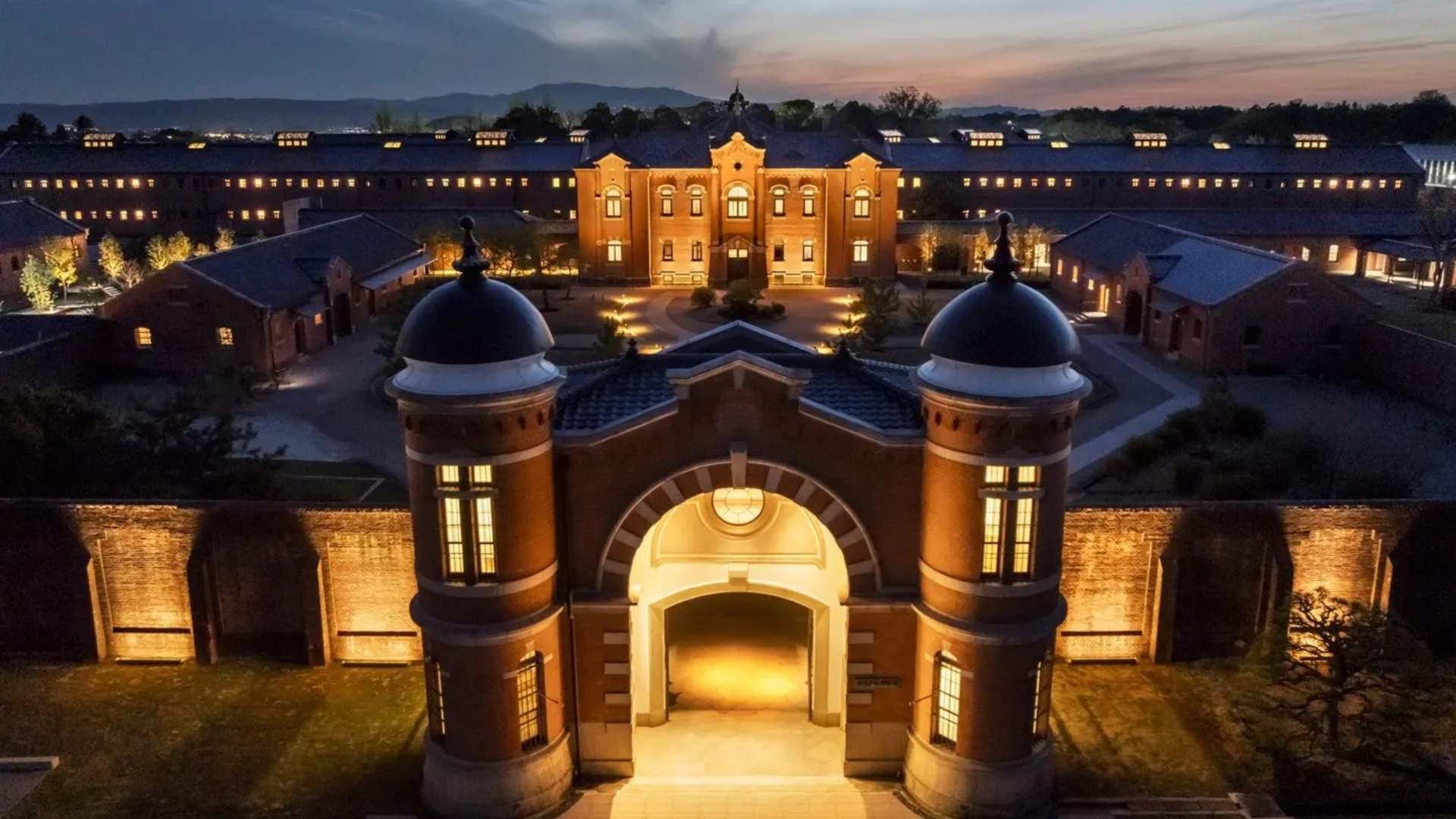
Some hotels lean on a good story. HOSHINOYA Nara Prison is built inside one. Opened on June 25, 2026, Japan’s most unusual new retreat occupies the former Nara Prison, a red-brick landmark that held inmates for more than a century before Hoshino Resorts spent roughly seven years transforming it into the country’s first luxury hotel set within a former prison.
The building is the draw as much as the service. Completed in 1908 to a design by architect Keijiro Yamashita, Nara Prison is the only one of the Meiji government’s “Five Great Prisons” to survive almost entirely intact – grand structures built to broadcast the ambition of a modernizing nation. Its red-brick walls follow the Haviland System, with cell wings radiating outward from a central guardhouse, a layout so admired it became the template for prisons across Japan.
Renamed the Nara Juvenile Prison in 1946, it spent more than 70 years as a centre for rehabilitation before closing, and in 2017 it was designated a National Important Cultural Property. It sits a short drive from the deer parks and temples of Nara itself.
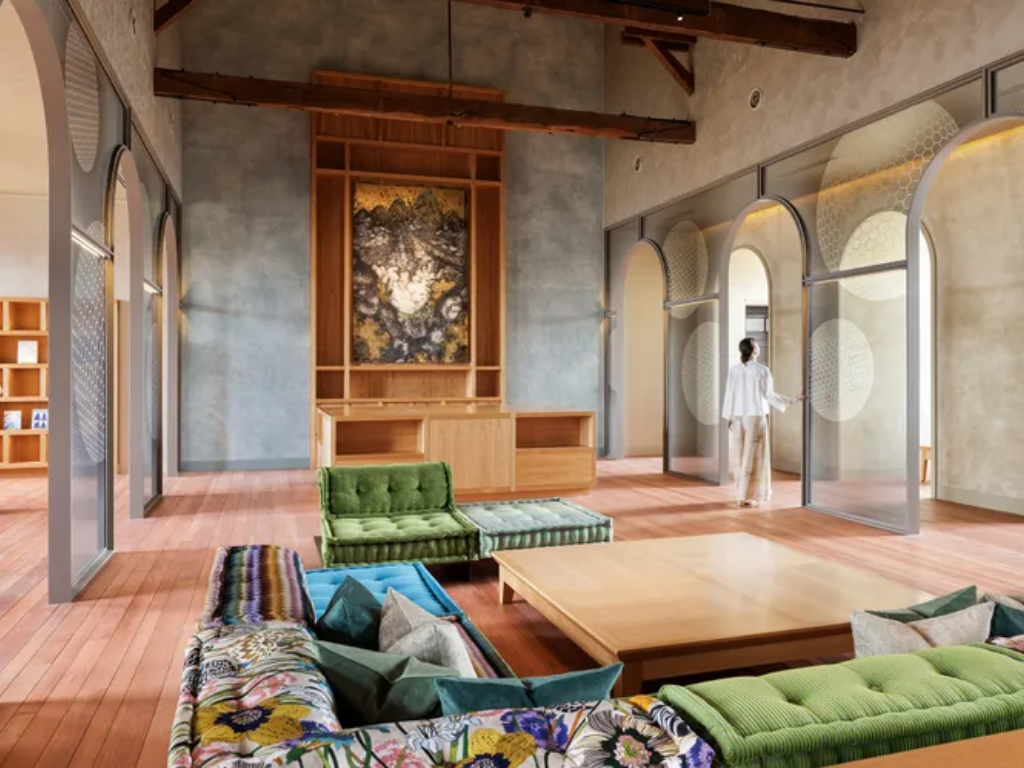
Rather than erase that history, the renovation frames it. The 48 rooms are all suites, created by connecting clusters of nine to eleven former cells into generously proportioned spaces with separate zones for sleeping, dining and quiet. The largest, The 11-Cell Deluxe, adds a dressing lounge and expansive living area. Throughout, the bones of the place are left on show: hand-laid brick exposed beneath the original plaster, ceiling mouldings kept as they were, and new steel reinforcements set in deliberate dialogue with warm wood panelling. Rooms come stocked with soft loungewear, a curated shelf of books chosen to encourage reflection, custom fragrances and a selection of wines and local sake.
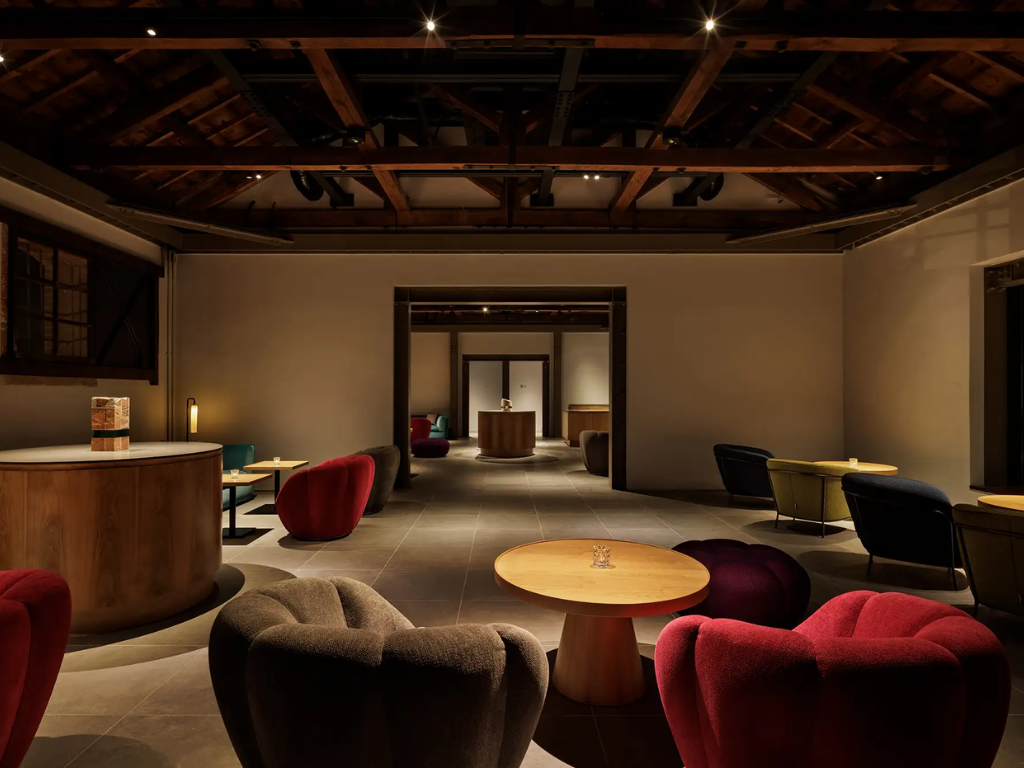
Beyond the suites, a soaring main lounge sits under an atrium of original beams and continuous arches, furnished with European pieces that nod to the Meiji era’s appetite for Western style. Dinner is “Gastronomy Chronicle,” a four-course tasting menu that traces the arrival and evolution of French cooking in Japan across themes from “Early Development” to “Future,” while breakfast revives Meiji-era yōshoku in miniature, from a Scotch egg with Worcestershire sauce to crab cream croquettes. The rhythm of the day is marked by gentle rituals: an afternoon tea salon pouring Nara-grown Japanese black tea, a late-night gramophone hour, a bespoke fragrance-blending session, and a morning stretch with dumbbells carved from local Yoshino cedar.
The stay is bound up with a second attraction on the grounds, the Nara Prison Museum by Hoshino Resorts, which reads the site’s layered history through design and art. A guest-only pathway links the two, and overnight visitors get unlimited access during the day plus private early-morning and late-evening hours when the galleries are all but empty. Hoshino Resorts calls the whole idea a “cycle of heritage” – the notion that staying the night is itself what keeps a fragile landmark alive. With HOSHINOYA Asuka set to follow in Nara Prefecture in 2027, the brand is quietly making the region its most compelling reason yet to check in.