From Antigua to Lake Atitlán, Guatemala reveals a balance of raw beauty and refined details.
By Renée Morrison
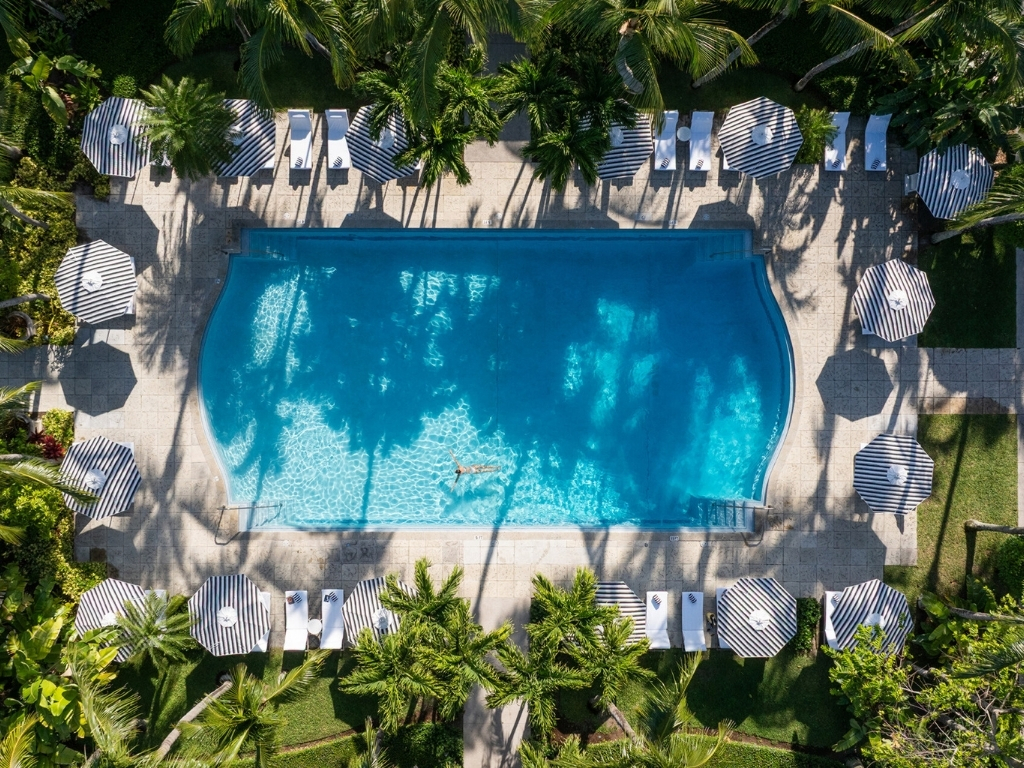
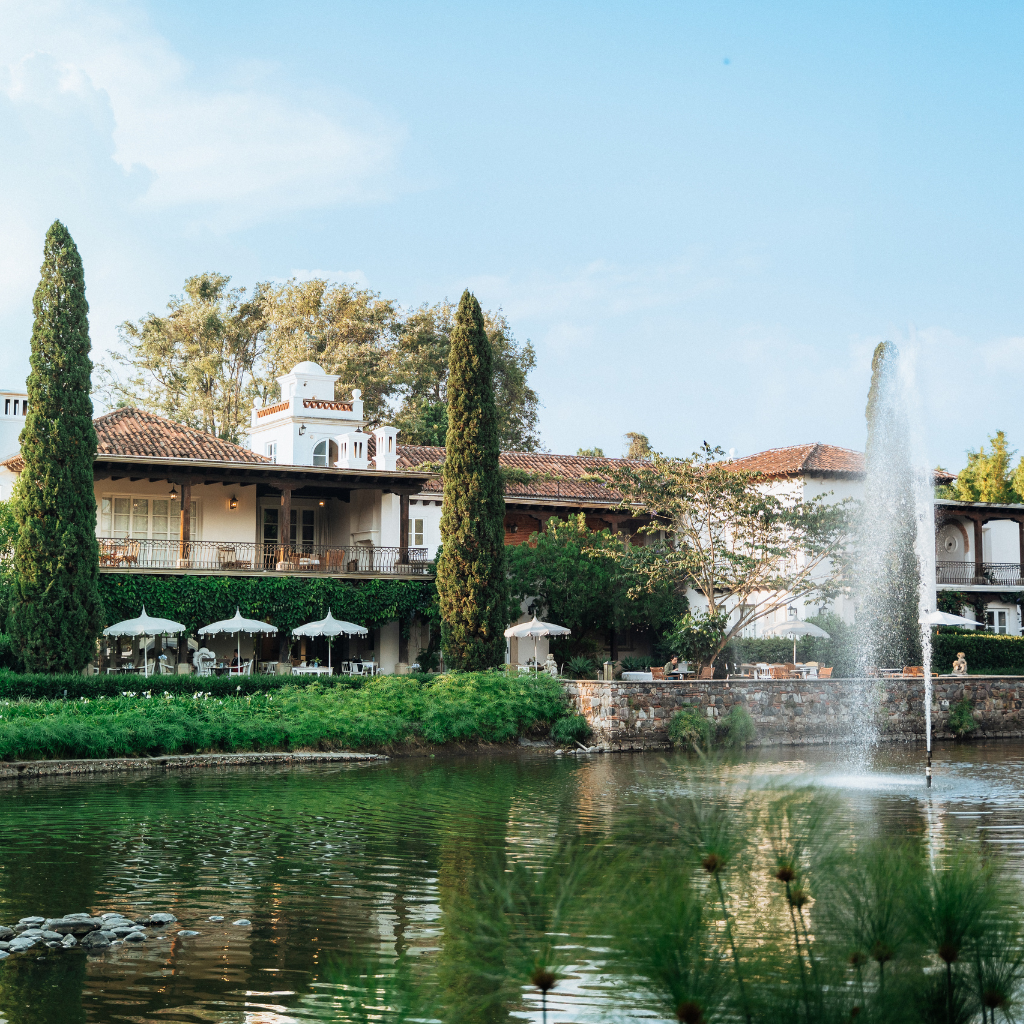
Stepping into Villa Bokéh in Antigua Guatemala feels like slipping into a secret garden. It’s just minutes from the bustling cobblestoned streets of the town centre, but past the unassuming entry gates lies a six-acre haven. With views of the twin volcanoes Agua and Fuego, manicured gardens of bamboo and birds of paradise surround a pond with three resident ducks, and a sleek pool is tucked into a lush corner. The hotel itself, designed by local Paliare Studio and featuring artwork from the private collection of owner Claudia Bosch, has 15 suites—each its own palette of colour, texture, craft—and sets the tone for a trip defined by design.
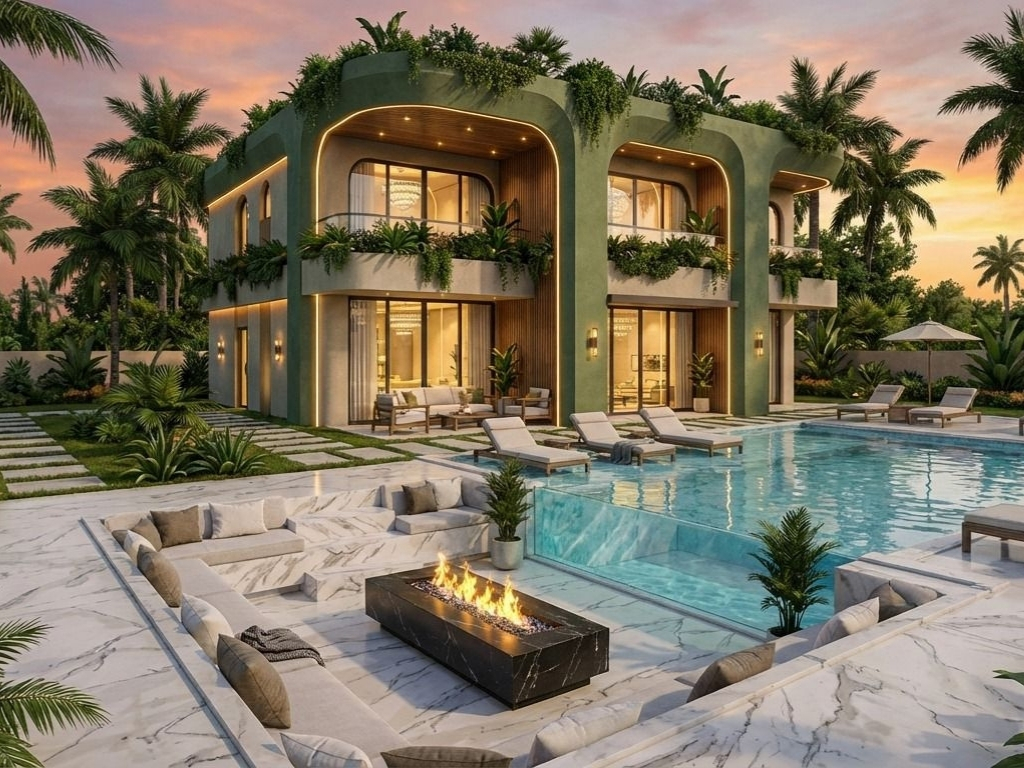
My Olive Suite pairs soft greens and white linens with woven accents, plus a private patio and fire pit. Here, the thoughtful touches extend beyond design: one night, a lavender eye mask and aromatherapy diffuser appear alongside local honey sweets; the next, a woven pouch of tiny Mayan worry dolls, said to take away your stresses if whispered to before bed.
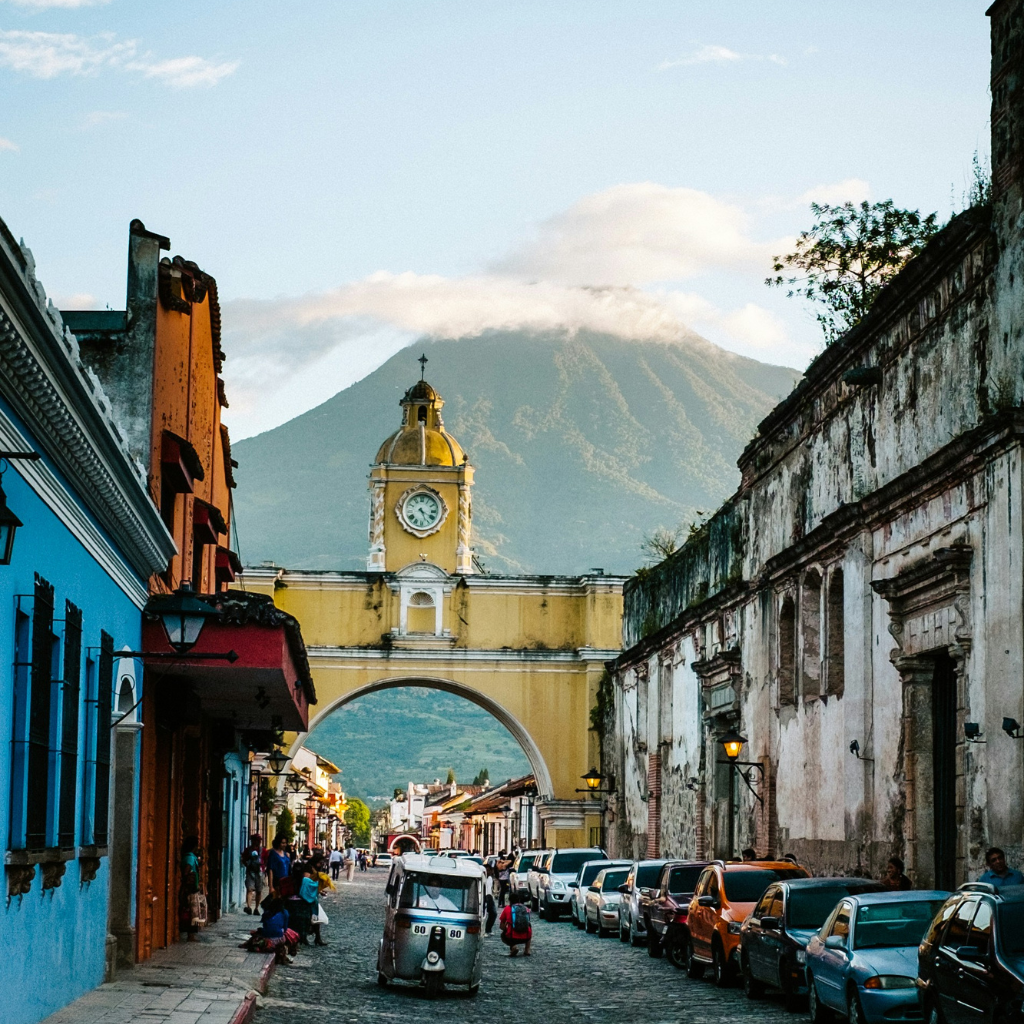
Stepping beyond Villa Bokéh’s gates, Antigua mirrors that same dialogue between past and present. Once the Spanish colonial capital, this UNESCO-listed city is famed for its barroco antigueño, a local take on Spanish Baroque adapted to withstand earthquakes. Thick adobe walls, low arches and sturdy columns meet delicate stucco façades, while Mudéjar-inspired tiles and arched windows—echoes of Arabic Spain—soften the geometry. On a walking tour, Antigua reads like a living design textbook: Mayan, Spanish and Moorish influences shaped by time and tremor.
In the bustling Parque La Unión, we stop at the Tanque, a public washbasin built in 1853 where women once aired out their laundry both literally and figuratively. A few blocks away, we step into a verdant courtyard that looks like a bohemian boutique hotel, only to find it’s a Starbucks (worth a photo, but head to Artista de Café for your caffeine fix). Nearby, Casa del Jade offers a fascinating primer on the stone’s cultural importance, a mini museum of original ceremonial artefacts, and a boutique selling contemporary jewellery.
On our final evening, back at Villa Bokéh, I climb a spiral staircase to the Honesty Bar—a tiny, unmanned gem that opens onto a rooftop terrace overlooking the gardens. We mix cocktails with local Zacapa Rum as the sun fades behind the volcanoes. Then, suddenly, the sky lights up with fireworks. They’re part of an engagement happening elsewhere on the property, doubling as a celebratory send-off.
From City to Stillness
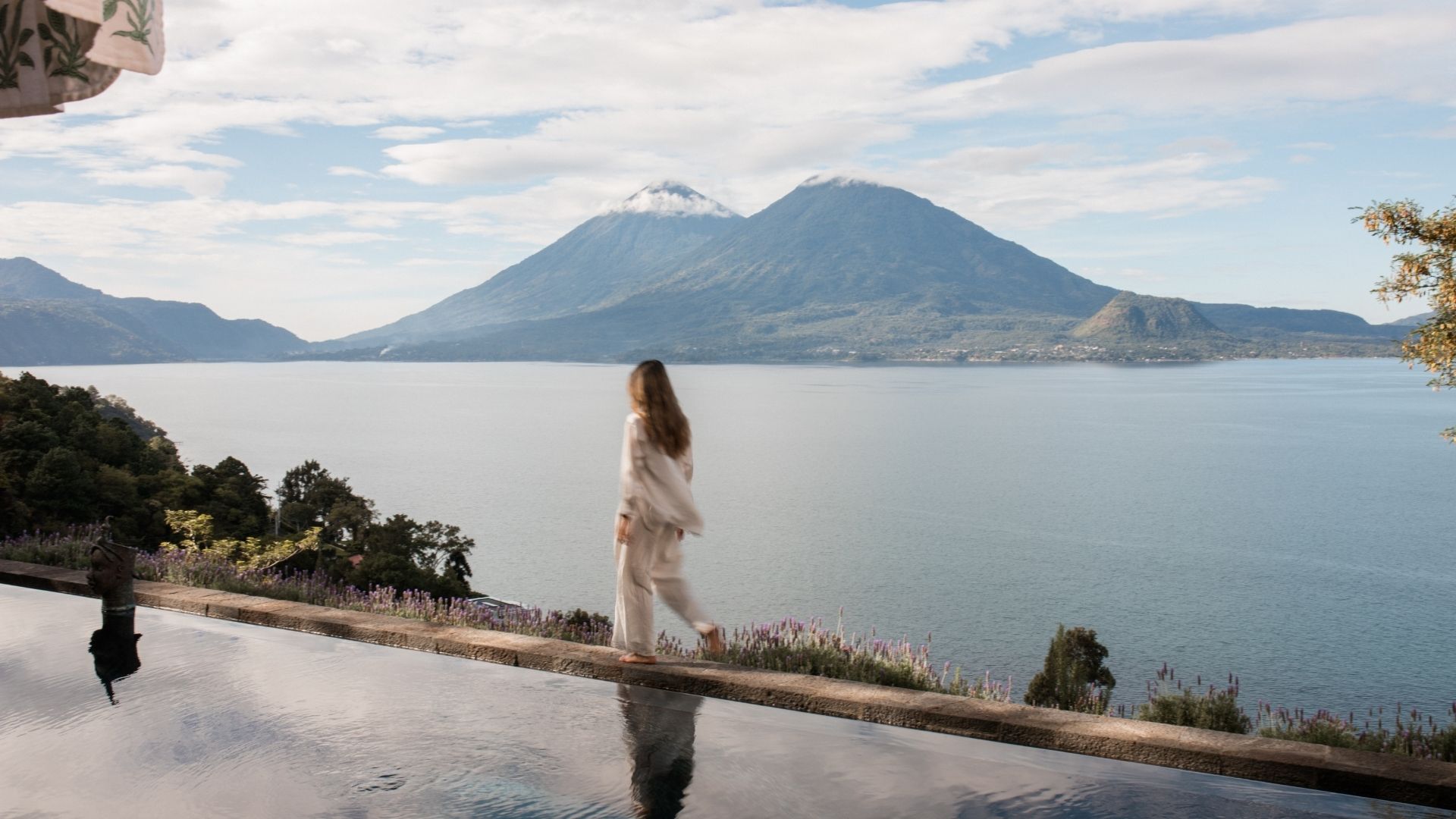
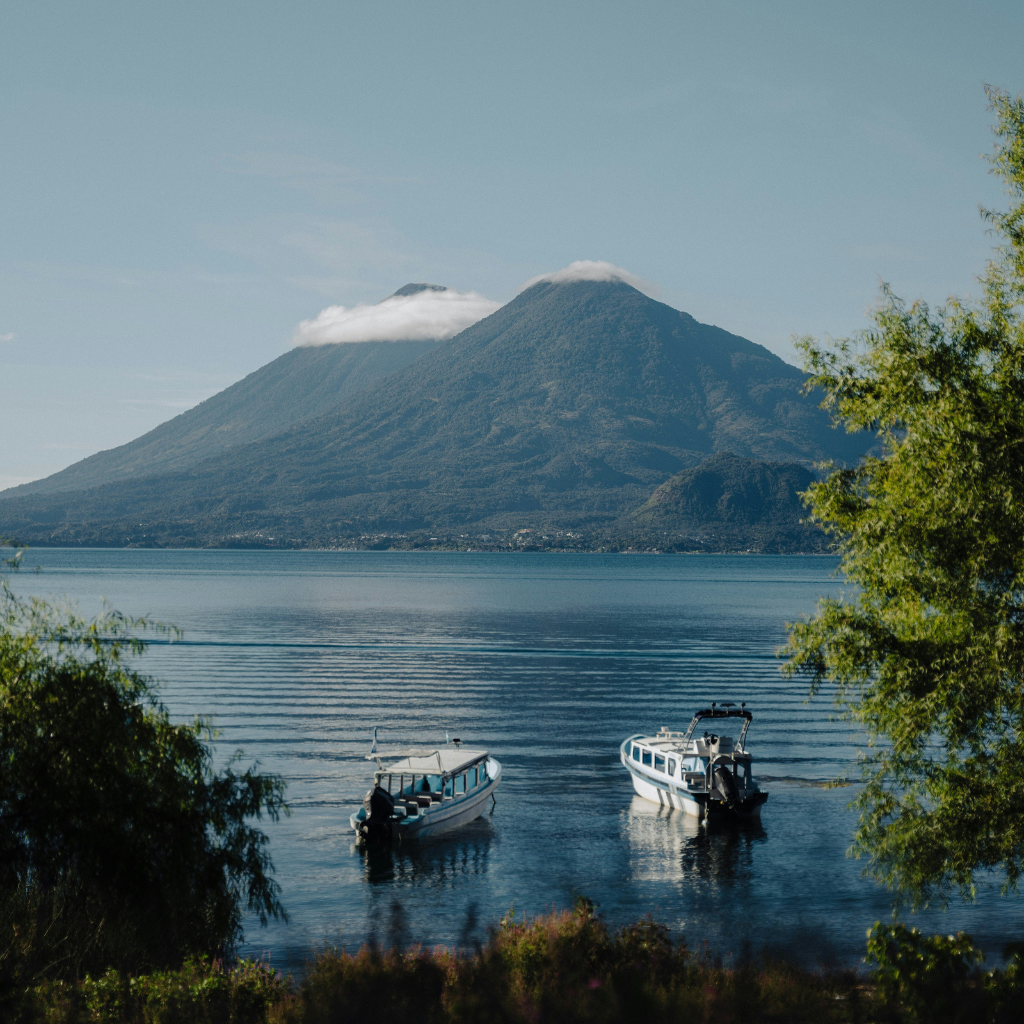
The next morning, a two-and-a-half-hour drive through the highlands brings us to Lake Atitlán, an immense volcanic caldera lake ringed by three imposing volcanoes. The landscape is enough to rewire your sense of scale. Perched on the mountainside facing the lake, Casa Palopó is modest from its façade, but as I’ve learned, much of Guatemala’s beauty lies beyond first impressions.
Inside, the sprawling property is bold yet refined, courtesy of Guatemalan designer Katy Jay. Colour reigns: cobalt, ochre and red on the walls, terracotta floors, patterned textiles. In the restaurant, vines of fuchsia and aquamarine blossoms hang overhead as hummingbirds dart around the open terrace. My room, beside a library stacked with vintage travel and décor magazines, opens onto a claw-foot outdoor tub facing the lake—a private theatre for volcano sunsets.
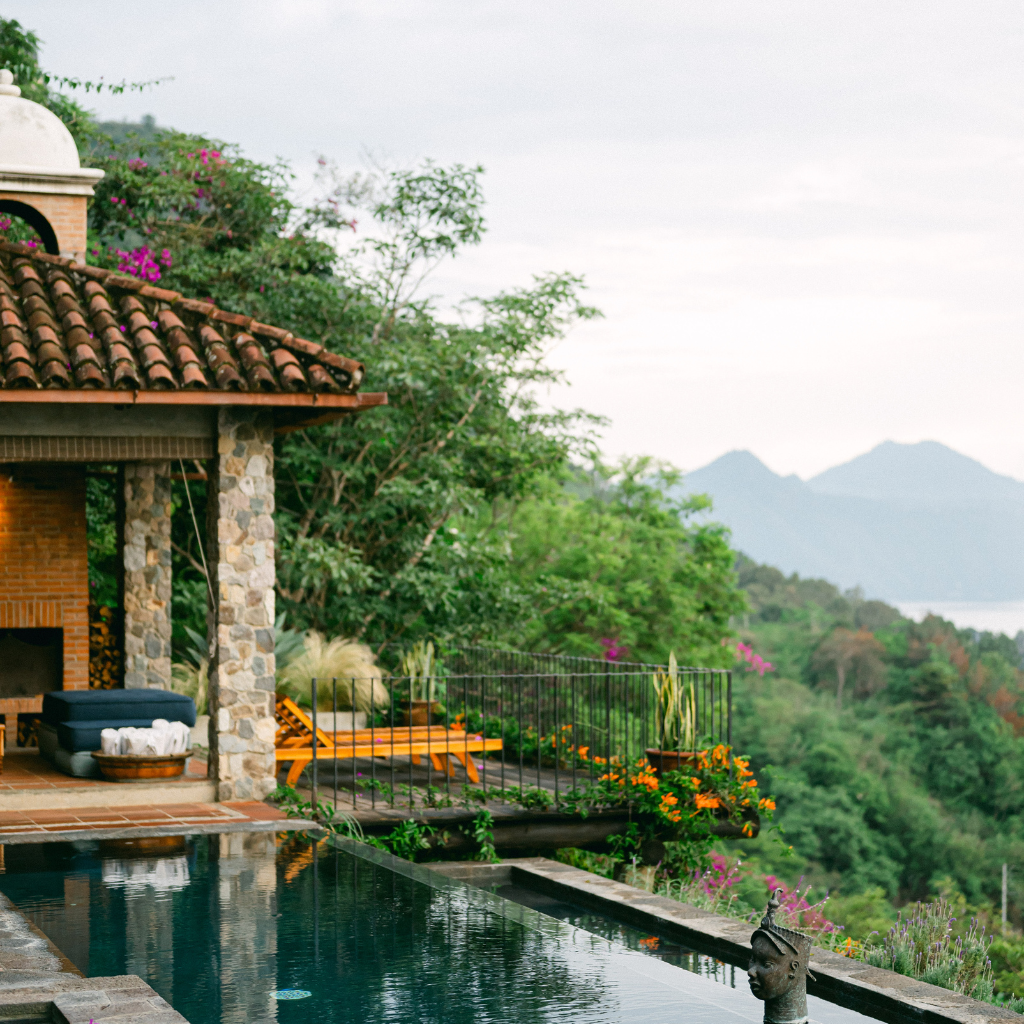
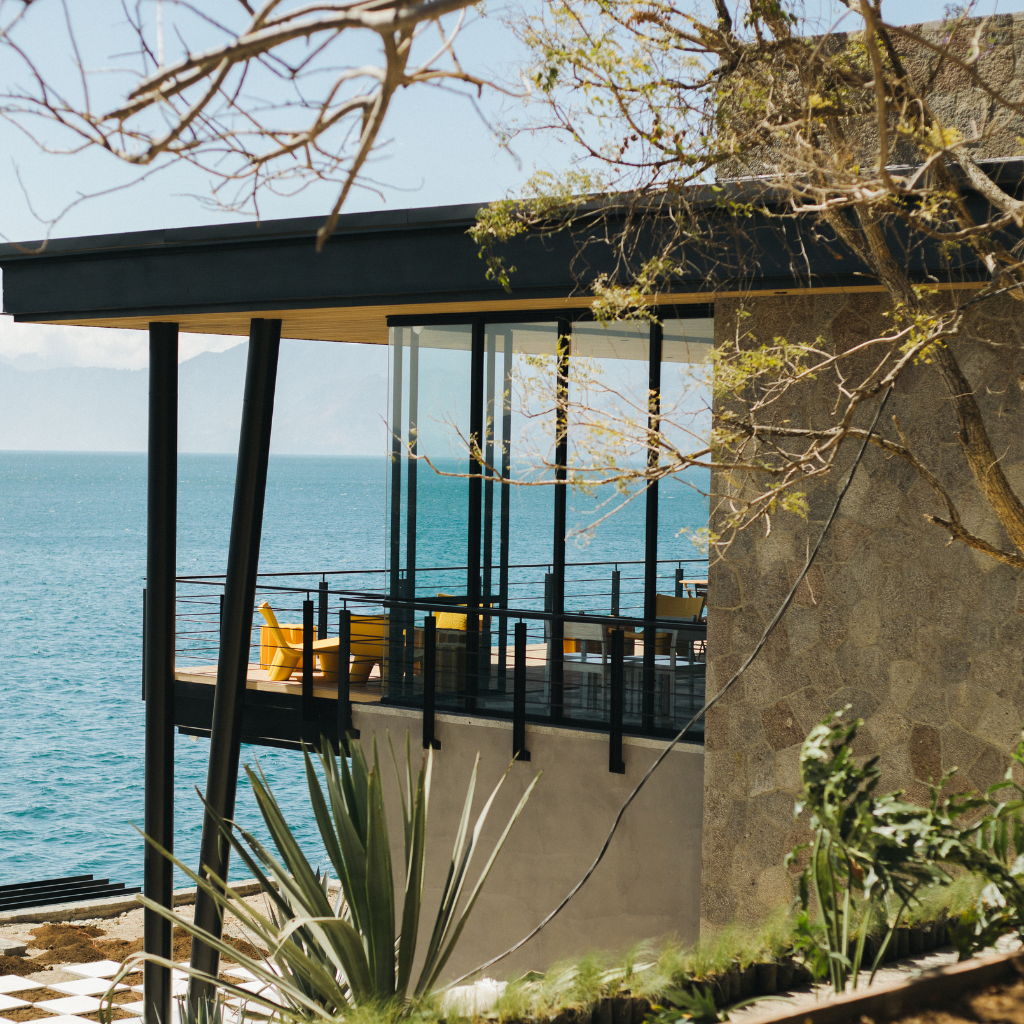
But that will have to wait. When the hotel’s private three-bedroom villa isn’t booked, guests can slip into its stone-clad infinity pool that feels lifted from a Slim Aarons photograph. So I do, watching my first Lake Atitlán sunset from the hot tub as faint Spanish lounge music drifts through hidden speakers. Later, we take the funicular down to Kinnik, the lakefront restaurant in a sleek glass-and-stone pavilion. Dinner is perfectly medium-rare beef asado, gorgonzola-roasted cauliflower, grilled vegetables and fresh tortillas—hand-pressed just steps away from our table. It’s one of those meals that quietly ruins you for others.
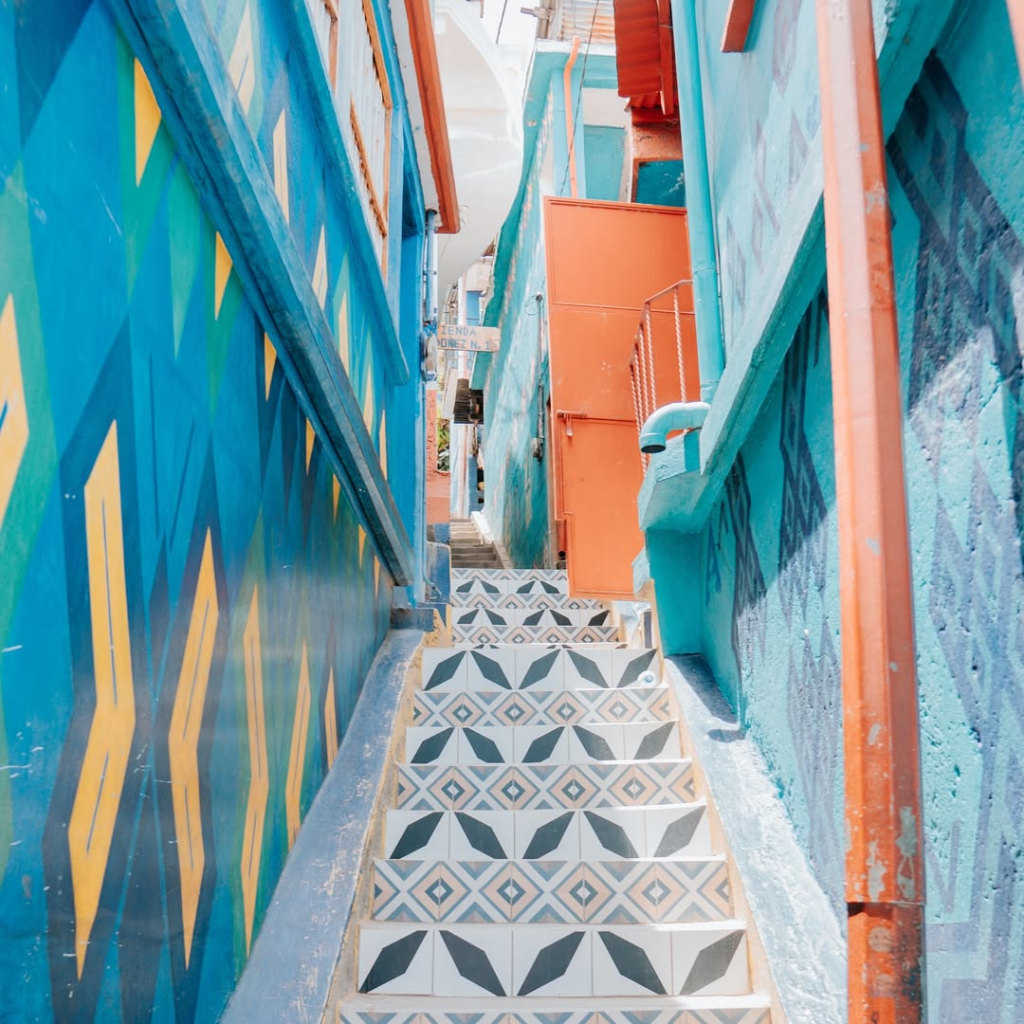
By day, in the neighbouring town of Santa Ca- tarina Palopó, we see how design is being used as a force for change. The Pintando Santa Ca- tarina Palopó project—an initiative led by Grupo Alta, the ownership group behind the hotel—is transforming this lakeside town of roughly 5,000 Kaqchikel Maya residents into a living canvas. With plans to paint more than 950 façades in bold geometric patterns inspired by ancestral textiles, the project revives local pride, creates jobs, and turns the town into a cultural landmark. Guests at Casa Palopó can even volunteer to help paint.
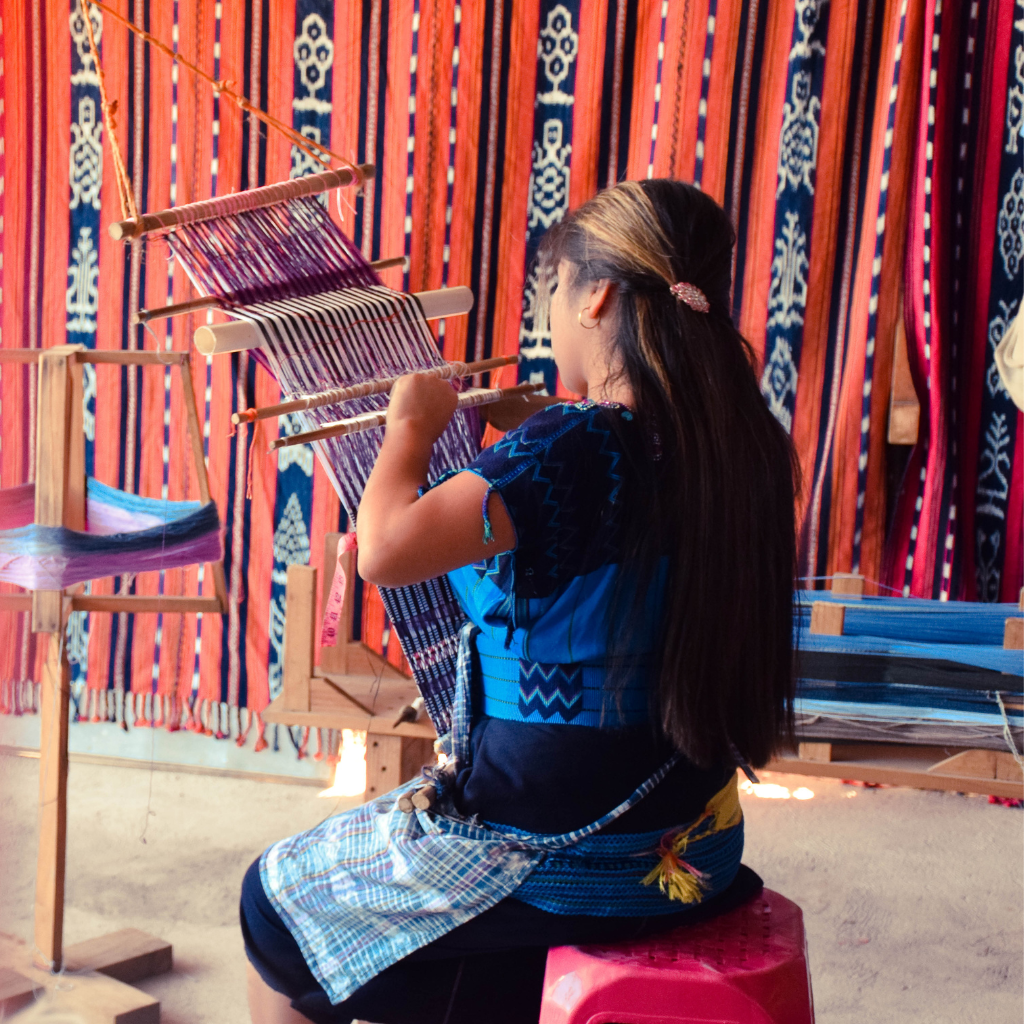
Inside By Katy Jay, the hotel designer’s boutique in Santa Catarina, shelves display artisanal pieces like wooden serving pieces, woven baskets and ceramic bowls, each representing the region’s craft traditions. I’m invited to try my hand at weaving on a miniature telar de cintura (traditional backstrap loom). My guide explains how cotton threads are dyed with natural pigments—hibiscus for purples, chipilín leaves for greens and cochineal insects for reds—before showing me how to weave them into a bracelet to take home.
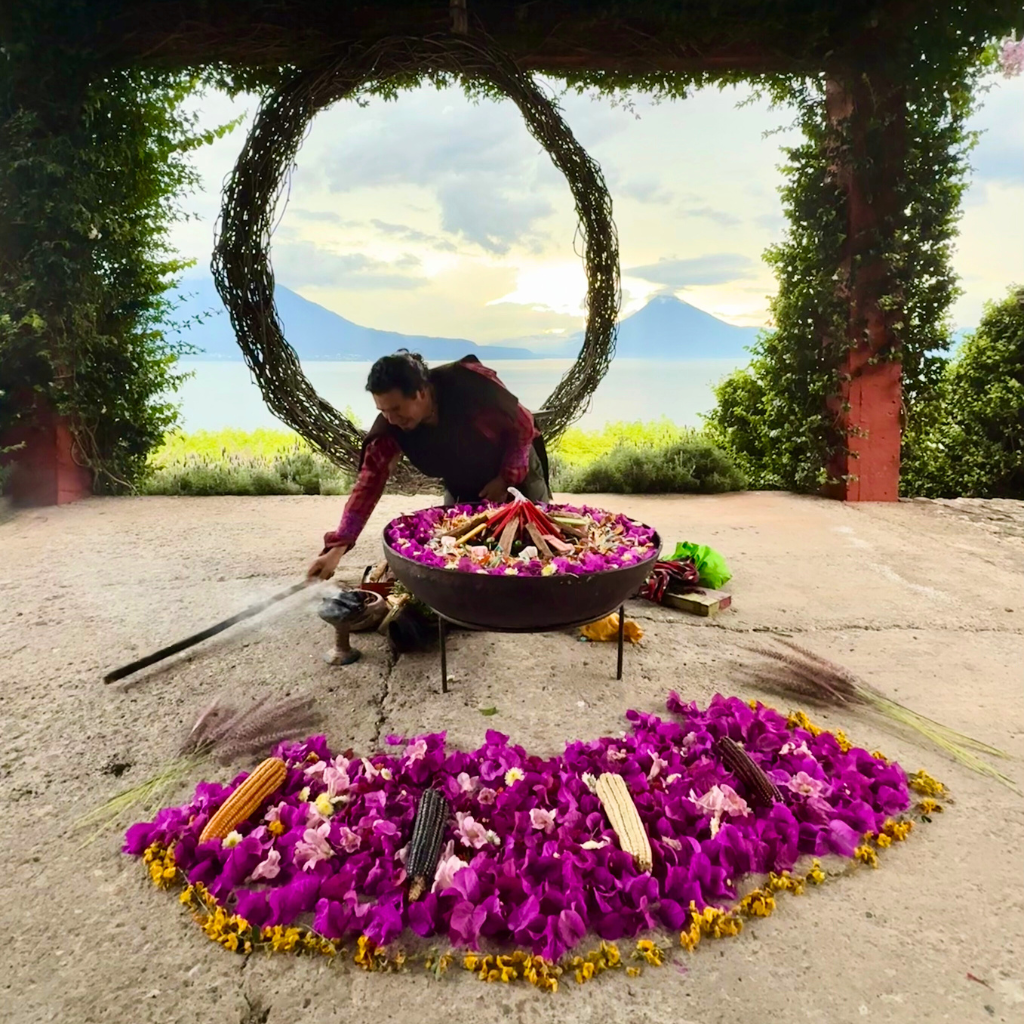
Our final night brings something sacred. At sunset, we meet our Mayan shaman, Tomas, for a private fire ceremony on the hotel terrace. We sit around a circular altar of flowers, corn and candles as he takes our birth dates to reveal our nahuales—Mayan spirit companions—before guiding us through a cleansing ritual. The fire crackles as the sky shifts from coral to black, and I can’t imagine a more meaningful ending than this glimpse into living Maya culture, which has been threaded into almost every textile, turndown and tour stop of my trip.
Later, returning to my suite, I find the al fresco bath drawn with rose petals, the same hue as those in the altar. It’s a simple gesture, and one any guest can request, but in context, it feels like magic. In Guatemala, as in design, it’s all in the details.
The List
Where to Stay
Villa Bokéh (Antigua) and Casa Palopó (Lake Atitlán), which features its own heli-pad for 30-minute air transfers that can be arranged by the hotel.
What to Eat
Shrimp ceviche (Casa Cristal at Villa Bokéh); Fagottini stuffed with icha-j pá sakil (6.8 Restaurant at Casa Palopó); Beef asado (Kinnik at Casa Palopó)
What to Do
Take a 20-minute boat ride to the artisan village of San Juan La Laguna for locally made chocolate, coffee, ceramics and handwoven goods.
What to Drink
Exceptional coffee, grown in volcanic soil; a cocktail made with Zacapa rum
What to Bring Back
Salted 70% chocolate from Xocolatl (San Juan La Laguna); a woven throw or tortilla basket (Santa Catarina); a carved charm featuring your Mayan nahual from Casa del Jade (Antigua).