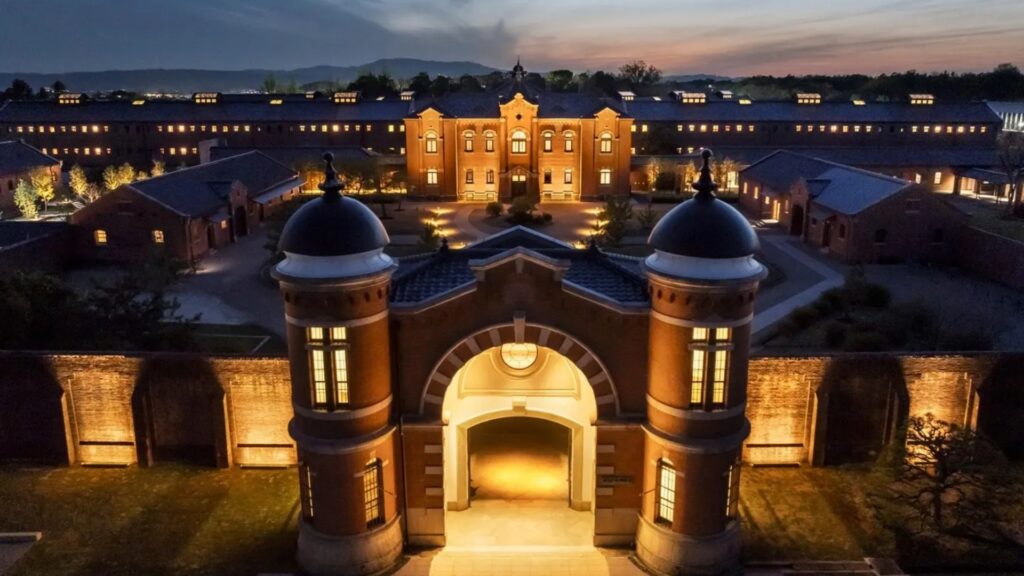
Palace Hotel Tokyo

Palace Hotel Tokyo Just Launched an Exclusive Dior Stay Package

The only Japanese hotel with both Forbes Five Stars and Michelin Three Keys has partnered with Dior on a limited, one-booking-per-day luxury experience in Tokyo.

Dior Bamboo Pavilion Tokyo
Dior Bamboo Pavilion
Palace Hotel Tokyo Dior Cafe
Dior Café

If you’re heading to Tokyo in 2026 or early 2027, Palace Hotel Tokyo just gave you a strong reason to book a night.

The city’s most decorated hotel – the only property in Japan to hold both Forbes Travel Guide’s Five Stars and the Michelin Guide’s Three Keys – has launched “A Touch of Dior at Palace Hotel Tokyo,” an exclusive collaboration timed to the opening of the Dior Bamboo Pavilion in Daikanyama.

The Pavilion itself is worth the visit on its own. Located in one of Tokyo’s most stylish neighbourhoods, it’s a concept store built around Christian Dior’s lifelong love of Japan, featuring Jonathan Anderson’s latest collections and limited-edition pieces sold nowhere else. The gold aluminium façade, inspired by Japanese bamboo forests, is lit up at night. Outside, a botanical garden by landscape designer Seijun Nishihata adds another layer.

Palace Hotel Tokyo Suite

The stay package wraps around that experience with serious attention to detail. Guests receive a privately guided tour of the Pavilion with return transfer from the hotel, breakfast at the guest’s choice of venue, Club Lounge access, a Dior-inspired in-room floral arrangement, a welcome bottle of Champagne (Veuve Clicquot for Club rooms, Ruinart Blanc de Blancs for suites), a box of Les Bonbons Bouton de Christian Dior chocolates, and a Miss Dior cocktail at the hotel’s Lounge Bar Privé.

The food highlight: a meal at Café Dior by Anne-Sophie Pic, the world’s most Michelin-starred female chef, who has created a seasonal menu exclusively for the Pavilion.

The package runs through March 31, 2027, limited to one booking per day. Book your stay at en.palacehoteltokyo.com.

Guadeloupe Voiles Bleues Villas

Green Guadeloupe: A Travel Guide to the Caribbean’s Lesser-Known Gem

In the French Antilles, real luxury lies in natural beauty.

By Eve Thomas

For some tropical vacation destinations, the dream is to find that one perfect spot, that dream beach or green valley where reality looks as good as the brochure. In Guadeloupe, that dream becomes reality around every corner.

The French overseas territory is an archipelago with two main sections shaped like a butterfly. I start my visit on leafy, mountainous Basse-Terre, which attracts outdoorsy types who want nature hikes or exciting sports like mountain biking and diving. On our first morning, we head to Guadeloupe National Park, a tropical rainforest that’s home to myriad ferns, orchids, and several houseplants I recognise from my own home, only here they’re enormous and thriving. As we amble along the cobblestone walkway (a bit slippery in spots, but not too challenging, and notably absent of any scary fauna) we greet hikers forging further ahead, all the way up to the active volcano La Soufrière.

In search of a more lowkey experience, we head to the Deshaies Botanical Garden for lunch. With a table overlooking some wading pink flamingos, we dine on classic local delicacies: grilled mahi mahi, Indian-inspired Colombo chicken, and accras (salt cod fritters), plus some planter’s punch and an impressive French wine list. Refreshingly, all the fruit on our plates (pineapple, melon, bananas) is locally grown. Not always a given, in the Caribbean.

salt cod fritters Guadeloupe
Waterfall Guadeloupe National Park

Alongside aviaries of parrots and some mischievous miniature goats, the highlight of the garden may be the sheer number of wild hummingbirds enjoying the blossom buffet. Despite seeing dozens, each one feels special, to me and to the birders who wander by, binoculars at the ready.

After lunch, we head to the coast to experience the national park’s watery side: a marine reserve. On a boat tour of the mangroves, we learn about how essential they are to the whole ecosystem, their roots protecting young fish from predators, and the islands themselves against natural disasters. Another little paradise is revealed as we drop anchor by a sandbar, high enough for us to stand in the water, a cup of rum punch or guava juice in hand. And beneath the sea, snorkel affixed, I find an underwater paradise full of angelfish and sea turtles.

A few days later, we move to Grande-Terre island. Flat, more populated, and brimming with golden beaches, it draws tourists in search of bigger hotels and bustling nightlife. Still in search of natural beauty, we wend our way along the coast, finding oases wherever we look. All beaches are public, and parking is quite “casual,” making it easy to stop on a whim. We pause for fresh coconut water one minute, then a swim in a hidden alcove the next. An unassuming roadside gallery, Kreol West Indies, turns out to be a revelation of Guadeloupe history and modern art.

When we check into a chic Les Voiles Bleues villa, the modern design and private chef dinner set a polished tone, but it’s the nightly frog song that becomes the most memorable amenity. When we visit five-star hotel La Toubana for lunch, the lobster tagliatelle and Sisley spa may be showstoppers, but it’s the sea view beyond the infinity pool that really takes my breath away. I know by now that, in Guadeloupe, luxury doesn’t just lie in the architecture or the menu. It is all around you: in the land, in the details, in the secret spots and natural beauty. You just need to know where to look.

Guadeloupe

The List: Guadeloupe

STAY: At Les Voiles Bleues, guests settle into architect-designed villas that balance privacy and proximity to the coast, making it easy to slip between poolside calm and nearby beaches.

EAT: Sugarcane chicken and ginger-fried bream at Jangal Kafé; lobster pasta at La Toubana Hôtel & Spa; waterside accras and Planter’s punch at Le Kanaoa.

DO: Take the ferry to Terre-de-Haut and explore on foot, including historic Fort Napoléon, home to a garden full of iguanas and sweeping panoramic views.

DRINK: The best French wine list in the country at 619 Restaurant; a flight of rum against the sugarcane fields at Longueteau Distillery.

BRING BACK: A box of “Torment d’amour” pastries from Les Saintes Islands (first made by sailors’ wives to welcome them home); a piece of original art or an antique print from Kreol West Indies gallery and museum.

MSC Sandy Cay private island

Sandy Cay: MSC’s New Luxury Private Island Retreat Opens in the Bahamas in 2028

The cruise group’s second Bahamian private island promises seclusion and elevated experiences for MSC Cruises and Explora Journeys passengers.

MSC Group’s cruise division has announced Sandy Cay, a new luxury private island set to open in the Bahamas in 2028. Located adjacent to Ocean Cay MSC Marine Reserve, it will be exclusively available to MSC Cruises and Explora Journeys guests.

Where Ocean Cay delivers a full-scale resort experience, Sandy Cay is designed around seclusion. The island takes its name from its aragonite sands – among the purest and brightest in the world – and that elemental, unhurried quality defines the whole concept. Fewer people, more space, a closer connection to the natural rhythms of the Bahamian ocean.

MSC Cruises Sandy Cay private island

MSC frames Sandy Cay as a complement to Ocean Cay rather than a replacement, giving guests two distinct modes of private island experience within the same marine reserve. Both destinations are continuing to evolve. Separately, MSC has announced a round of upgrades coming to Ocean Cay: new dining venues, family and adults-only beach concepts, expanded relaxation areas, and new marine conservation experiences.

Private island stops have become one of the most coveted elements of a Caribbean cruise itinerary, and MSC is clearly investing in owning that space. Sandy Cay adds a more refined, intimate option to what’s already a strong private destination offering.

Sandy Cay opens in 2028, available exclusively to MSC Cruises and Explora Journeys passengers. More at msccruises.com.

GoWay Road Trip Itineraries

Road Trips Are Having a Moment, and Goway Now Has 80+ Ways to Do Them Right

New fly-drive and guided road trip packages give travellers more structure without sacrificing the freedom that road trips are loved for.

Road trips have always promised something package tours struggle to replicate: the freedom to pull over when the view earns it, linger in places a bit longer than scheduled, and discover the parts of a destination that aren’t on the highlight reel. The catch has always been the planning – which routes are actually worth it, which roads are genuinely driveable, which detours pay off.

Goway Travel is making a case that you don’t have to figure that out alone. The Canadian tour operator has expanded its road trip product line to over 80 packages spanning 23 countries, built for independent-minded travellers who want the logistics handled and the experience left open.

GoWay Grand Canyon Road Trip Travel Itinerary
Grand Canyon, Nevada

The concept positions Goway less as a tour company and more as a travel architect. The framework – the route, the accommodation, the car – is sorted. The experience still feels personal. It’s the fly-drive model at scale, extended to destinations that range from the obvious (New Zealand, Ireland, Iceland) to the less charted. Some examples: 

The timing makes sense. Road trip travel has been gaining traction as travellers look for alternatives to group tours and resort stays. Skyscanner recently flagged the fly-drive approach as one of the best ways to cut costs while unlocking less-visited destinations – fly into a smaller regional hub, drive to where you actually want to be. For Canadian travellers, international road trips in Europe, Southern Africa, and the South Pacific have been among the fastest-growing booking categories heading into 2026.

With 80-plus options now in the portfolio, Goway’s expanded lineup gives travellers – and the advisors helping them plan – a serious set of new options for clients who want to move at their own speed.

Borneo Malaysia Wildlife Travel Tour

Borneo to be Wild

A journey across Sabah, guided by wildlife and waterways.

By Steve Gillick

The Sabah Tourism Board’s slogan, Feel Sabah North Borneo, speaks to a deep-rooted connection with wilderness, wildlife, and serenity. It calls to travellers seeking a place where escape feels not just memorable, but meaningful.

The island of Borneo is shared by the Malaysian states of Sarawak and Sabah, five Indonesian provinces, and the nation of Brunei Darussalam. Our journey begins in Kota Kinabalu, on Sabah’s west coast, fronting the South China Sea. After a restful night at the Hyatt Regency, we set off for Mount Kinabalu with Mr. William, our affable guide from Amazing Borneo Tours.

Rising to 4,095 metres (13,435 feet), Mount Kinabalu is Malaysia’s highest peak and is revered locally as the resting place of the soul. Our two-hour drive unfolds through mountain forests and wildflower-strewn landscapes, with stops at the Kadamaian (Peaceful) Waterfall, the tallest in the country, and the villages of Tamparuli and Tanak Nabalu.

Photos by Steve Gillick

The purpose of the journey is threefold: to photograph Sabah’s extraordinary birdlife, to hike forest trails, and to practise shinrin-yoku, the Japanese art of forest bathing — a mindful way of slowing down, de-stressing, and reconnecting with nature. Among Sabah’s 688 recorded bird species, we spot Chestnut-hooded Laughing Thrushes, Bornean Green Magpies, and Black-sided Flowerpeckers as we explore the park’s lush trails. At Kiau Gap View, a sweeping panorama opens beside a monument honouring the spiritual bond between Mount Kinabalu and the Kadazan-Dusun, Sabah’s largest Indigenous group, as well as the park’s UNESCO World Heritage designation.

A one-hour flight east to Sandakan ushers us into a different realm of adventure. After checking in to the Sabah Hotel, we head straight to the Rainforest Discovery Center in Sepilok, where winding paths, canopy bridges, and observation towers offer intimate encounters with wildlife. Within minutes, we’re face-to-face with a striking Diard’s Trogon. Nearby, a mother orangutan and her baby forage among fruiting trees, while Thick-billed Spiderhunters probe spiky red calliandra blossoms for nectar.

At the neighbouring Sepilok Orangutan Rehabilitation Centre, daily feedings take place at 10:00 a.m. and 3:00 p.m. Rangers arrive with reed baskets brimming with fruit and vegetables, greeted by orangutans already waiting on the platform, while others swing in on ropes from the surrounding forest. Later, along the boardwalk, our focus shifts to reptiles and nocturnal curiosities: a Bornean Keeled Pit Viper, a Grey-tailed Racer, and a Flying Lemur clinging to a tree trunk. At the Nursery, young orangutans and macaques play and cuddle in lively family groups.

Just down the road, the Bornean Sun Bear Conservation Centre offers forested enclosures and elevated observation points where visitors can watch and learn about the world’s smallest bears.

Photos by Steve Gillick

Our immersion in nature deepens further in Sukau. After spotting our first Oriental Pied Hornbill, we board a motorboat on the Kinabatangan River to reach Borneo Nature Lodge. Over two days and six river excursions — including a night cruise — we experience tropical rainstorms, blazing sun, postcard-worthy sunrises and sunsets, and remarkable wildlife sightings: Proboscis Monkeys, Long-tailed Macaques, Silver Langurs, Borneo Pygmy Elephants, crocodiles, and an astonishing array of birds, from hornbills and kingfishers to eagles, bee-eaters, herons, storks, and owls.

After a final dawn cruise, we return to Sandakan Airport carrying the afterglow of Sabah — a destination that delivers a true jolt to the senses. It’s a place where wildlife inspires, adventure sharpens awareness, and the memory of the experience lingers vividly long after the journey ends.

The List: Sabah, Malaysia

STAY
Hyatt Regency Kota Kinabalu delivers five-star Sabahan hospitality on the South China Sea waterfront. Book a seaview room for sunrise and sunset views. It’s a short walk to Wisma Merdeka, the handicrafts market and the Segama Bridge Night Market.

EAT
Near Kinabalu Park, head to Farmers Restaurant in Kundasang for the Kamppungku platter: fried fish, rice, turmeric chicken and more. In Tamparuli, Restoran Wun Chiap is known for Temparuli Mee — fried noodles with pork — best with a cold Tiger Beer.

DO
Rise at 4:30 am and head to Kota Kinabalu’s Fish Market. It’s loud, colourful and unforgettable, with puffer fish, snapper, prawns and more laid out as the city wakes.

DRINK
Caffeine-free Sabah Tea grown in the highlands, and wood-fired Tenom Coffee made with local Robusta beans.

BRING BACK
Patterned Sabah batik fabric, handwoven rattan baskets and amplang (crispy fish crackers).

Royalton Resort Antigua

Three Destinations, One Elevated Standard at Royalton

For travellers who expect more than just a beautiful setting, Royalton Hotels & Resorts continues to redefine luxury all-inclusive experiences across the Caribbean and Mexico. With design-forward resorts, elevated culinary offerings, and a signature focus on personalization, Royalton presents three standout destinations that speak to different styles of indulgence—without compromising on sophistication.

Curated experiences in Antigua

Royalton CHIC Antigua, An Autograph Collection All-Inclusive Resort brings a bold energy to one of the Caribbean’s most breathtaking islands. Set against Antigua’s turquoise waters, this vibrant adults-only retreat blends social luxury with effortless elegance, enhanced by distinctive overwater suites and the resort’s signature overwater restaurant, Pescari. Designed for travellers who appreciate stylish spaces and curated experiences, Royalton CHIC Antigua is where beachfront days seamlessly transition into chic evenings. From elevated mixology to immersive entertainment, the resort embodies its philosophy of “Party Your Way”—allowing guests to define their own rhythm, whether that’s a sunset toast, a lively rooftop moment, or an intimate culinary experience above the water under the stars.

Royalton Resort Grenada
Royalton Resort Antigua

Refined island living in Grenada

Royalton Grenada, An Autograph Collection All-Inclusive Resort offers a refined sanctuary rooted in natural beauty and understated luxury. Perfectly positioned on the island’s lush southern coast, this resort delivers a serene escape for couples, families, and multigenerational travellers alike. The design reflects Grenada’s organic elegance, pairing contemporary architecture with panoramic ocean views. Guests are invited to slow down and reconnect—through thoughtfully curated dining, tranquil spa experiences, and Royalton’s signature personalized service. It’s a destination that celebrates authenticity while maintaining the brand’s modern, upscale sensibility.

Royalton Resort Cancun

Reimagined luxury in Riviera Cancun

Meanwhile, Royalton Riviera Cancun, An Autograph Collection All-Inclusive Resort & Casino, stands as a flagship expression of Royalton’s versatility and scale—now fully renovated and reimagined to deliver a dynamic luxury experience in one of Mexico’s most sought-after destinations. Ideal for families, groups, and discerning travellers seeking variety, the resort seamlessly blends high-energy entertainment with moments of calm and exclusivity. With expansive pools, world-class dining, and dedicated spaces designed for every type of traveler, Royalton Riviera Cancun offers a vibrant yet polished take on the all-inclusive concept, anchored by the brand’s commitment to innovation and comfort.

Together, these three resorts illustrate Royalton Hotels & Resorts’ ability to adapt luxury to different lifestyles and destinations—whether it’s adults-only sophistication in Antigua, tranquil elegance in Grenada, or dynamic beachfront living in Cancun. For travellers and travel advisors alike, Royalton continues to offer not just destinations, but distinct experiences, each elevated, intentional, and unmistakably Royalton.

Looking ahead, Royalton Hotels & Resorts continues to shape its future with intention. The opening of Royalton Vessence Barbados on June 1st introduces a new expression of refined, experience-driven travel, while the addition of Paraíso de la Bonita, A Luxury Collection Resort, marks a meaningful evolution of the brand’s luxury portfolio.

Book your luxury escape with Sunwing at Royalton Hotels & Resorts today.

Maui Hawaii Travel Guide

Magical Maui: A Slow-Travel Guide to the Valley Isle

By Ann Ruppenstein

Hoʻomau: to continue, persist, renew, perpetuate and persevere.

A different Hawaiian word of the day is placed against my pillow each afternoon at the Wailea Beach Resort – Marriott, Maui, but this first card—describing Hoʻomau—resonates most. It speaks to the way Maui protects its land, culture and identity, and to the responsibility of carrying that stewardship forward for generations.

Haleakala national park maui hawaii
Haleakalā National Park
outrigger canoe maui hawaii
Outrigger Canoeing at Wailea Beach Resort - Marriott

On my first morning, we begin on shore with a traditional Hawaiian chant (an oli) offered before pushing the outrigger canoe into the water. Moments later, I’m gliding across the south shore for a guided paddle (hoe waʻa), the shoreline receding behind us. Our guide shares stories of wayfinding and celestial navigation, of reading swells and stars long before GPS. Hawaiian green sea turtles and the rarer hawksbill briefly surface beside us. With each synchronized stroke—left, then right—stress loosens its grip. 

With the slopes of Haleakalā National Park rising behind us and the West Maui Mountains in the distance, palms lining the coast and mynah birds calling overhead, the scene feels impossibly cinematic. It is, in fact, just down the beach from where The White Lotus filmed its first season—though here, the drama is traded for calm.

“Responsible travel is deeply intertwined with Hawaiʻi’s values and culture, and visitors are increasingly mindful of the role they play when travelling to the islands,” says Laurie Garzon, director of sales and marketing for the resort. “In ancient times, Wailea was home to canoeing, fishing and life at the water’s edge. We’ve seen renewed interest in outrigger canoeing as travellers seek more meaningful experiences.”

Seasonal, by the Sea

As golden hour slips into soft pink, we head off-resort to Koast Maui, a relatively new addition to Wailea’s dining scene. The restaurant’s ethos is simple: honour Hawaiʻi’s natural abundance by working in lockstep with local farmers and fishermen.

Koast Maui seafood

“Our goal is to be island sustainable,” says Top Chef Masters winner and James Beard Award–nominated chef Chris Cosentino, describing a dragonfruit aguachile topped with just-caught tuna from a fisherman named Chimo. “Everything is based on what we have here. We wait to see what’s coming through the back door. That’s why the menu says cut of the day, crudo of the day. We evolve quickly with what’s available.”

Dry-aged wagyu, aged with kombu seaweed, is showcased prominently at the front of the restaurant. The kelp imparts umami depth while accelerating the aging process.

“You’re sitting here looking at the ocean, so why not age your meat in beautiful sheets of kelp?” Cosentino says. “The kombu gives you the flavour profile of 48 days in about 28.”

Daily texts from fishermen dictate the night’s offerings—tuna, mahi-mahi, opakapaka, even local lobster caught by an extreme kayak fisherman known as Jon Jon. Cosentino’s nose-to-tail philosophy extends to matanza-style tuna tripe, simmered with tomato, capers and spice, a Sicilian-inspired dish that surprises with its richness.

Each course emerges like a work of art, but dessert is a showstopper: a whole, caramelized Maui Gold pineapple served with layers of coconut ice cream, lilikoi curd, and toasted Italian meringue.

Don’t Worry, Be Happy

When I’m not above the clouds at Haleakalā National Park for sunset—the summit rises more than 10,000 feet above sea level and is among the best stargazing spots in the Pacific—or sailing toward the crescent-shaped Molokini Crater, home to more than 250 species of marine life and famously clear water, I surrender to stillness.

At the adults-only Olakino infinity-edge pool, wellness programming rotates daily. A mini massage melts into a sound healing session. Later, an acoustic guitarist strums softly as morning drifts into afternoon. There is a champagne sabering ritual at sunset, and suddenly the day is wrapping up. I’ve mastered the art of doing absolutely nothing.

“The experience is designed to leave guests feeling rested, restored and fully immersed in the natural rhythm of Maui,” Garzon says.

Mission accomplished.

Travel With Care

Responsible travel is not a trend in Hawaiʻi; it’s an expectation. Visitors are encouraged to honour the concept of mālama ʻāina—to care for the land. In practice, that means guidelines like staying on marked trails to protect fragile ecosystems, never touching or feeding marine life such as sea turtles and monk seals, and using reef-safe sunscreen free of oxybenzone and octinoxate to help preserve coral reefs. These small efforts add up, and are a modest ask in return for all that Hawaiʻi has to offer.

“For Canadians who are being more intentional about where they travel, Hawaiʻi stands out as a destination rooted in sustainability and harmony with the natural environment,” says Garzon. “Within a single destination, visitors can experience extraordinary natural landscapes and traditions that are still very much alive.”

The List; Maui, Hawaiʻi 

STAY

Set between two golden-sand beaches, the 22-acre oceanfront Wailea Beach Resort – Marriott, Maui makes a picturesque home base. Don’t miss the onsite Te Au Moana Luau, where storytelling, hula and fire dancing unfold against the sea. Visit between November and April to spot migrating humpback whales offshore.

EAT

The sesame- and nori-crusted ahi tuna at Humble Market Kitchin by Roy Yamaguchi is a standout. At Koast Maui, the daily catch is a must. And for a quintessential local bite, try teriyaki spam musubi from a neighbourhood convenience store—the canned meat staple took root in Hawaiʻi during World War II and remains beloved.

DO

Watch the sun dip below a sea of clouds at Haleakalā National Park, then stay for stargazing. Snorkel with a luxury outfitter such as Alii Nui Sailing Charters to Molokini Crater for vibrant reef life and exceptional visibility.

BRING BACK

A hand-picked Maui Gold pineapple, prized for its sweetness and low acidity. The Maui Pineapple Farm Tour includes a complimentary packaged pineapple with each visit.

Nassau Bahamas Travel Guide

Quick Trip to Nassau & Paradise Island

The ultimate Bahamas travel guide: where to stay, eat and explore.

By Ann Ruppenstein

With powder-soft beaches and impossibly turquoise waters, Nassau and Paradise Island deliver the Bahamas most travellers imagine—but there’s far more here than a stretch of sand. Snorkel through an underwater sculpture garden, follow in the footsteps of James Bond, linger over long dinners in historic dining rooms, then retreat to one of the island’s landmark resorts or secluded villas. With new nonstop flights from Montreal and Toronto on Porter Airlines, alongside expanded service from Air Canada and WestJet, the capital of The Bahamas now sits firmly within long-weekend reach.


Sacred Space The Cove Bahamas
Bahamas underwater museum

WHAT TO DO

Snorkel right off the shore at Clifton Heritage National Park, located on the western end of New Providence, to come face-to-face with a captivating underwater coral reef sculpture garden. The standout is Ocean Atlas, believed to be the world’s largest underwater sculpture, weighing 60 tons and rising 18 feet from the seabed. Movie buffs will also want to see the remnants of an old prop plane used in the filming of Jaws: The Revenge. Back on land, don’t miss Sacred Space, a powerful series of wooden sculptures dedicated to enslaved African women. The installation was created by Bahamian artist and sculptor Antonius Roberts and Tyrone Ferguson. 

Junkanoo Bahamas

If you can’t make it for Junkanoo, the vibrant cultural festival that hits the streets of downtown Nassau in the wee hours of Boxing Day and New Year’s Day, the Educulture Junkanoo Museum provides deeper context. Founder Arlene Nash Ferguson shares the history, craftsmanship and community spirit behind the elaborate, handmade costumes.

The Ocean Club, A Four Seasons Resort
The Ocean Club, A Four Seasons Resort, Bahamas

WHERE TO STAY

Landmark resorts like Atlantis and Baha Mar continue to garner attention, but for a more tranquil escape, check into The Ocean Club, A Four Seasons Resort, Bahamas. Spanning 35 acres on Paradise Island, the idyllic luxury property served as a prime filming spot for Casino Royale, starring Daniel Craig as James Bond. At the Martini Bar, order the Passionfruit Chili or a Vesper—shaken, not stirred—where longtime bartender Keith Cash has held court for more than three decades.

Book an indulgent spa service in one of eight Balinese-style villa treatment areas that come complete with a daybed, shower and outdoor jacuzzi tub. The soothing and skin-nourishing Coconut Poultice Massage features a heated coconut compress rich in vitamins E and K that’s applied to pressure points to release tension.

The resort’s 107 accommodations range from spacious rooms and suites to two-bedroom plunge-pool bungalows and private beachfront villas. Multiple pools, a long stretch of white sand and the Versailles Gardens, home to a 12th-century French cloister, lend the property a sense of scale and history. Artwork throughout includes large-scale abstract and contemporary pieces by mother and son Canadian artists Jane and Jonah Waterous.

DUNE by Jean-Georges Bahamas
DUNE by Jean-Georges

WHERE TO DINE 

Overlooking the Atlantic, DUNE by Jean-Georges features a menu by Chef Jean-Georges Vongerichten that moves from yellowfin tuna tartare to red snapper crusted with nuts and seeds. The banana cake with praline crunch and ice cream is a standout, so save room for dessert.

Outside the resort, head to Graycliff Restaurant for a fine-dining experience with nightly entertainment in a longstanding family-run establishment that has served the likes of Billy Joel, Beyoncé, Jay-Z and the late Sean Connery. For a romantic evening, request a spot in the garden under the stars surrounded by a canopy of foliage and string lights. The most coveted reservation is the private table inside its wine cellar, home to more than 250,000 bottles. From the fresh lobster ravioli to the rack of lamb with focaccia crumbs, garlic and parsley crust, the hardest decision will be narrowing down what to order. 

Kenya savanna stargazing safaris

Under Kenya’s Night Sky: The Ultimate Stargazing Safari Experience

Discover why Kenya is one of the best dark sky destinations for luxury stargazing safaris.

By Mitchell McClung

Kenya has always been synonymous with spectacle. By day, the drama unfolds across golden plains where elephants move in slow procession and escarpments glow in the late afternoon light. But when the sun drops below the horizon, another kind of theatre begins.

For travellers who believe luxury is defined not only by thread counts and wine lists, but by access to rare, humbling moments, Kenya is quietly becoming one of the world’s most compelling destinations for stargazing.

Thanks to its position almost directly on the equator, the country offers a remarkable celestial vantage point. Over the course of the year, both northern and southern hemisphere constellations are visible here. Orion rises high above the savannah. The Southern Cross arcs across the sky. On especially clear nights, Saturn can appear nearly overhead, sharp and luminous.

Just as important is what isn’t here: artificial light. Large swaths of Kenya — including Samburu, Laikipia, and parts of the Maasai Mara — remain far from urban glare. These regions fall at the darkest end of the Bortle Scale, the international measure of light pollution. On moonless nights, thousands of stars emerge. The Milky Way stretches across the sky in bright, textured bands. It is not subtle.

Sasaab Lodge Kenya
Sasaab Lodge
stargazing safaris Kenya
Sasaab Lodge

Safari camps are beginning to lean into this natural advantage. Open-air “star beds” allow guests to sleep beneath the constellations. Telescopes are set up near the fire pit after dinner. What was once simply sundowners and storytelling now often includes guided stargazing sessions, where guides point out planetary movements between the distant calls of hyenas. Some camps have even introduced astrophotography experiences, inviting guests to capture the night sky with the same reverence typically reserved for wildlife.

The movement is not only about tourism. Nairobi-based organization The Travelling Telescope, founded by Kenyan astronomer Susan Murabana Owen, has played a pivotal role in making astronomy more accessible across the country. Through mobile planetariums, laser-guided constellation tours, and community events, the organization blends science education with public engagement — often partnering with lodges to offer immersive guest experiences.

Murabana Owen’s work has earned international recognition, but its impact is perhaps best felt on a clear Kenyan night, when first-time stargazers tilt their heads back and realize just how much of the universe they have been missing. Her vision is simple and profound. The sky belongs to everyone.

In an era when light pollution dims much of the developed world, Kenya offers something increasingly rare: true darkness. The same stars that guided early navigators and pastoral communities still burn brightly above the savannah. And much like the wildlife that draws travellers here, the night sky is part of the country’s natural heritage, meant to be both experienced and carefully preserved. 

Here, the safari doesn’t end at sunset. It simply continues overhead. 

The List: Kenya

STAY
Set above the Ewaso Nyiro River in Samburu, Sasaab Lodge blends Moroccan-inspired design with wide-open Kenyan wilderness. Days unfold with guided game drives and camel treks; nights are made for lantern-lit dinners and, of course, extraordinary stargazing.

EAT
For something quintessentially Kenyan, try nyama choma – charcoal-grilled meat served with kachumbari tomato relish – a beloved staple best enjoyed communally.

DRINK
Order a dawa, Kenya’s signature cocktail of vodka, honey, lime and crushed ice. Created at Nairobi’s famed Carnivore Restaurant, its name means “medicine” in Swahili.

DO
Spend a day in Nairobi with a visit to the Sheldrick Wildlife Trust’s Nairobi Nursery, where orphaned elephants are cared for before being reintroduced to the wild.

BRING BACK
A blown-glass piece from Kitengela Glass, which also offers glassblowing workshops so you can craft your own keepsake.

Orient Express Venezia hotel

Orient Express Venezia Opens in a 15th Century Palazzo

Historic frescoes, canal views and Michelin-level dining define the Orient Express Venice debut.

Orient Express has officially entered the hotel space in Venice, opening Orient Express Venezia inside a restored 15th century palazzo in the Cannaregio district.

The property sits at the meeting point of two canals and, notably, marks the first time the historic residence has operated as a hotel in nearly 600 years . That sense of history is the main draw here. This is not a new build trying to feel old. It is the real thing, carefully restored. Original frescoes, carved ceilings, and grand rooms are still very much intact, but the overall feel is lighter and more livable than you might expect from a historic property.

Orient Express Venezia suite

The hotel has 47 rooms, suites, and residences, and no two are exactly the same. Some lean into classic Venetian style, while others feel more understated. The suites are the highlight, especially those with preserved ceiling details and canal views.

Food is a big part of the experience. At the centre is a fine dining restaurant led by three Michelin star chef Heinz Beck, bringing a more elevated, contemporary interpretation of Italian cuisine. Even if you’re not staying overnight (though you really should), this is likely to become a reservation worth making. The hotel’s La Casati is a less formal option, still centred around Italian ingredients and seasonal menus. 

Orient Express Venezia

Location plays in its favour. Cannaregio offers a different pace compared to the busiest parts of Venice. You are still close enough to reach the major sights, but far enough to feel like you are stepping into a more residential side of the city. The addition of canal views and garden spaces gives the hotel a quieter, more private feel.

For anyone who has already done Venice and is looking for something more distinctive, this is where the property really delivers. It feels less like a traditional hotel and more like staying in a beautifully restored home, with all the service and detail you would expect from a brand like Orient Express.