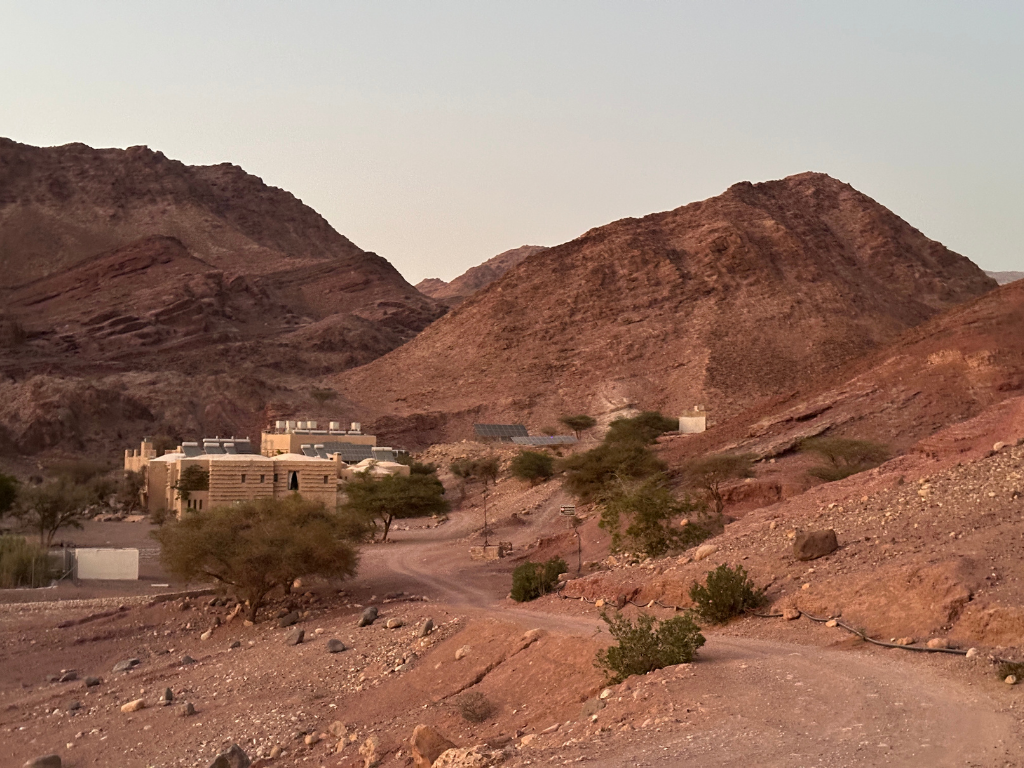
Feynan EcoLodge in Dana Biosphere Reserve, Jordan

The Road Less Travelled in Jordan

This candle-lit ecolodge on the edge of the Dana Biosphere Reserve is designed with purpose.

By Ann Ruppenstein

There are two main ways to reach Feynan Ecolodge—the easy way and the challenging way—and, to borrow from Frost, I stood contemplating the road not taken. After traversing uneven terrain, scrambling over boulders, wading through a stream, and even using my guide’s foot as a stepping stone to navigate steep slopes, somewhere along the 17-km Wadi Ghuweir Trail I began to wonder what it might have been like to take one of the 4×4 shuttles to the off-the-grid lodge instead of relying on my own two feet.

But as the scenery shifted dramatically, from a narrow slot canyon framed by tall red-rock walls to an open oasis lush with greenery and palms, and finally to hillsides dotted with hundreds of grazing goats, I knew I wouldn’t trade these spectacular views for the easy way out. After a brief rest, my Bedouin guide Ameen Saraheen brewed fresh tea over a cliffside fire, and we refuelled with flatbread, tuna, and hummus before continuing on.

Unlike a typical hotel check-in, I felt a true sense of accomplishment when I finally reached the front desk at Feynan Ecolodge and was greeted with warm smiles and a tray of the most refreshing homemade lemonade. The journey had been longer, but far more rewarding.
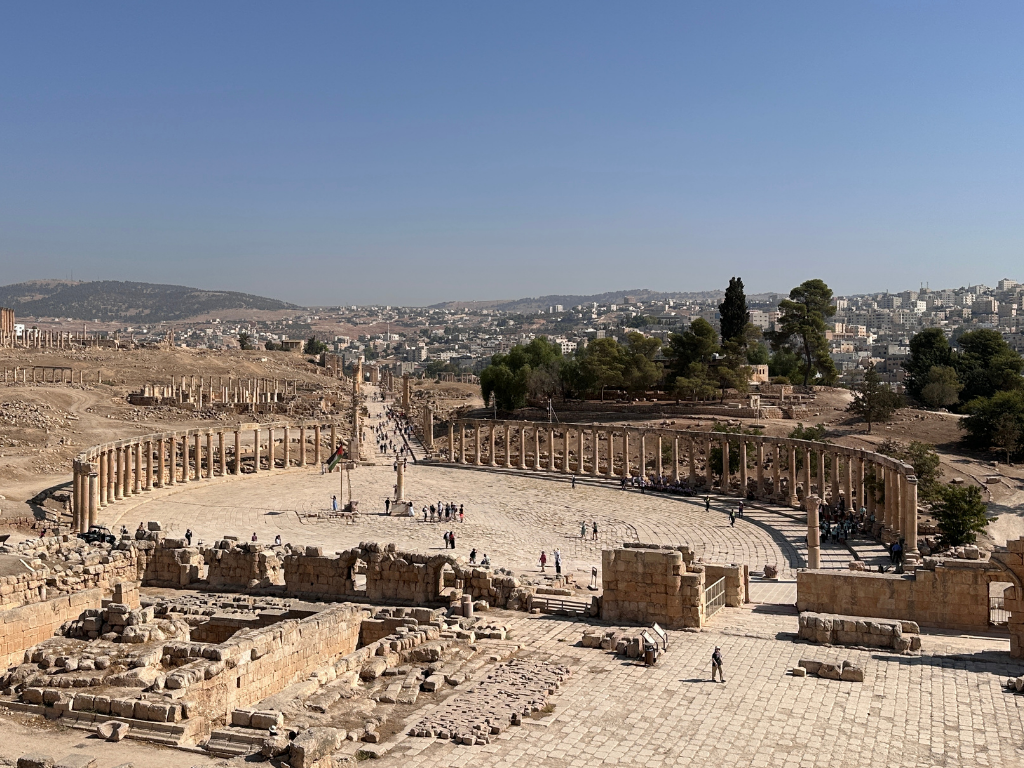
Jordan Ruins
Ruins in Jordan
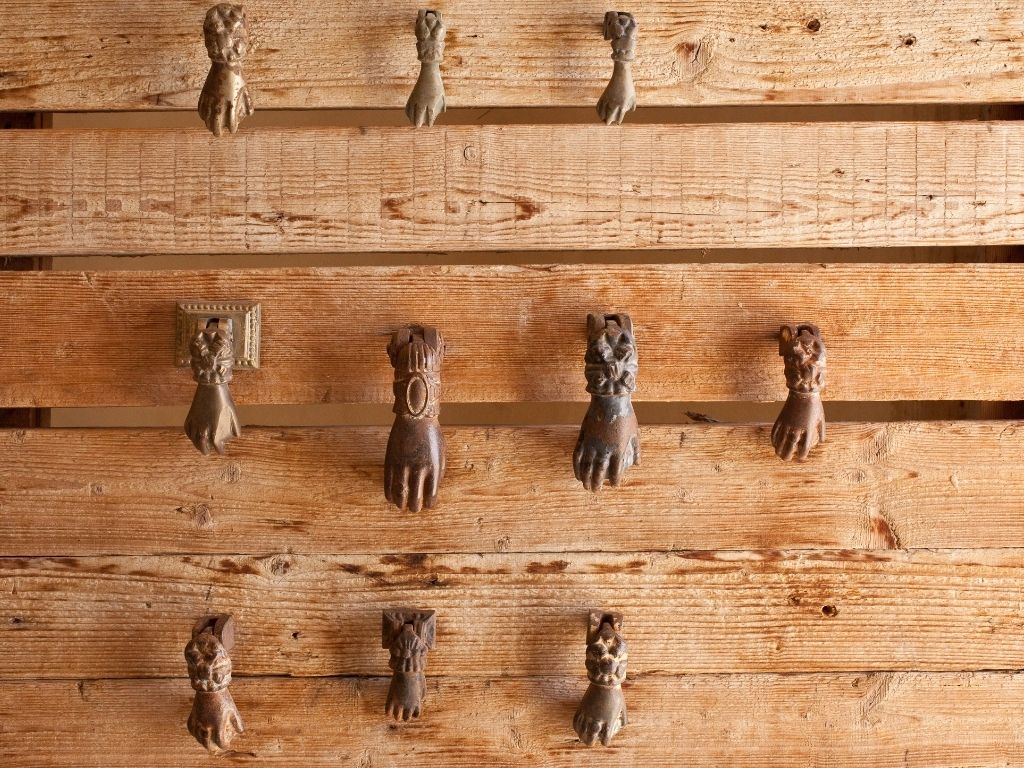
Feynan EcoLodge Jordan hands on door
Design details at Feynan Ecolodge

Located on the southwestern edge of the Dana Biosphere Reserve, Jordan’s largest nature reserve, the 26-room lodge was designed by architect Ammar Khammash and developed by the Royal Society for the Conservation of Nature.

“The idea was to build something modern in sustainability—having the least possible impact on the environment—while benefiting one of the poorest communities in Jordan,” explains Nabil Tarazi, founder and CEO of EcoHotels, which manages the property. “It became one of the first sites in Jordan to implement solar power. Instead of electric lighting throughout, candles are used in most areas—and those candles are produced onsite by local Bedouin women.”

Beyond generating most of its energy from the sun, the ecolodge was founded on supporting the Bedouin families in the surrounding area. For example, all of the bread served at the lodge is made by a local woman, Um Khalid, providing her family’s main source of income.

“She makes our bread three times a day, and we actually pay almost double what you’d pay for a loaf in Amman,” says Tarazi. “The idea is to help her run her own business.”

Meaningful connections with nearby families are a big part of staying here. The lodge links guests with Bedouin guides for treks of varying lengths, from sunrise and sunset hikes to full-day adventures like mine. Even non-guests can arrange excursions, as the Wadi Ghuweir Trail is one of the most scenic stretches of the Jordan Trail, a 675-km route from Um Qais in the north to Aqaba in the south that takes roughly 40 days to complete—a Middle Eastern rival to the Camino de Santiago. For me, one day was enough to capture its essence.

“It’s a whole experience, not just a place to stay,” notes Abeer Tannous, marketing and business development executive for EcoHotels.
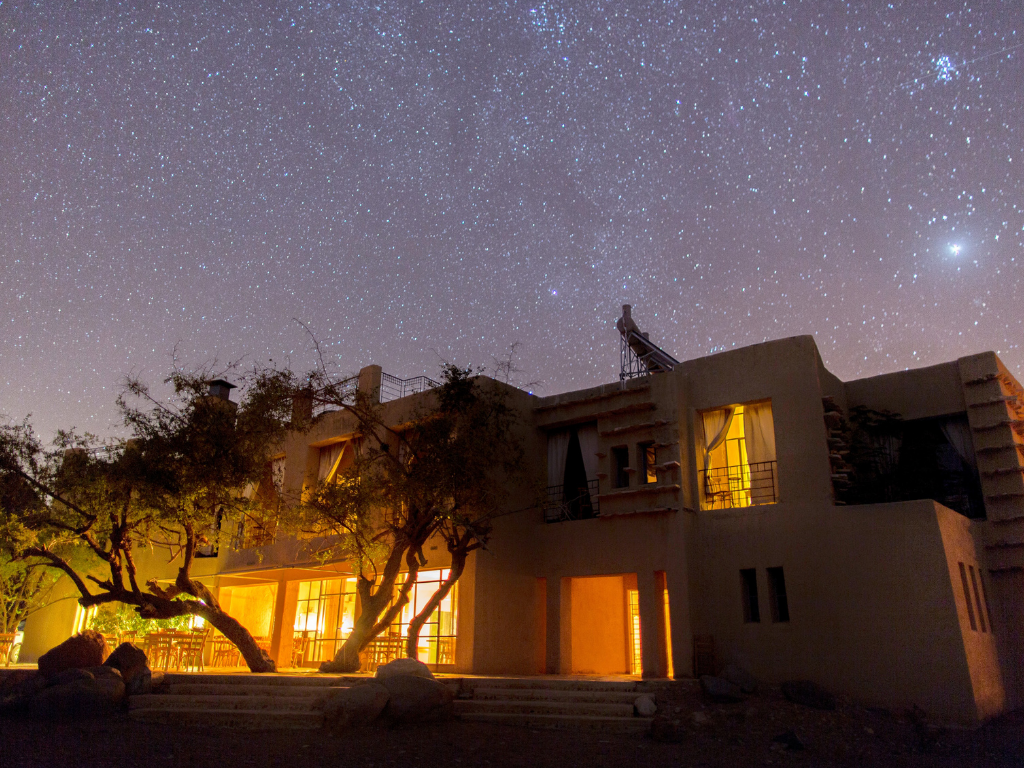
Stars visible above Feynan EcoLoge in the dark sky Dana Biosphere reserve
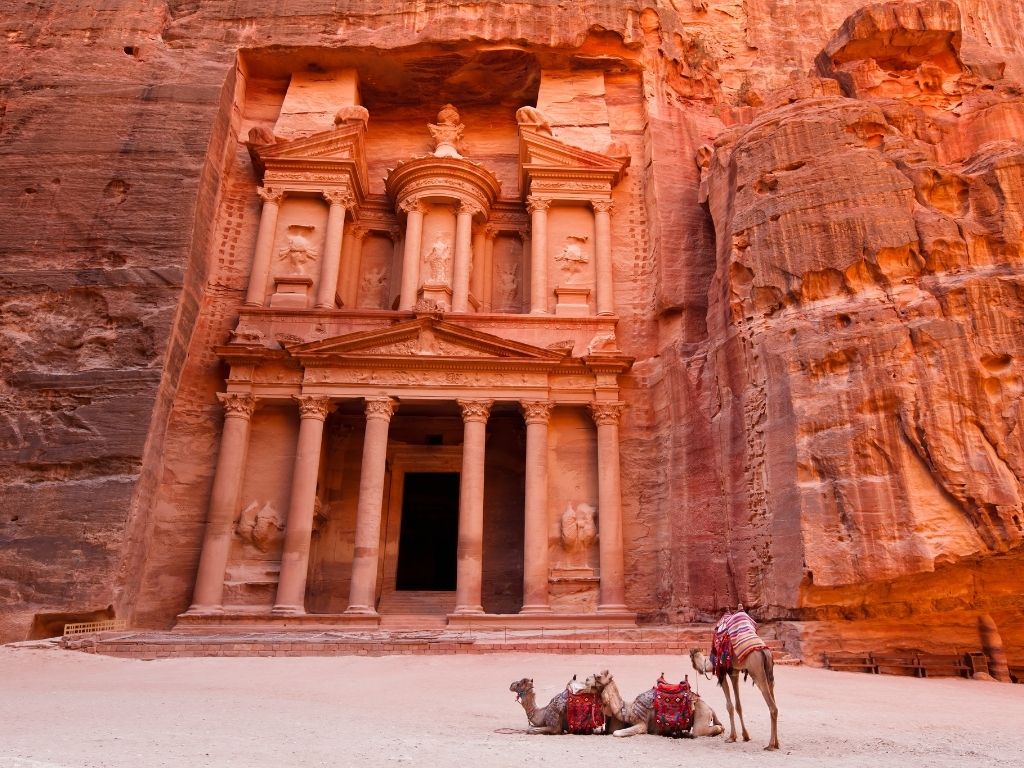
The Treasury, Jordan
The Treasury

After watching the sunset from a nearby hilltop, I returned to find Feynan transformed by the glow of 200 candles. With no light pollution, the night sky was ablaze with stars. On the rooftop, strewn with comfortable mattresses, I was shown the constellations and learned how Bedouins once relied on the stars to navigate the desert and track the seasons. Through the telescope, Saturn’s rings were crystal clear.

“There’s zero light pollution anywhere on the horizon, which is why the sky comes alive,” says Tarazi. “If you come in August, you can see about 60 meteors an hour during the Perseid shower. We blend technology, like the telescope, with traditional storytelling from the community, whose ancestors lived by the stars. These experiences aren’t scripted; they come from people who know this land best.”

That night, I fell asleep to the soft flicker of candlelight and woke refreshed, ready to explore the lodge’s community experiences. While most excursions are included, certain activities come with a small fee that goes directly to local families.

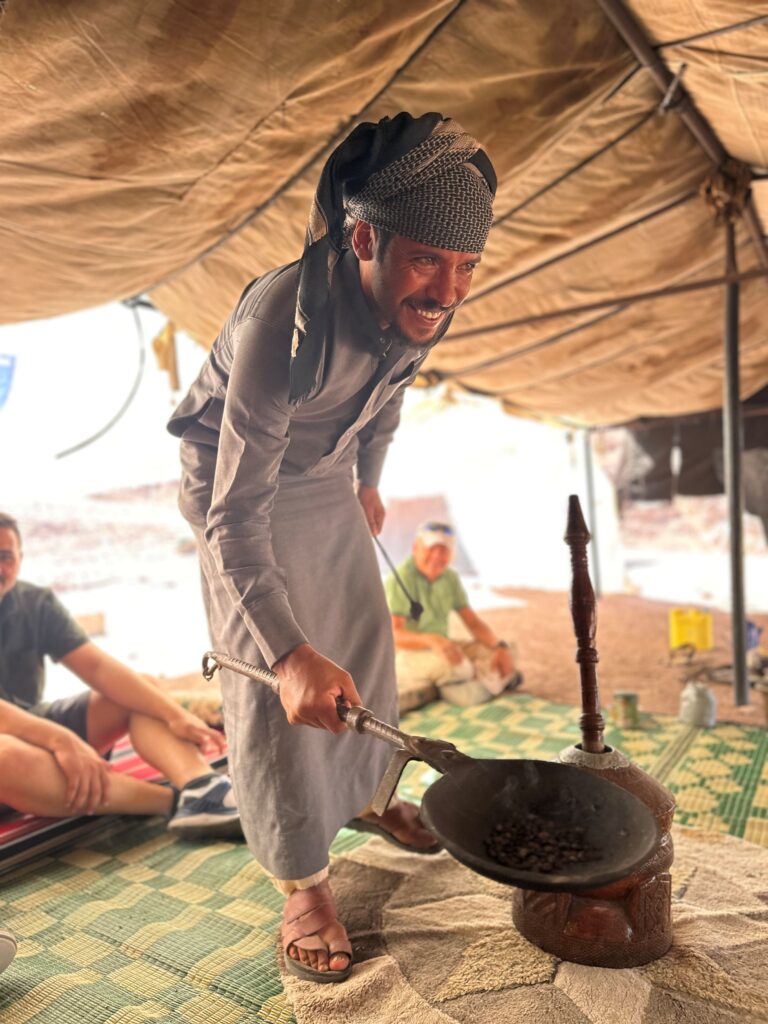
A short walk brought me to the tented home of Suleiman Hasaseen, made from woven goat hair. There, he taught our small group about the Bedouin tradition of serving Arabic coffee. Joined by his mother, we made Arbood bread—simply flour, salt, and water—baked in hot ashes and served warm with olive oil. Despite its humble preparation, the bread emerged clean and delicious.

When it was time to leave, I opted for a local transfer rather than another long hike. The 8-km unpaved road from the reception centre to the lodge requires a high-clearance vehicle, and Feynan relies on community members to provide transport in their own cars.

“We consciously chose not to pave the road so that locals could continue offering the transfers,” says Tarazi. “Guests are warned they’ll ride in beat-up vehicles, but every dinar goes directly to the driver. Around 45 families benefit from this system—it’s a significant source of income.”

Depending on the season, the lodge supports between 80 and 100 families in the region.

“Aside from having a fabulous, unique experience, we hope guests leave inspired to seek out other places like Feynan—properties that take community and environment seriously, minimize their impact, and give back,” Tarazi says.

Arabic coffee at Feynan Ecolodge Travel for Good

Feynan Ecolodge is featured on the Meaningful Travel Map of Jordan, an initiative by the Jordan Tourism Board North America and the non-profit Tourism Cares. The map highlights sustainable social enterprises and cultural experiences that help travellers support local communities, preserve heritage, and promote environmental conservation. 

Tourism is vital to Jordan’s economy, yet the current Gaza conflict has sharply reduced visitor numbers. Petra, for instance, has dropped from 5,000 daily visitors to just a few hundred.

“The impact has been tremendous, not only from a business standpoint but on the community,” says Tarazi. “Many livelihoods depend on tourism. And Jordan remains extremely safe. Now is actually one of the best times to visit since there aren’t too many tourists.”
Indigenous Tourism in Canada with Intrepid Tours

A New Chapter for Indigenous Tourism in Canada

A five-year partnership between Intrepid Travel and the Indigenous Tourism Association of Canada signals a shift toward more meaningful, Indigenous-led travel experiences nationwide.

Travel is changing. More travellers are looking beyond scenery and sightseeing, seeking experiences that offer cultural depth, context, and genuine connection. In Canada, that shift is helping Indigenous tourism move into a new phase — one defined by greater visibility, investment, and long-term opportunity for Indigenous communities.

This winter, Intrepid Travel committed CA$500,000 over five years to support Indigenous tourism development and promotion through a landmark partnership with the Indigenous Tourism Association of Canada (ITAC). The agreement aims to integrate Indigenous-led experiences more fully into Canadian travel itineraries — not as optional add-ons, but as essential ways of understanding the country.

At the heart of the partnership is a clear goal: by the end of 2026, 75 percent of Intrepid’s Canadian tours will include at least one Indigenous-led experience, with a longer-term ambition of reaching full inclusion across all itineraries. Rather than developing products in isolation, Intrepid will work through ITAC’s national network of accredited Indigenous tourism businesses, ensuring experiences are community-led, culturally grounded, and designed to benefit the people who host them.

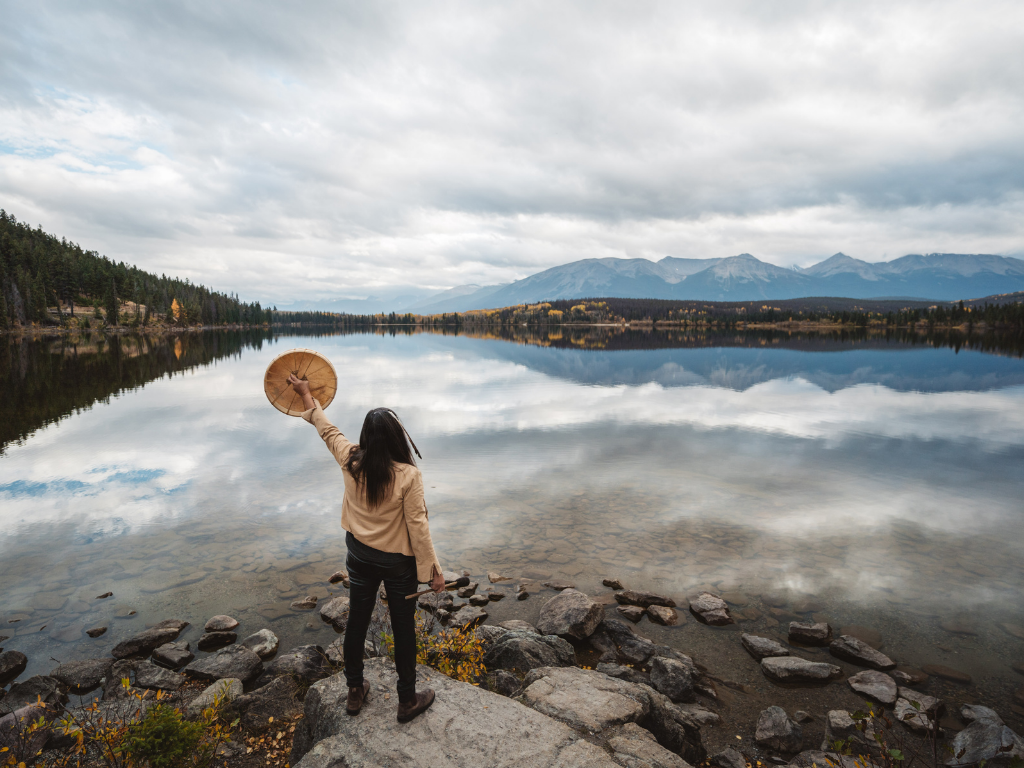
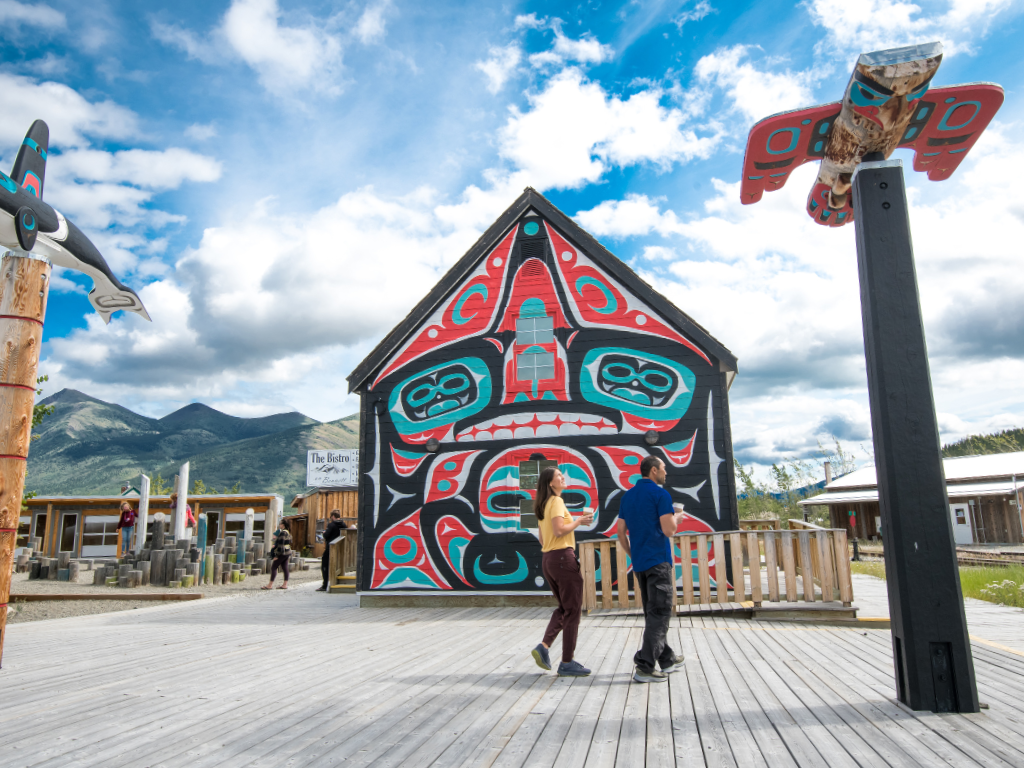
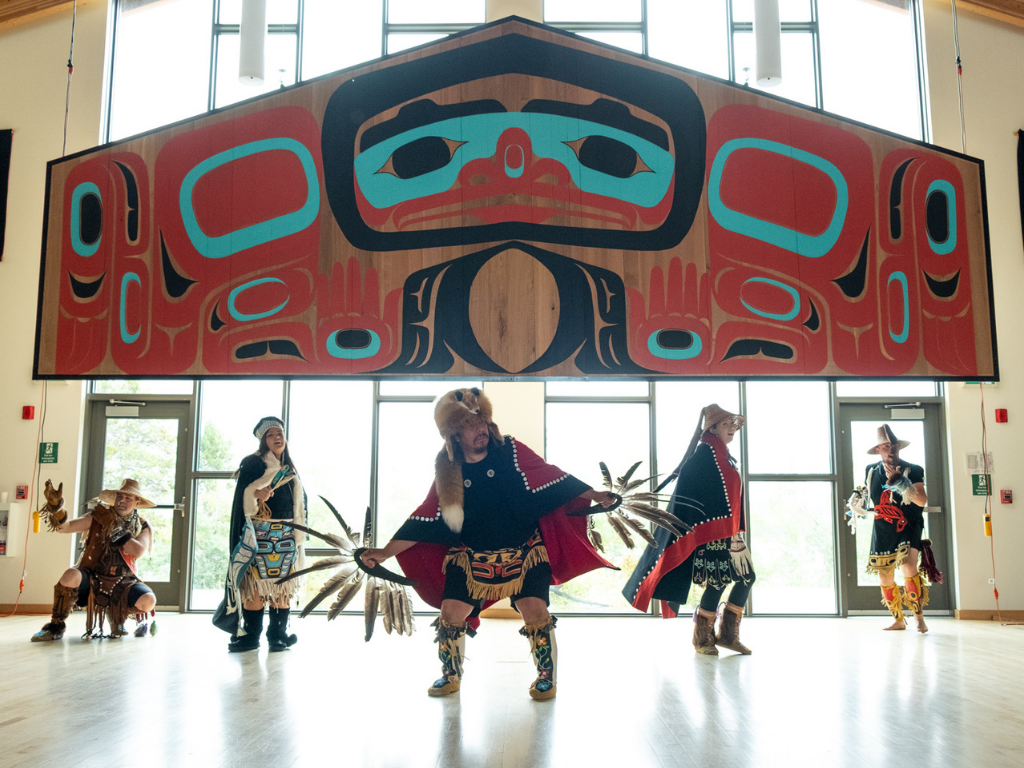
ITAC Indigenous Tours in Canada
Images courtesy of ITAC
ITAC Indigenous Tours in Canada

Interest in Indigenous tourism has been steadily rising, driven by travellers who want to engage more thoughtfully with the places they visit. Recent national tourism research shows that more than 60 percent of highly engaged travellers are actively seeking Indigenous-led experiences.

Despite that demand, many Indigenous tourism operators continue to face challenges related to funding, infrastructure, and visibility, particularly in rural and remote regions. ITAC has spent years working alongside First Nations, Inuit, and Métis businesses to help close those gaps and build sustainable, community-driven tourism economies.

This partnership connects that groundwork to global reach. Over the next five years, Intrepid will invest $50,000 annually into ITAC’s Destination Fund to support the development of Indigenous-led tourism businesses across Canada. An additional minimum of $50,000 per year will go toward promoting Indigenous tourism through media initiatives and marketing efforts, developed in consultation with ITAC to ensure respectful representation and long-term impact.

For travellers, the shift may feel subtle but significant. Indigenous experiences might include guided cultural encounters, storytelling, land-based activities, or community visits that provide insight into both tradition and contemporary Indigenous life. The emphasis is on authenticity and exchange, rather than performance.

Crucially, these experiences are designed to generate meaningful economic benefits for host communities while safeguarding cultural integrity. The aim is not simply to showcase Indigenous culture, but to support self-determined growth through tourism.

Shangi-La Toronto Suite

The Shangri-La Toronto has the Perfect Valentine’s Day Package

It's been a long winter. Here's your sign to treat yourself (and a loved one) to a candlelit Italian dinner and an indulgent overnight stay at Shangri-La Toronto.

This year, Shangri-La Toronto is offering a polished but unfussy way to celebrate Valentine’s Day right in the city. The hotel’s curated experiences are designed to feel intimate and unrushed — ideal for couples who want something memorable without overdoing it.

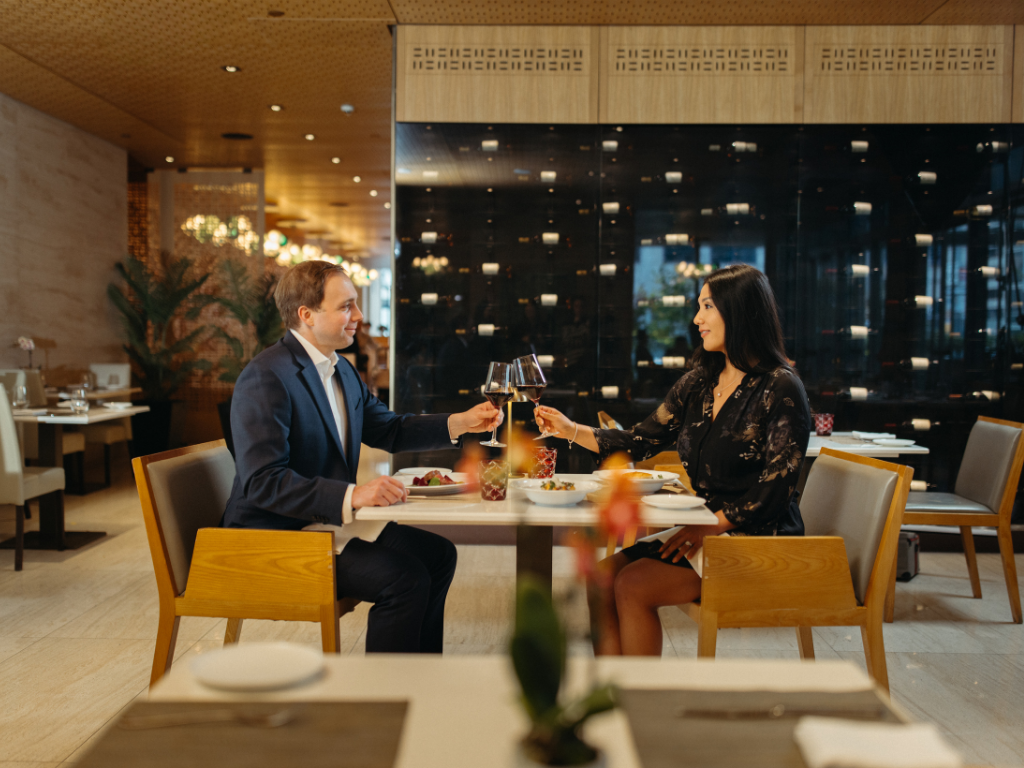
At the centre of the celebration is Valentine’s Rendezvous at bosk, the hotel’s Northern Italian restaurant. Offered on February 14 from 6 p.m. to 10 p.m., the four-course dinner is meant to unfold at an easy pace, with live violin music setting the tone, a Valentine’s cocktail to start the evening, and hand-dipped chocolate strawberries to finish.

The menu highlights seasonal Canadian ingredients with Italian flair. Courses include red wine–marinated venison carpaccio with Koziak’s Triple Crunch mustard, beet root spaghetti with goat’s milk fonduta and B.C. spot prawns, and dry-aged striploin served with celeriac purée. Desserts lean elegant rather than heavy, with options like dark chocolate merveilleux with hazelnut praline or a raspberry-and-rose creation finished with rosewater ganache.

Valentine’s Rendezvous dinner at bosk, Shangri-La

Make it a Staycation

For couples who want to turn dinner into a true escape, Shangri-La Toronto’s A Suite Valentine’s Day experience removes the need to head home at all. Guests are welcomed with a bottle of Veuve Clicquot Champagne and a decadent cake, followed by an overnight stay in one of the hotel’s suites.

A CAD $250 dining credit per night encourages lingering meals or room service, while breakfast for two the following morning keeps things feeling relaxed. Small details make a difference here: fresh florals on arrival, an evening turndown featuring the hotel’s signature tea set and Bathorium bath salts, and flexible check-in and check-out times (subject to availability).

Parking is included as well — a small but appreciated touch for anyone who’s ever hesitated over a downtown stay.

Whether you opt for the dinner, the overnight stay, or both, this is Valentine’s Day done with just enough luxury to make it feel like a real occasion.

Rio de Janeiro, Brazil

Brazil Just Launched a New Multi-City Air Pass for International Travellers

The new Azul Brazil Air Pass allows visitors to explore multiple regions of the country under a single fare, making complex itineraries far easier to plan.

Brazil’s size has always been part of its allure — and its challenge. With rainforests, beaches, wetlands, and megacities spread across a continent-sized country, travellers have often had to choose just one slice of the experience. A newly launched air pass is aiming to change that.

Introduced this January, the Azul Brazil Air Pass allows international travellers to combine multiple domestic flights within Brazil under a single, fixed price. The pass is designed for visitors arriving from abroad who want to explore more than one region without booking separate tickets for each leg of their journey.

Depending on the option selected, travellers can include up to eight destinations in a single itinerary, with stays ranging from 14 to 30 days. Prices start at USD $479 for trips covering up to four destinations, rising to USD $599 for longer itineraries flown entirely on Azul. Options that include segments operated by other airlines range from USD $599 to $799.

The pass is valid for travellers entering Brazil on Azul flights as well as those arriving on other international carriers, making it accessible regardless of how visitors reach the country. It is sold exclusively outside Brazil, primarily through international travel agencies and Azul’s international call centre.

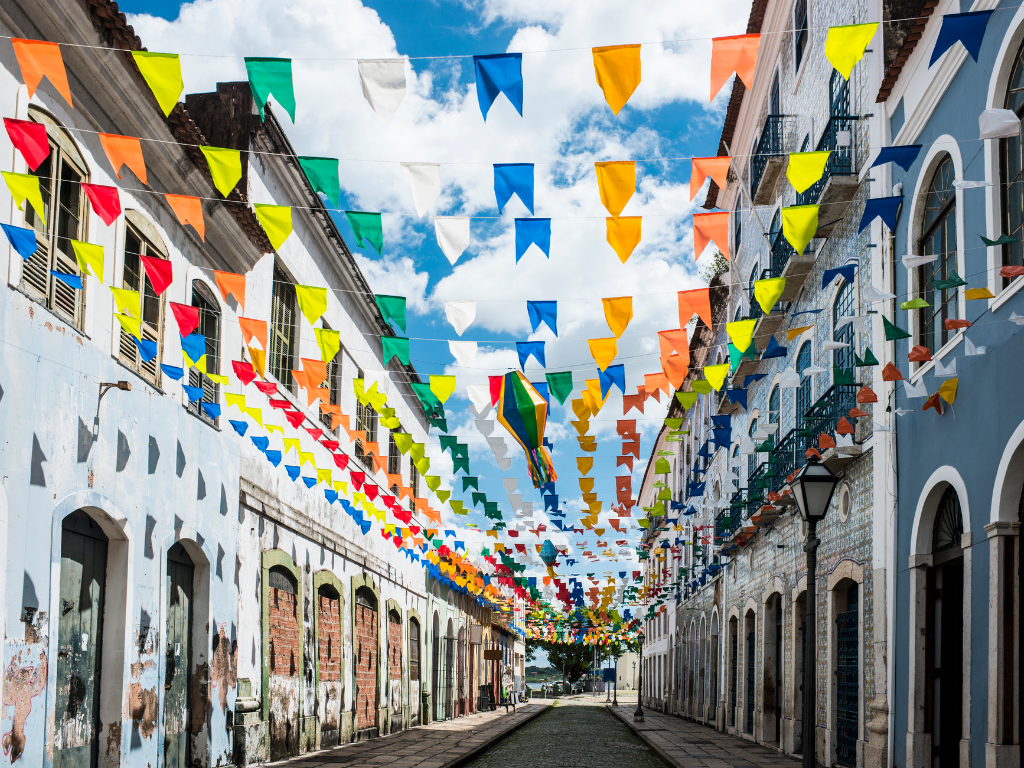
The Historic city of Sao Luis, Maranhao State, Brazil
The historic city of Sao Luis, Maranhao State, Brazil
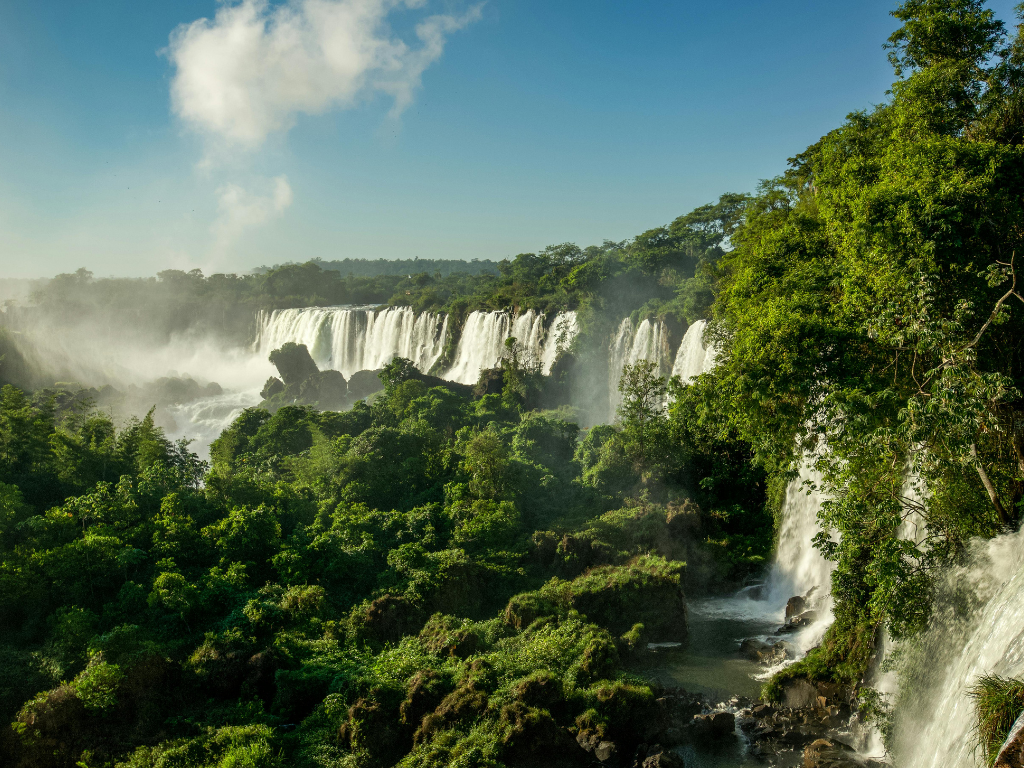
Iguaçu Falls
Iguaçu Falls in Paraná, Brazil

The launch comes as Brazil sees a surge in international interest. In 2025, the country welcomed approximately 9.3 million foreign visitors — a 37 percent increase over the previous year — underscoring growing demand for longer, more immersive travel experiences.

For travellers, the appeal is practical as much as aspirational: simpler booking, predictable pricing, and the freedom to move between Brazil’s vastly different regions in one continuous trip. Boa viagem!