The Road Less Travelled in Jordan
This candle-lit ecolodge on the edge of the Dana Biosphere Reserve is designed with purpose.
By Ann Ruppenstein
There are two main ways to reach Feynan Ecolodge—the easy way and the challenging way—and, to borrow from Frost, I stood contemplating the road not taken. After traversing uneven terrain, scrambling over boulders, wading through a stream, and even using my guide’s foot as a stepping stone to navigate steep slopes, somewhere along the 17-km Wadi Ghuweir Trail I began to wonder what it might have been like to take one of the 4×4 shuttles to the off-the-grid lodge instead of relying on my own two feet.
But as the scenery shifted dramatically, from a narrow slot canyon framed by tall red-rock walls to an open oasis lush with greenery and palms, and finally to hillsides dotted with hundreds of grazing goats, I knew I wouldn’t trade these spectacular views for the easy way out. After a brief rest, my Bedouin guide Ameen Saraheen brewed fresh tea over a cliffside fire, and we refuelled with flatbread, tuna, and hummus before continuing on.
Unlike a typical hotel check-in, I felt a true sense of accomplishment when I finally reached the front desk at Feynan Ecolodge and was greeted with warm smiles and a tray of the most refreshing homemade lemonade. The journey had been longer, but far more rewarding.
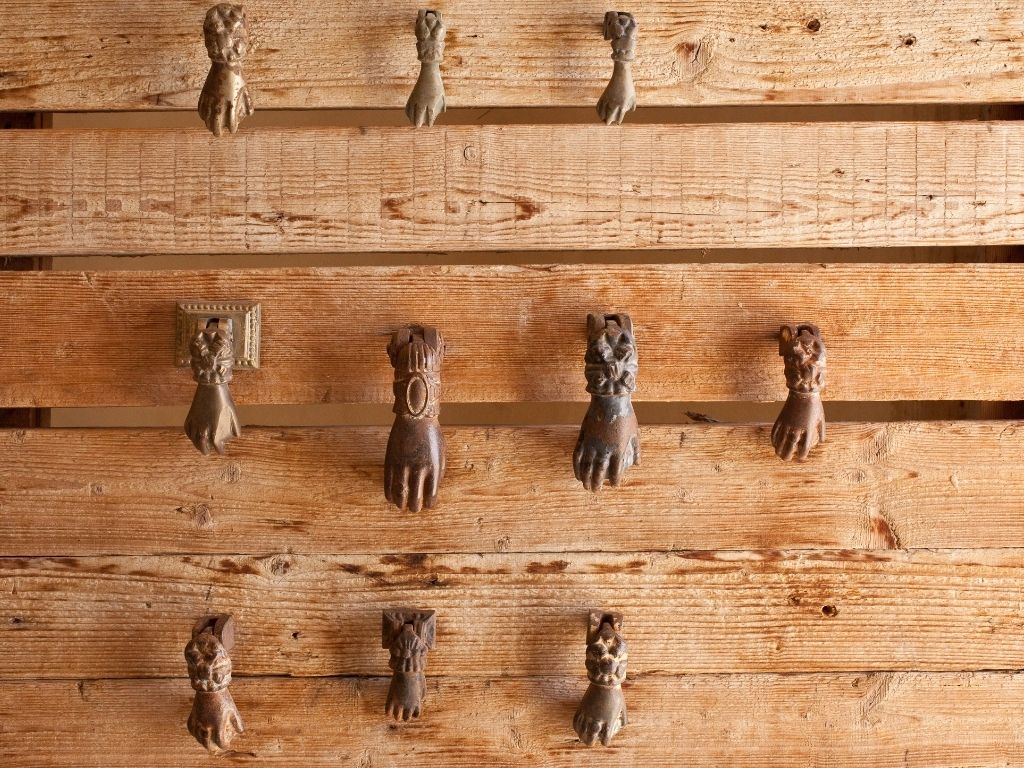
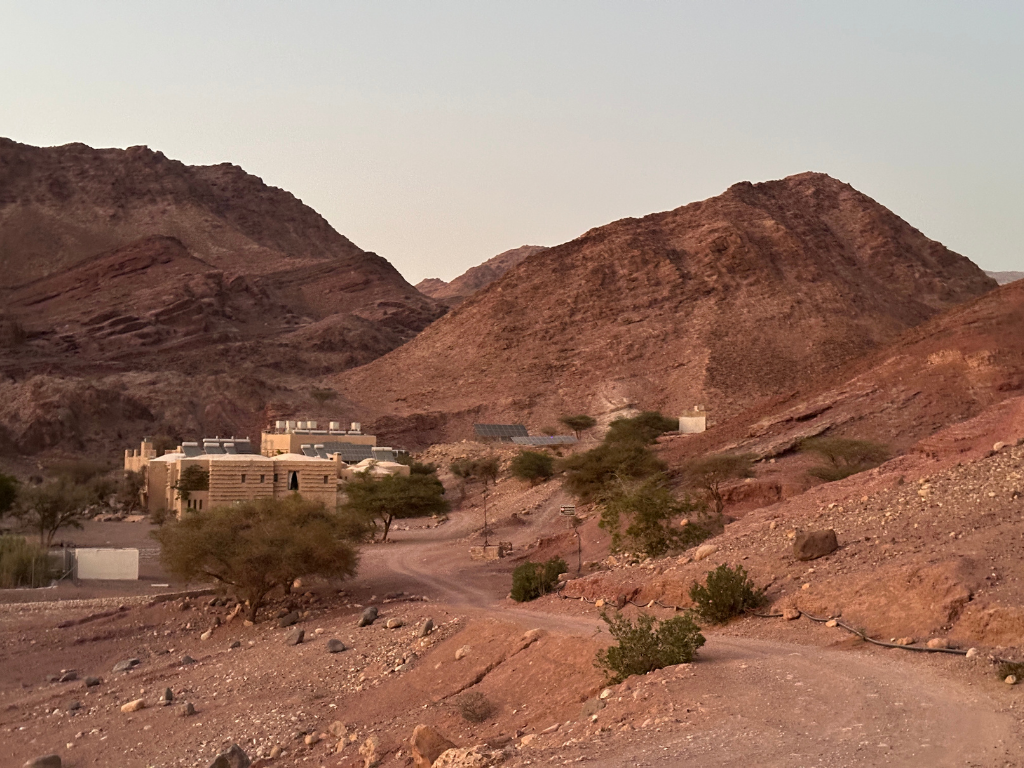
Located on the southwestern edge of the Dana Biosphere Reserve, Jordan’s largest nature reserve, the 26-room lodge was designed by architect Ammar Khammash and developed by the Royal Society for the Conservation of Nature.
“The idea was to build something modern in sustainability—having the least possible impact on the environment—while benefiting one of the poorest communities in Jordan,” explains Nabil Tarazi, founder and CEO of EcoHotels, which manages the property. “It became one of the first sites in Jordan to implement solar power. Instead of electric lighting throughout, candles are used in most areas—and those candles are produced onsite by local Bedouin women.”
Beyond generating most of its energy from the sun, the ecolodge was founded on supporting the Bedouin families in the surrounding area. For example, all of the bread served at the lodge is made by a local woman, Um Khalid, providing her family’s main source of income.
“She makes our bread three times a day, and we actually pay almost double what you’d pay for a loaf in Amman,” says Tarazi. “The idea is to help her run her own business.”
Meaningful connections with nearby families are a big part of staying here. The lodge links guests with Bedouin guides for treks of varying lengths, from sunrise and sunset hikes to full-day adventures like mine. Even non-guests can arrange excursions, as the Wadi Ghuweir Trail is one of the most scenic stretches of the Jordan Trail, a 675-km route from Um Qais in the north to Aqaba in the south that takes roughly 40 days to complete—a Middle Eastern rival to the Camino de Santiago. For me, one day was enough to capture its essence.
“It’s a whole experience, not just a place to stay,” notes Abeer Tannous, marketing and business development executive for EcoHotels.
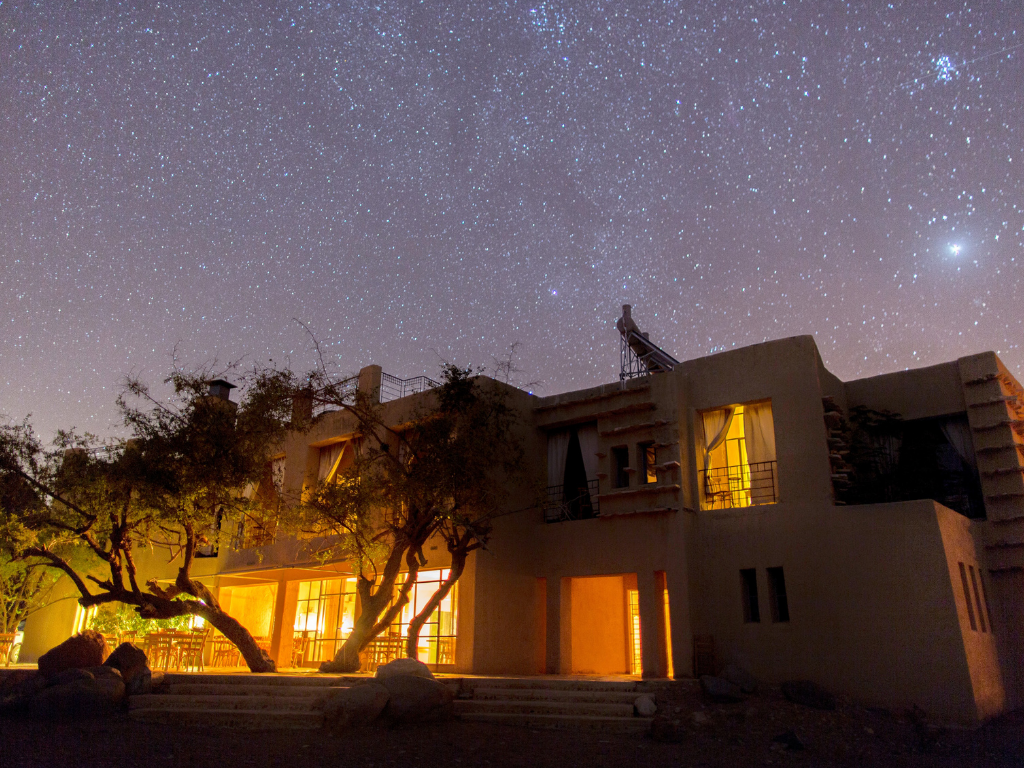
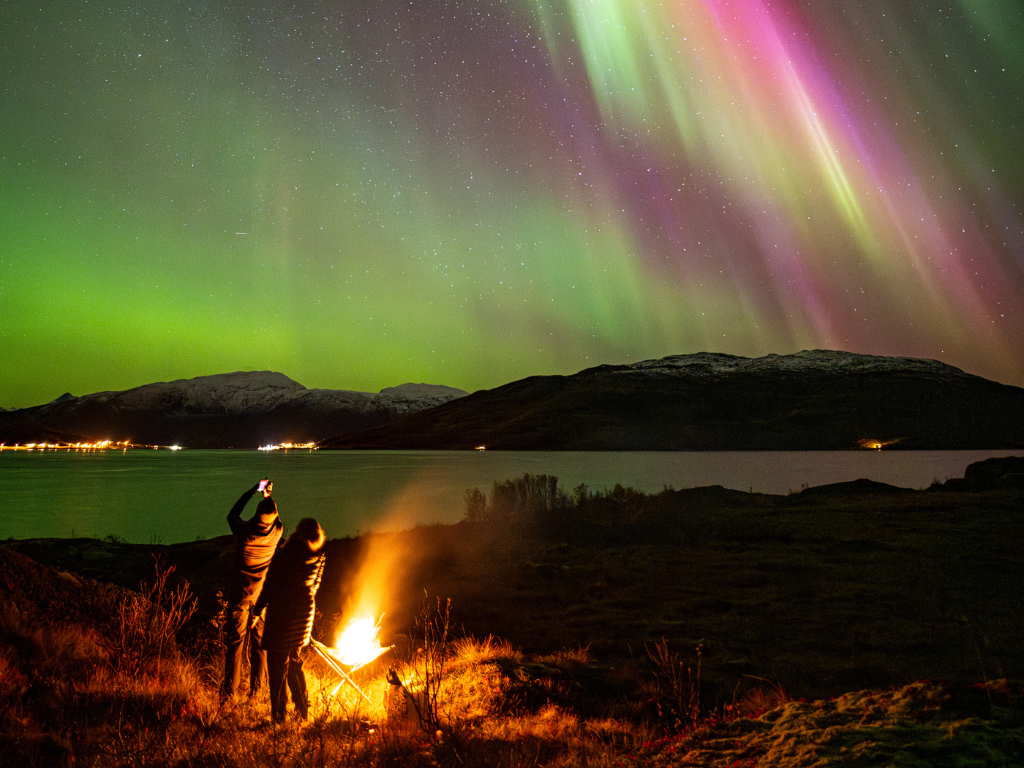
After watching the sunset from a nearby hilltop, I returned to find Feynan transformed by the glow of 200 candles. With no light pollution, the night sky was ablaze with stars. On the rooftop, strewn with comfortable mattresses, I was shown the constellations and learned how Bedouins once relied on the stars to navigate the desert and track the seasons. Through the telescope, Saturn’s rings were crystal clear.
“There’s zero light pollution anywhere on the horizon, which is why the sky comes alive,” says Tarazi. “If you come in August, you can see about 60 meteors an hour during the Perseid shower. We blend technology, like the telescope, with traditional storytelling from the community, whose ancestors lived by the stars. These experiences aren’t scripted; they come from people who know this land best.”
That night, I fell asleep to the soft flicker of candlelight and woke refreshed, ready to explore the lodge’s community experiences. While most excursions are included, certain activities come with a small fee that goes directly to local families.
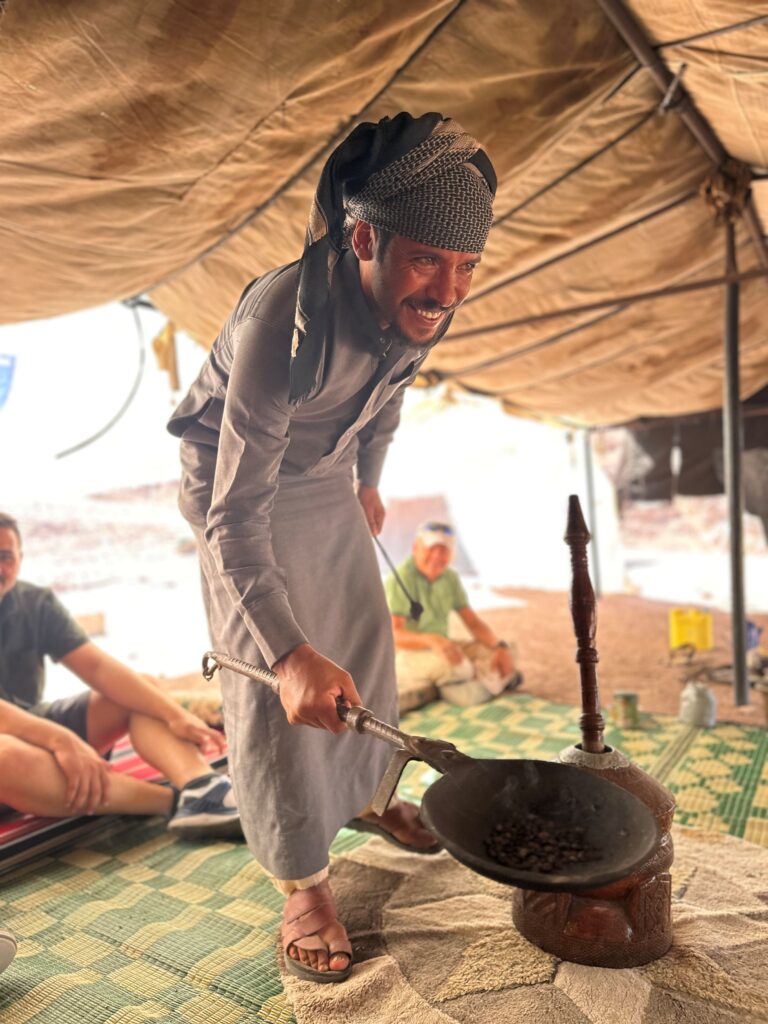
A short walk brought me to the tented home of Suleiman Hasaseen, made from woven goat hair. There, he taught our small group about the Bedouin tradition of serving Arabic coffee. Joined by his mother, we made Arbood bread—simply flour, salt, and water—baked in hot ashes and served warm with olive oil. Despite its humble preparation, the bread emerged clean and delicious.
When it was time to leave, I opted for a local transfer rather than another long hike. The 8-km unpaved road from the reception centre to the lodge requires a high-clearance vehicle, and Feynan relies on community members to provide transport in their own cars.
“We consciously chose not to pave the road so that locals could continue offering the transfers,” says Tarazi. “Guests are warned they’ll ride in beat-up vehicles, but every dinar goes directly to the driver. Around 45 families benefit from this system—it’s a significant source of income.”
Depending on the season, the lodge supports between 80 and 100 families in the region.
“Aside from having a fabulous, unique experience, we hope guests leave inspired to seek out other places like Feynan—properties that take community and environment seriously, minimize their impact, and give back,” Tarazi says.
Travel for Good
Feynan Ecolodge is featured on the Meaningful Travel Map of Jordan, an initiative by the Jordan Tourism Board North America and the non-profit Tourism Cares. The map highlights sustainable social enterprises and cultural experiences that help travellers support local communities, preserve heritage, and promote environmental conservation.
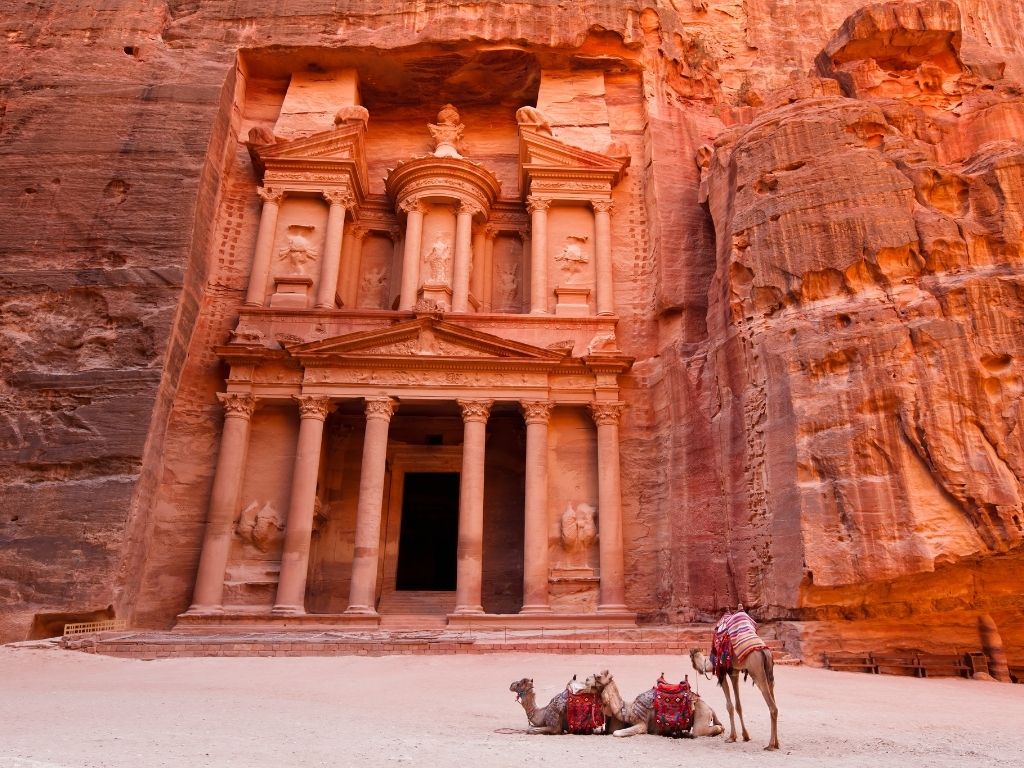
Tourism is vital to Jordan’s economy, yet the current Gaza conflict has sharply reduced visitor numbers. Petra, for instance, has dropped from 5,000 daily visitors to just a few hundred.
“The impact has been tremendous, not only from a business standpoint but on the community,” says Tarazi. “Many livelihoods depend on tourism. And Jordan remains extremely safe. Now is actually one of the best times to visit since there aren’t too many tourists.”