A Slow-Travel Guide to Liguria, Italy

Italy’s Riviera reveals its beauty most to those willing to slow down. Here’s a designer's guide to Liguria’s architecture, cuisine and coastal rituals.

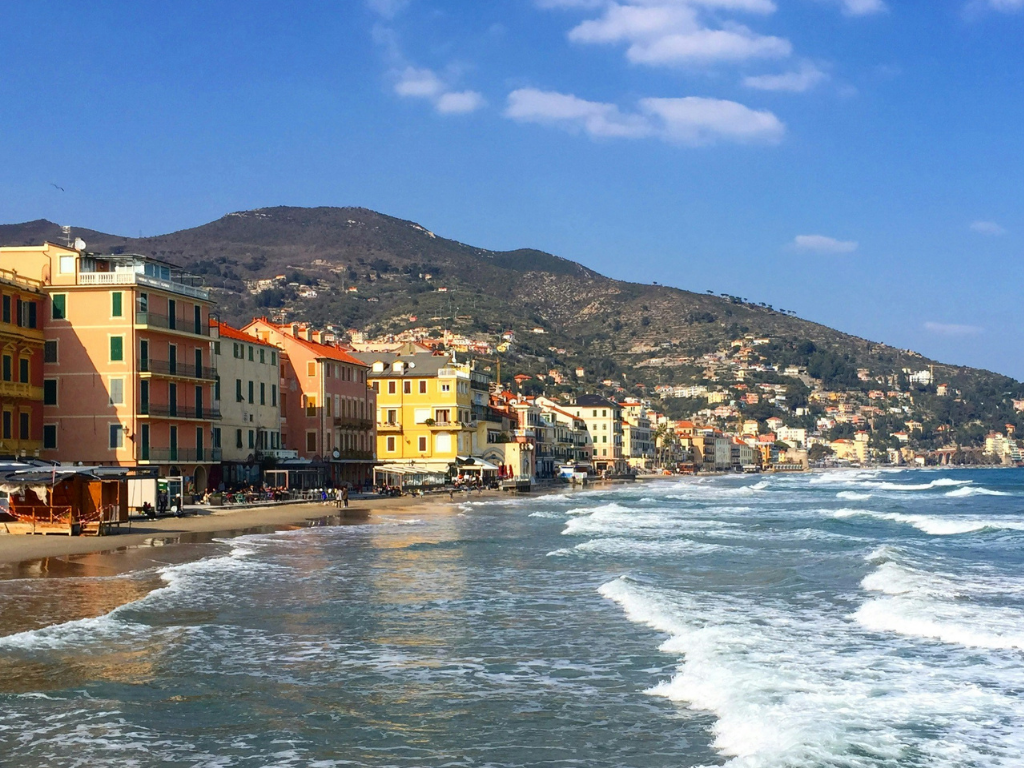
Between the French border and La Spezia, Liguria is a postcard of sun-washed villages clinging to the cliffs. Trains rattle along the edge of the Mediterranean, slipping through tunnels, while sea-salted air drifts through open windows.

“I usually over-plan trips, but Liguria calls for a loose itinerary,” says Montreal-based designer Alexandre Lafleur. “Take your time. Enjoy a late morning reading under an olive tree, have a leisurely lunch followed by multiple dips in the sea, and always catch the sunset with an aperitivo in hand.”

Below are his personal recommendations from his latest trip to the Italian Riviera.

Casa d'Artista

Alassio

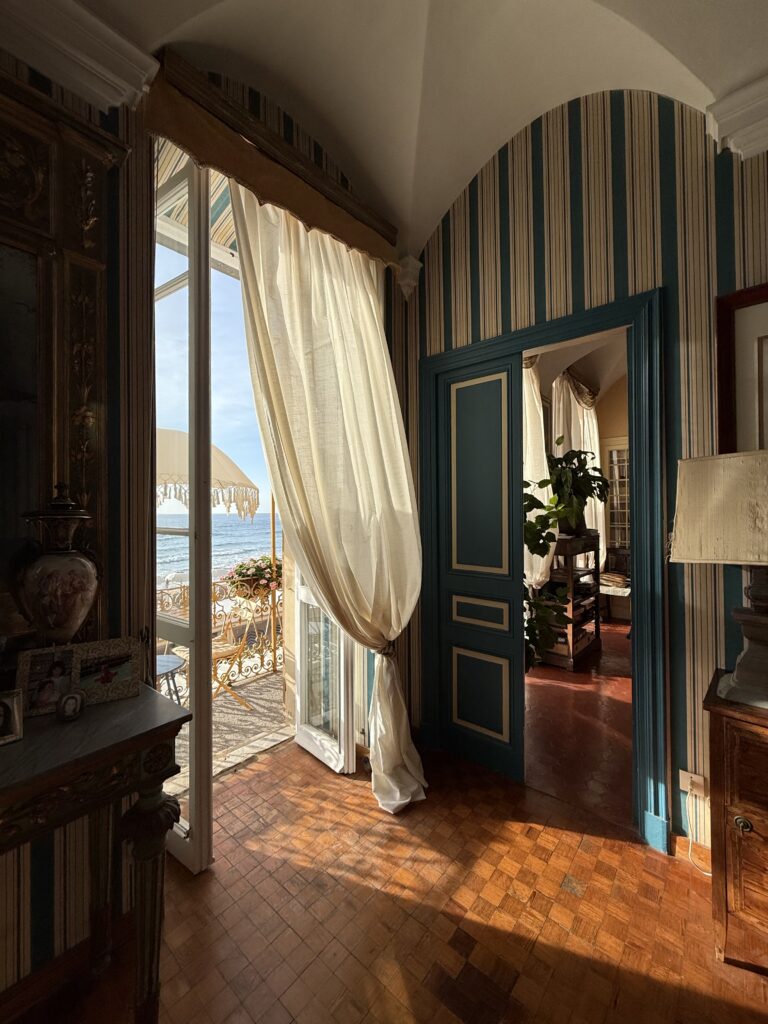
Tucked between the Ligurian hills and the water, Alassio feels timeless with its striped parasols, faded frescoes and honey-coloured villas. Stay a few steps from the promenade at Casa d’Artista, a three-room bed-and-breakfast in what was formerly a private seaside home. With frescoed walls, antique armchairs and balconies shaded by tasselled umbrellas, it captures the charm of a slower era.

“In the morning, each room gets breakfast in a picnic basket filled with pastries, fruit, and eggs to enjoy in the breakfast room or seafront balcony,” says Lafleur.

Spend the morning walking the Lungomare, then grab a pair of loungers at one of Alassio’s lidos—private beach clubs with striped cabanas, showers and lively seaside restaurants serving fried anchovies and spritzes. For a taste of old-world grandeur, visit the gardens of Villa della Pergola, where wisteria, citrus and jasmine fill the air.

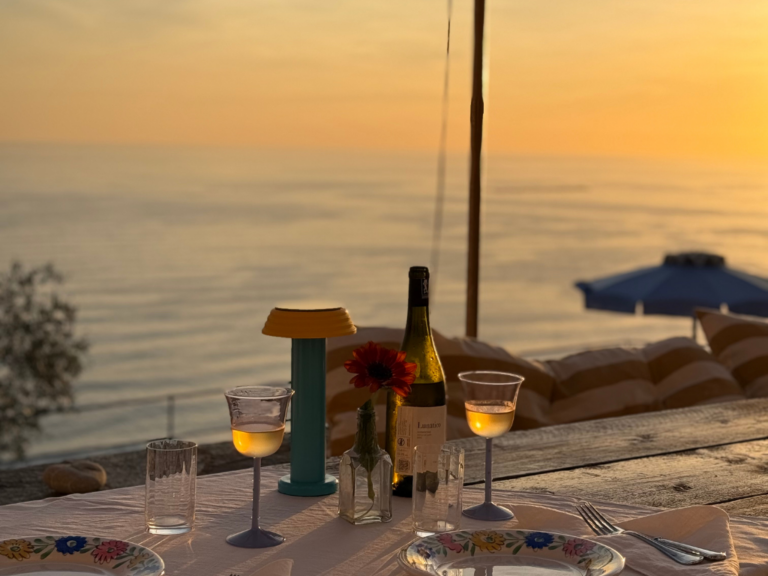
End the day with a Michelin-starred dinner at Nove, the villa’s restaurant. Dishes like goat-cheese agnolotti and sourdough panzanella with green gazpacho are elegant without being fussy, and the best spot to enjoy them is from the terrace overlooking the sea.


Casa Pernice
Fresh pasta at Rezzano

Cavi & Sestri Levante

Just a short train ride east, make your home base at Casa Pernice, a lovingly restored farmhouse in Cavi di Lavagna, where owners Giorgia and Davide have created a laid-back, design-forward escape. The rooms feel effortlessly chic with linen-draped beds, vintage ceramics, and sunlight spilling across old terracotta floors. Mornings start with homemade pastries and eggs from their hens, followed by a stroll down to Bagni Mignon, their retro-chic beach club on the pebbled shore.

Cavi sits between the polished resort town of Sestri Levante and the wild beauty of Portofino National Park. Take a ferry to San Fruttuoso, a tiny monastery bay framed by forested cliffs, where the 13th-century abbey is reachable only by water or a long coastal hike. The reward is a swim in clear turquoise water and lunch at Da Laura—lasagnette verde with pesto, fritto misto and a chilled white wine under the olive trees.

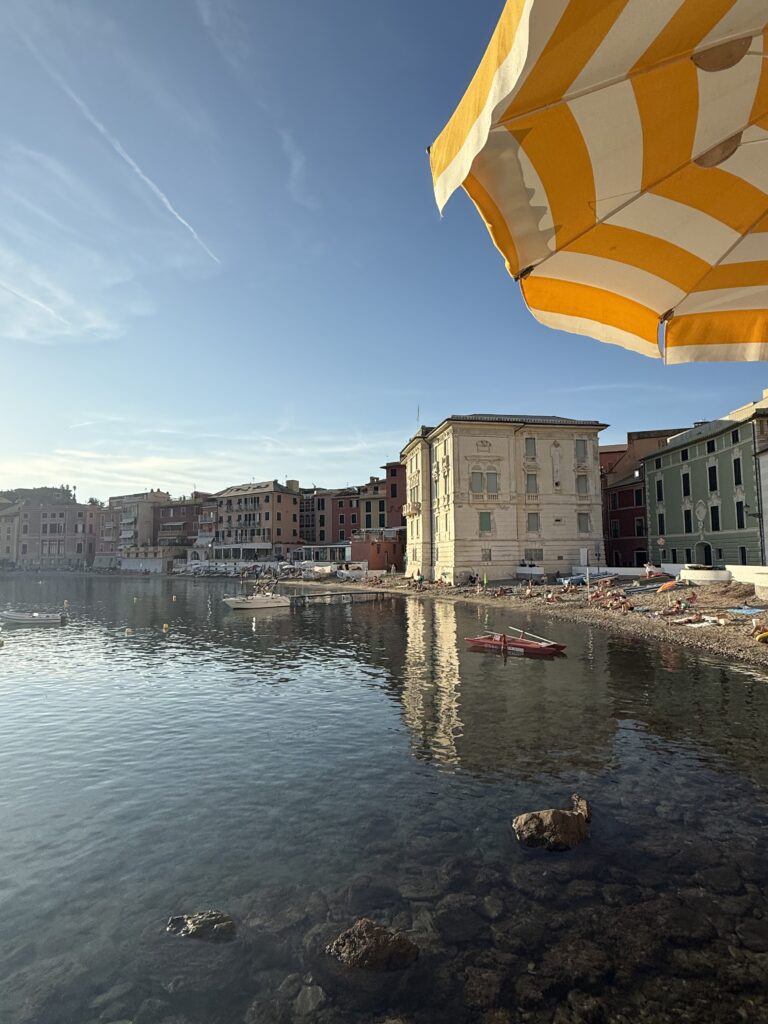
Back in Sestri Levante, stop by Baia del Silenzio (Bay of Silence), and do as the locals do: Take an evening swim before heading to Rezzano or Balin for fresh seafood, pasta, and a glass of Vermentino. 

Genoa

Once a powerful maritime republic, Genoa is a city of contrasts, with Renaissance palaces beside narrow alleys and marble staircases leading to quiet courtyards.

Wander through the caruggi, Genoa’s medieval lanes where artisans still make focaccia and brass fixtures by hand. Visit the Palazzi dei Rolli, a UNESCO-listed set of 16th- and 17th-century noble homes, or stroll Via Garibaldi, lined with painted façades and ornate balconies. Pause for an espresso at an old-world café before catching the train back. 

Most of Liguria’s coastline is connected by rail, making car-free travel easy and scenic. Every town along the route, from Camogli to Laigueglia, offers its own version of seaside life—the morning markets, the scent of salt and citrus, the fresh seafood. It’s a rhythm you’ll fall into quickly, and one that’s hard to leave behind.

The List

Stay Casa d’Artista (Alassio); Casa Pernice (Cavi)

Eat Nove (Alassio); Terrazza Praié (Laigueglia); Da Laura (San Fruttuoso)

Do Ferry to San Fruttuoso; Swim at Baia del Silenzio; Explore Genoa’s Palazzi dei Rolli

Drink A Hugo Spritz at lunch; a glass of chilled Vermentino at sunset

Bring Back Ligurian olive oil, hand-painted ceramics, Genovese pesto, or a woven market bag

How to Find Flight Deals Using AI

By Reneé Morrison

Here's your sign to try Google's AI-powered Flight Deals feature.

I wasn’t even thinking about planning a mother-daughter getaway to Paris. I was just playing around with flight searches. I had opened Google Flights and decided to test out its AI Flight Deals feature to see the most heavily discounted nonstop flights from Montreal during the upcoming March spring break. I wasn’t searching for a specific destination, just the best value for direct routes to anywhere.

That’s when Paris appeared. A nonstop, round-trip flight for just over $600 Canadian, luggage included. A few clicks later, I had booked my first solo trip with my seven-year-old daughter. And mais oui, we’re squeezing in a day at Disneyland Paris between croissants and strolls in the Jardin de Luxembourg. 

Why AI works so well for finding travel deals

Previously, my deal-hunting mania revolved around refreshing pages, tracking one route, locking in exact dates. AI works differently. so instead of asking for one specific outcome, your best bet is to give it a bit of flexibility and let it scan patterns at scale.

AI is especially good at:

  • Comparing huge amounts of pricing data quickly

  • Flagging unusual price drops or underpriced routes

  • Responding well to flexible, human-style requests

The trick is learning how to ask better questions.

Here’s a travel prompt you can steal

If you’re using an AI chatbot or planning tool, try something like:

“Find the best-value nonstop flights from Montreal during (insert dates). I’m flexible on destination, prefer flights under X hours, and want luggage included. Focus on routes with recent price drops.”

This works because it mixes clear limits with openness. 

You can easily tweak it:

  • Add the length of your trip, with flexibility (sometimes, the prompt above will show you trips that are unreasonably short, so you can try specifying a range of how long you’d like to be away).

  • Add that you’re looking for warm weather, cultural cities or beach destinations

Where AI fits into trip planning

AI isn’t a booking engine, and it doesn’t need to be. Its real strength is helping you decide where to look before you decide what to book. Even if you prefer to use a travel agency for the actual booking of your trip, it can be useful for helping you spot which destinations will be accessible within your budget.

It’s especially helpful for:

  • Finding destinations you hadn’t considered

  • Comparing direct flights versus connections

  • Confirming what a good value is in terms of fare pricing

  • Narrowing options before heading to airline sites or your agent

Once a flight looks promising, it’s worth clicking through nearly to checkout to confirm the price is still valid. More than once, I’ve followed a deal only to discover the fare disappeared by the time I reached the booking page.

A few practical tips before you book

  • Flexibility matters (a lot). Even a one-day shift can change pricing.

  • Nonstop flights are not always the expensive option, especially on routes airlines want to fill.

  • Always check baggage rules before celebrating a low fare.

  • Think about value, not just price. Better timing or fewer connections can make a slightly higher fare worth it. You’ll end up spending that extra $100 on a mediocre airport lunch.

Happy deal-hunting!