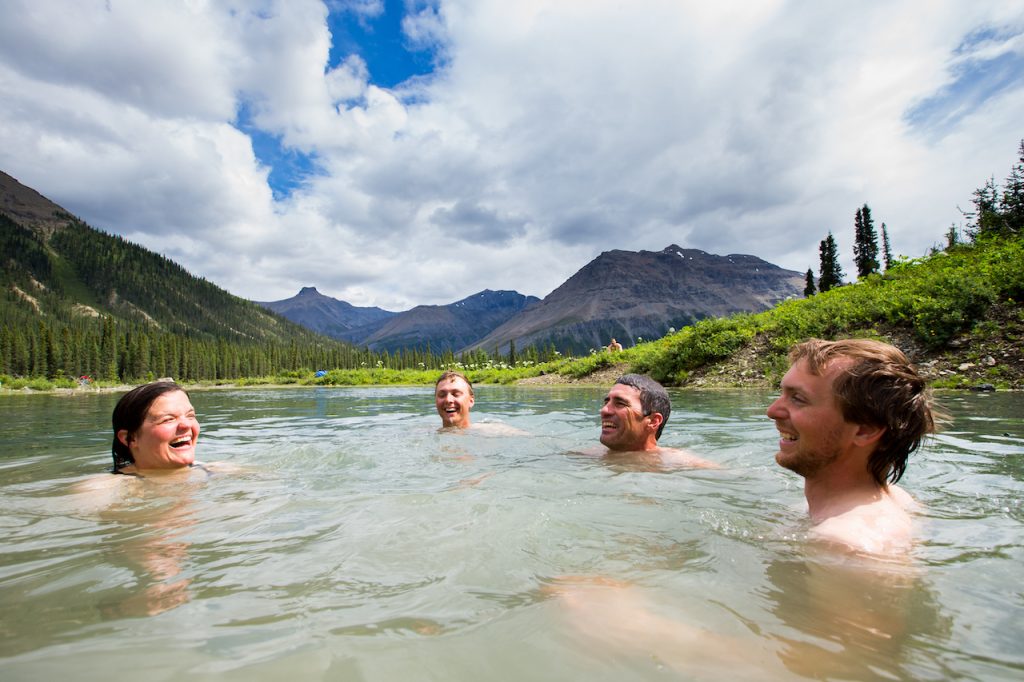
Four people swim in a lake with pine forests and mountains in the background. The four people are all smiling and laughing.

Why a trip to Canada’s stunning Northwest Territories should be on your summer bucket list
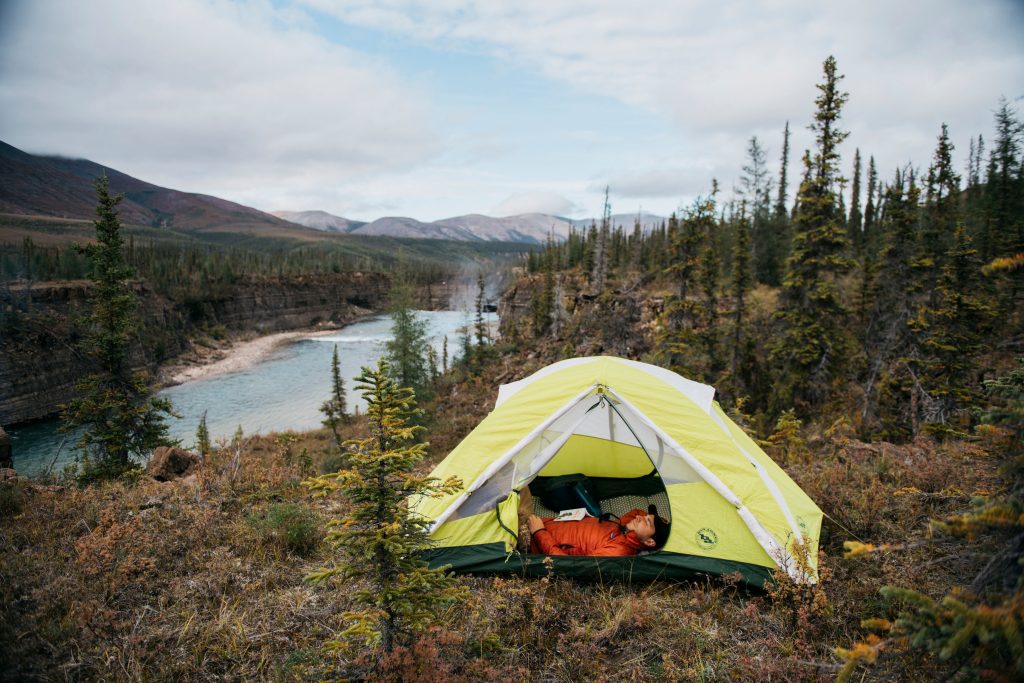
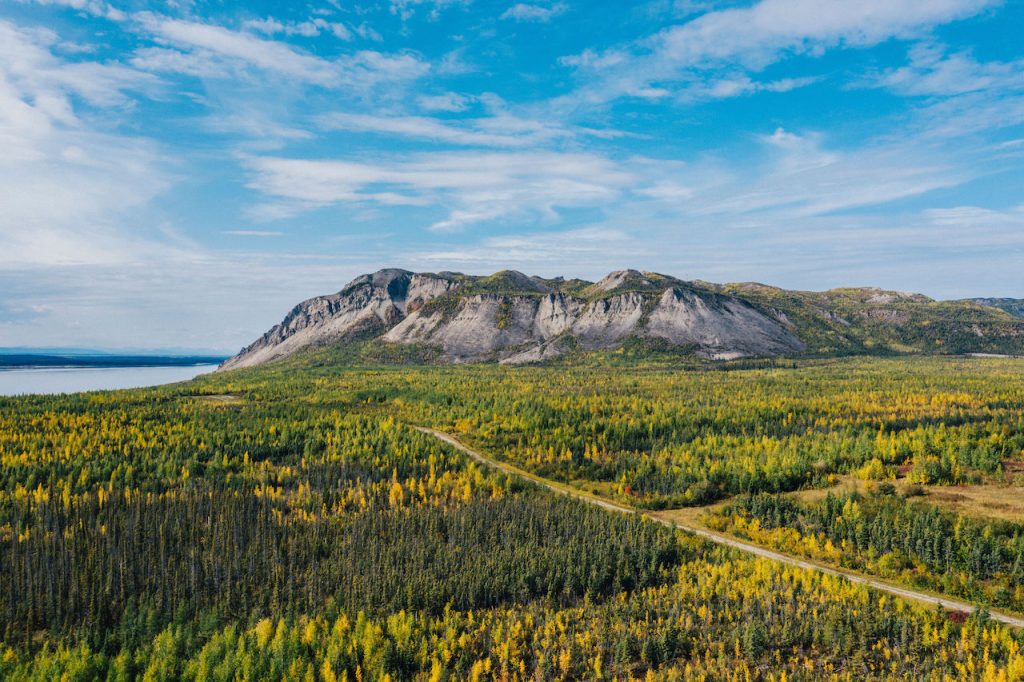
Affectionately known as the Land of the Midnight Sun, the summer months present one of the best months to visit the Northwest Territories.

From June to August, the NWT sees clear blue skies, flanked by a shimmering sun that never truly sets. Divided by the Arctic Circle, on June 21, which marks the Summer Solstice, the sun never sinks below the horizon, meaning that until mid-July, the Northwest Territories sees a delirious amount of sunshine at all hours of the day. Depending on how far north travellers trek into the Arctic Circle, the constant sunshine can last for up to six months.

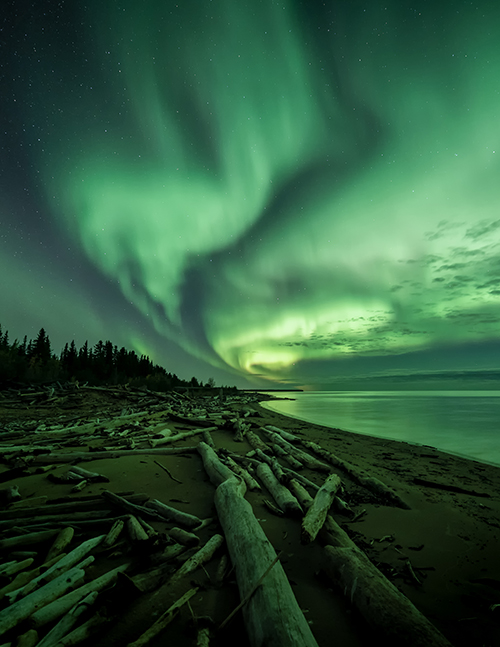
While darkness truly never comes to Canada’s far north from April to July, by August, the Aurora Borealis resumes visibility and paints the northern skies in brilliant shades of electric green, deep purple, and inky indigo. 

The Northwest Territories are divided into six definite regions, each one distinctly beautiful from the next.

SOUTH SLAVE

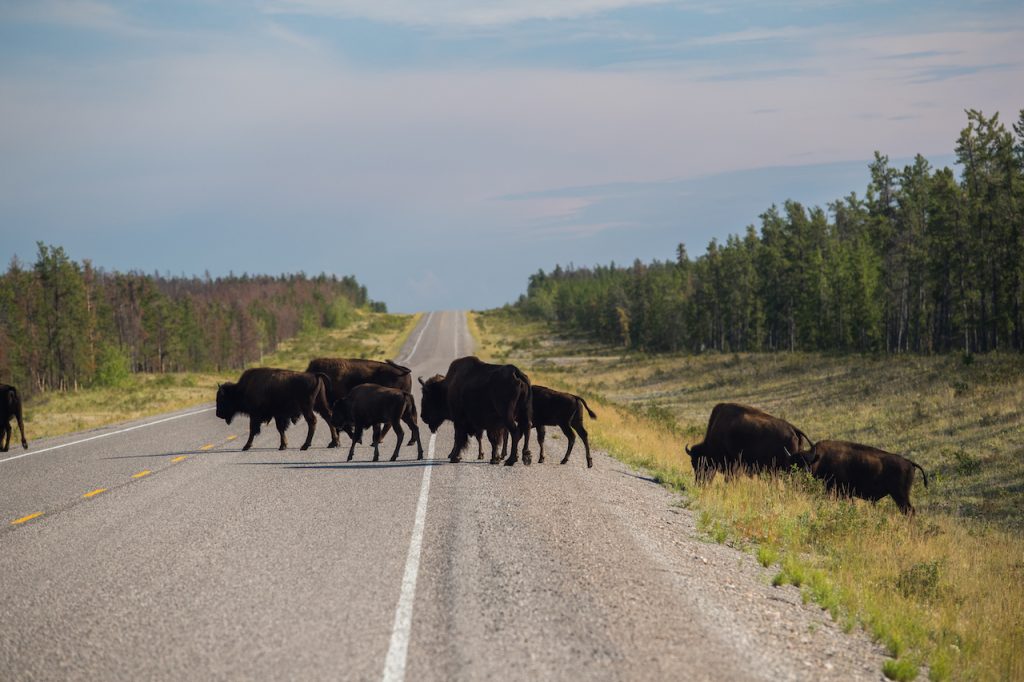
South Slave, located south of Great Slave Lake, is the jumping point into the Territory, with direct access from the Alberta border. South Slave is home to Canada’s largest national park, Wood Buffalo, which spans 44,741 sq. km and is open for camping from now until Sept. 30. 

Photo credit: Angela Gzowski

NORTH SLAVE

To the north of Great Slave Lake lies North Slave, an area that’s home to the oldest rock formation in the world, the four billion-year-old Acasta Gneiss. North Slave is also home to the NWT’s largest Indigenous population, the Tłı̨chǫ (sometimes spelled Tlicho) people. 

Photo credit: Angela Gzowski

DECHO

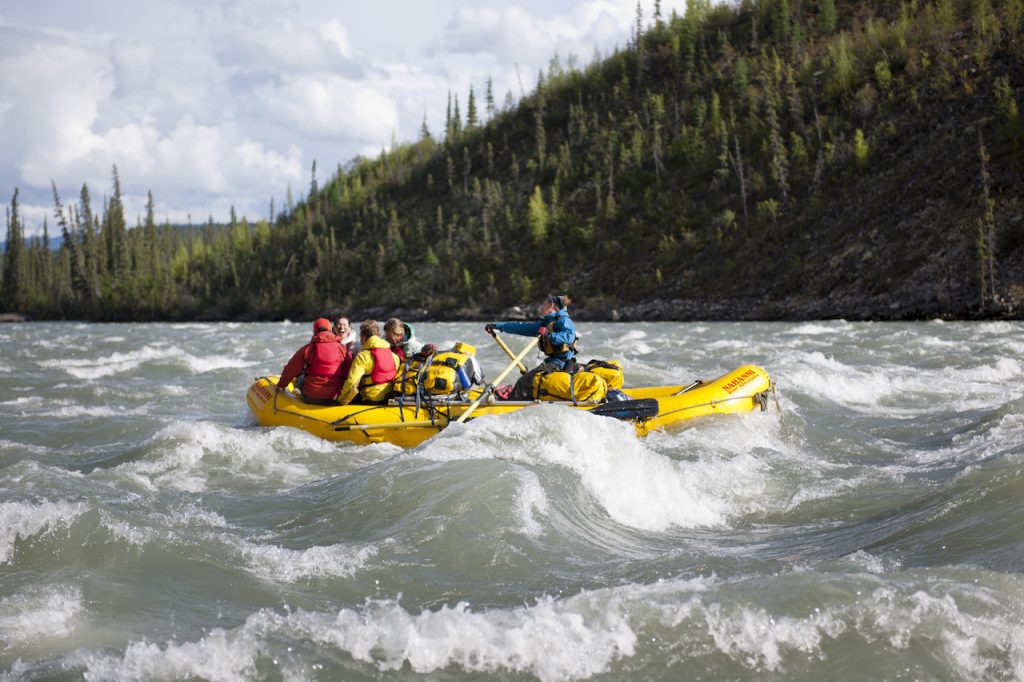
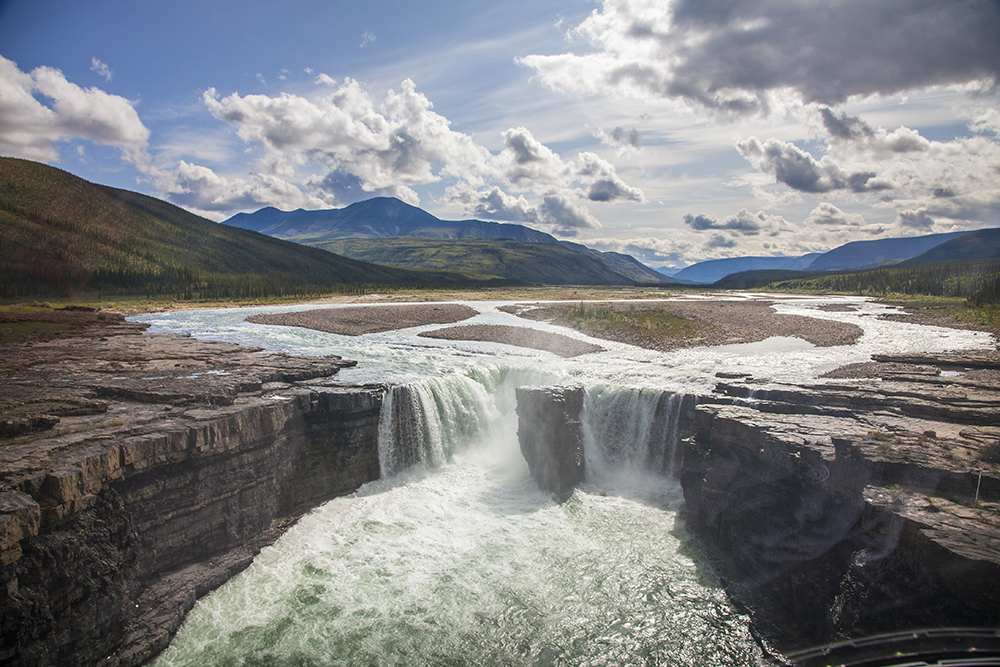
Adventure travellers shouldn’t skip out on a visit to Dehcho, where breathtaking mountain backdrops and winding rivers abound. Dehcho is also home to the Nahanni National Park Reserve, which was designated as a protected UNESCO World Heritage Site due to its incomparable geological land formations, which include deep canyons, thunderous waterfalls, and ancestral Dehcho First Nations sites. 

Photo Credit: Destination Canada

SAHTU

Sahtu, which borders the Yukon Territory on its western side and Inuvik to the north, is a backcountry camping lover’s dream, and is considered one of the most remote places in NWT, meaning travellers are very likely to come across an abundance of regional flora and fauna, like wood buffalo, moose and grizzly bears. 

Photo credit: Colin Field

WESTERN ARCTIC

The Western Arctic, a land of polar bears and sprawling tundra, is flanked by the Mackenzie River, and is where travellers can find a direct link to parts of the famed Northwest Passage. 

Photo Credit: Gerold Sigl/NWT Tourism

YELLOWKNIFE

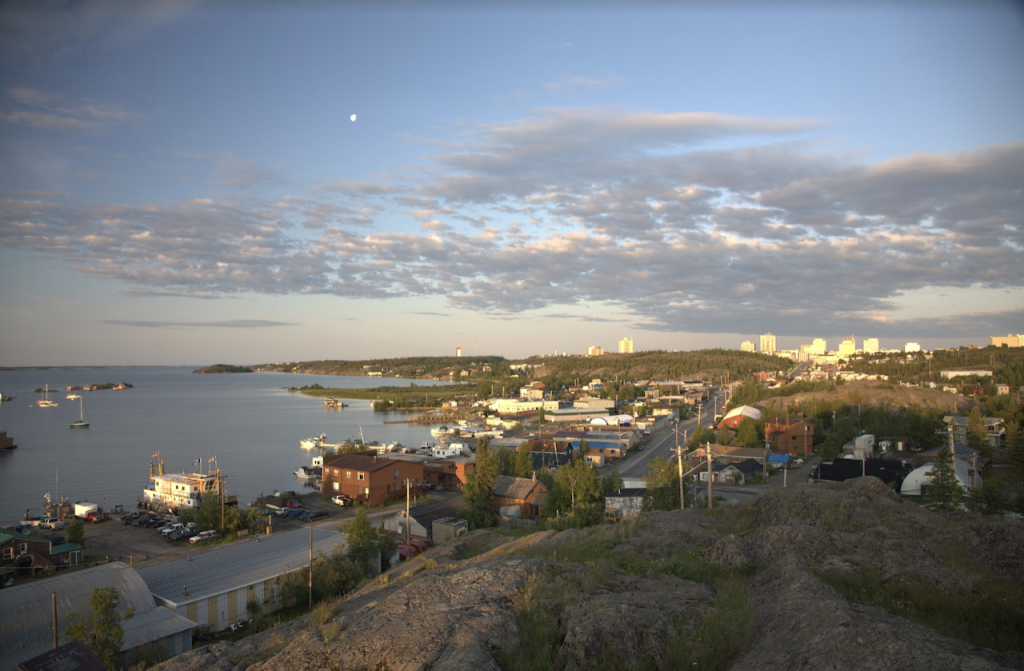
Finally, Yellowknife, NWT’s capital, provides endless fun year round, and is a “little big city” that’s buzzing with community and culture.

From paddling, rafting, cruising or fishing the dozens of lakes and rivers, to embarking on a road trip down one of many scenic highways, to camping out under the Northern Lights, playing a round of golf, or embarking on an Indigenous-led tour, there’s no shortage of things to see and do this summer in the Northwest Territories.

Down the Danube with Avalon Waterways

“From Vienna to Budapest, a river cruise showcases off-the-beaten path things to experience.”

There’s a fire in the kitchen! Sparks are flying after chef Karl Wrenkh pours a small vial of vodka into a simmering pan of oyster mushroom stroganoff and quickly takes a lighter to it — causing the liquid substance to instantly burst into metre-high flames.

But unlike some failed dinners that accidently transform meals into a charred crisp, his concoction is all about deliberately sealing some extra flavour into a mouthwatering recipe. 

From the newly-remodelled cooking studio of Wrenkh Vienna Culinary School, the budding entrepreneur explained how he and his brother Leo followed in their parents’ footsteps to bring local, fresh and healthy cuisine to life in a destination that’s universally renowned for being the home of the Wiener schnitzel. It’s a rather interesting story too, considering the family isn’t vegetarian but rather, stems from a long history of butchering. 

“Nobody in the family ever was [vegetarian] — we’re actually a family of butchers. We still feel there’s a lack of really good, quality vegetarian food in Austria. It’s great fun cooking vegetarian stuff because we can still always be creative with the recipes,” he said. “My parents were among the first vegetarian chefs in Austria in the 1990s, but then they divorced and we didn’t exist for a couple of years… then my brother and I opened up here in ’09. It’s 80% vegetarian with meat and fish [on the menu] — we say we cook what we hunt and fish.” 

Today, the restaurant has not only become a trendy spot for lunch and dinner, but a cooking hub for visitors and locals alike to learn how to make mainly vegetarian meals with a twist during daily culinary workshops. The Wrenkh brothers, who have their own cookbooks, are also co-creators of Avalon Fresh, river cruise line Avalon Waterways’ selection of healthy and vegetarian menu offerings onboard.

“We had a need to elevate our vegetarian cuisine; we didn’t want to serve pasta every day,” noted Pam Hoffee, the president of Avalon Waterways, who was also on location for the cooking demonstration. “Originally, it was about vegetarian cuisine but then we saw a trend towards healthy eating as well. It’s helped us elevate that and it’s been evolving over time.”

The suite life 

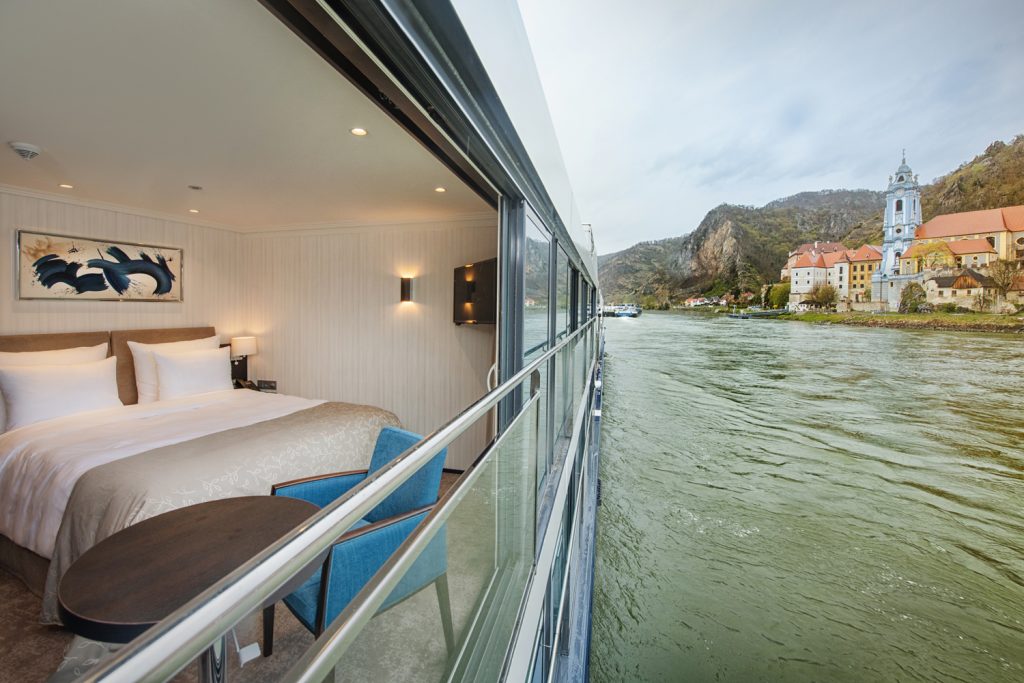
Recently christened by 15-time Emmy Award-winning host, executive producer and anchor Meredith Vieira, Avalon View is the newest ship to join Avalon’s fleet. The 166-passenger ship is mostly made up of 200 sq. ft. Panorama Suites with floor-to-ceiling 11-feet wide windows that slide wide open. There are also two large 300 sq. ft. Royal Suites, complete with two sinks and a powder room for guests for those seeking even more space.

Travellers looking to experience the ship firsthand can take part in a variety of Danube-based itineraries offered this year, including a special Gone Girl! departure on Sept. 15 with author Gillian Flynn.

After transforming the ship from Lot #02338024 to Avalon View, Vieira, well known for her time on television as the host of The View and Who Wants To Be A Millionaire, admitted to having a slight fear of water before agreeing to take on duties as godmother. 

“It’s so warm and inviting. I love the size of the ship. You feel like you’re part of a family,” she said, reflecting on her time on the ship. “There’s an intimacy to it that’s really lovely. I really feel like I’m immersed in the culture around me because of the fact that we’re constantly stopping and you have the opportunity to do so many different things in port. The food on this ship is really good and the wine is unbelievable. I would definitely do it again. I could see myself doing it alone, it’s definitely a great experience as a family or friends. You can make it whatever you want.”

Highlights along the route

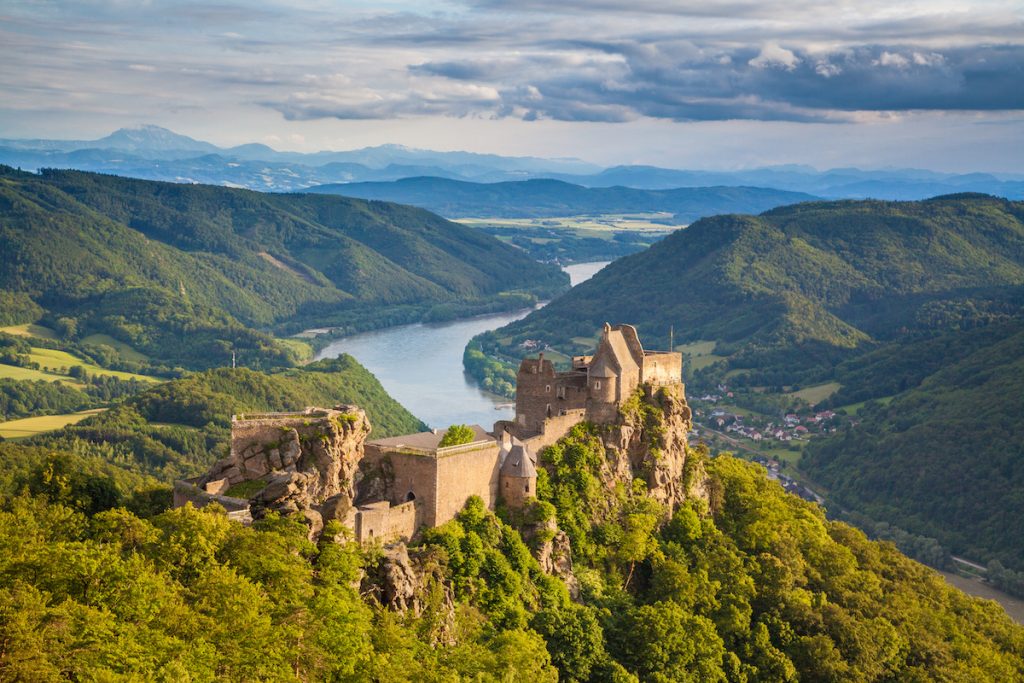
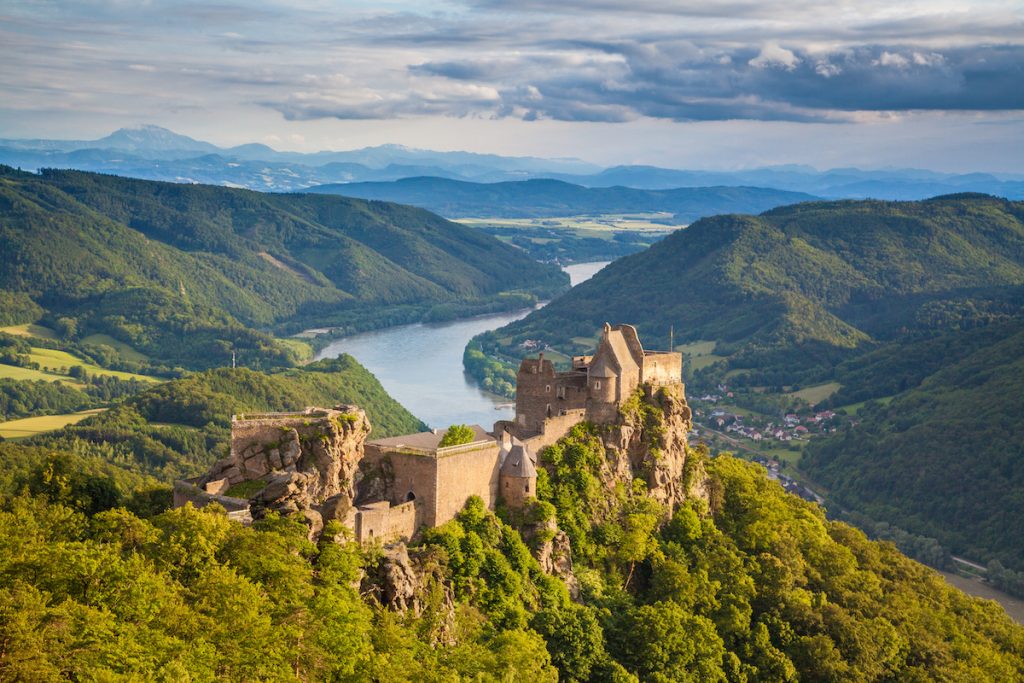
Unlike ocean cruises where guests often wake up somewhere new every morning, the river cruise journey takes place during the day so that all those onboard can soak up the scenery as the ship moves past historic castles, stunning landscapes and picturesque buildings like Dürnstein’s blue Abbey. Another must on a river cruise down the Danube is an evening illumination cruise past landmarks in Budapest like the The Hungarian Parliament Building and Castle Hill. 

While in port, a variety of daily tours ranging from active hiking or biking outings to classic city explorations are offered to give visitors the chance to have a deeper connection and understanding of the destination. These options allow travellers to customize their river cruise journey from start-to-finish based on personal interests. In Bratislava, for example, a classic option would be a city tour with a stop to enjoy Slovakian liquor tasting at the St. Nicolaus Distillery. Meanwhile an active option would be hiking through the forest and vineyards of Raca, followed by a wine tasting. There is really no wrong choice and it can be tough to narrow down which tour to choose. The convenient thing about being docked in the heart of the city is that it’s also easy to get on and off to explore. There’s ample free time built into each itinerary so that those who are torn between two daily excursions will be able to cross off some of those sights on their own.

Finding the real Fiji

The founding values behind Bula Coffee — a coffee production company in Fiji — extend far beyond providing a good cup of morning joe. As Luke Fryett, whose job title cleverly reads ‘Man on the Ground,’ explains, while giving the world a great shot of coffee, Bula Coffee is “all about giving Fijians a better shot at life.”


What started out over a decade ago as a small enterprise working with one family in one village in Fiji has since expanded across 38 villages to buying coffee off of 5,000 people annually — a significant number of Fijians who now have additional sources of revenue.   

“It’s more than money — we exist to give people a hand up — to give people a better shot at life,” he said. “To give people access to education, to give them financial independence. Money matters, but it’s more than money. We are changing lives one cup at a time.”

More recently, Bula Coffee launched the Crop to Cup Coffee Tour, giving travellers “the chance to not only taste Fiji’s wild harvest coffee and see how we process it, but also the chance to become a part of our story, becoming invested in our work and becoming part of the change we are making in Fiji.”
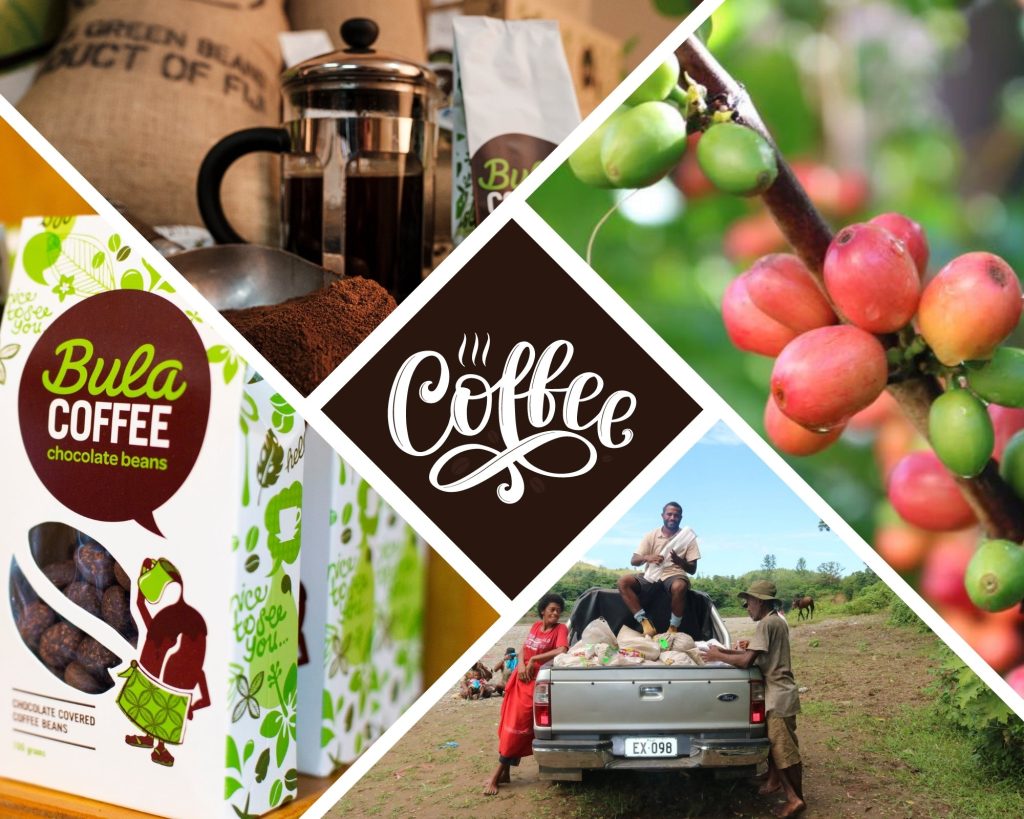
Along with learning about how to get a coffee cherry ready for a morning brew, visitors will be able to learn about how every cup of coffee can make a difference in the local economy. One example of how getting involved in the coffee business has made a positive impact is in a local community where kids would get to their boarding school by floating down the river in a tire — often getting soaked in the process. 

“They used their coffee money to buy every kid in the village a waterproof bag, and a small cooker, so now the older kids can cook for the younger kids, during the week,” he said. “They also built a much better raft with tires all around it secured properly so the kids can keep dry… This is why money matters, but it’s more than money. It’s about empowering communities to keep their kids safe, to keep them dry, to let them have food during the week. Allowing the kids to focus better at school because they aren’t hungry, aren’t worried about their wet clothes. This is why every cup counts.”
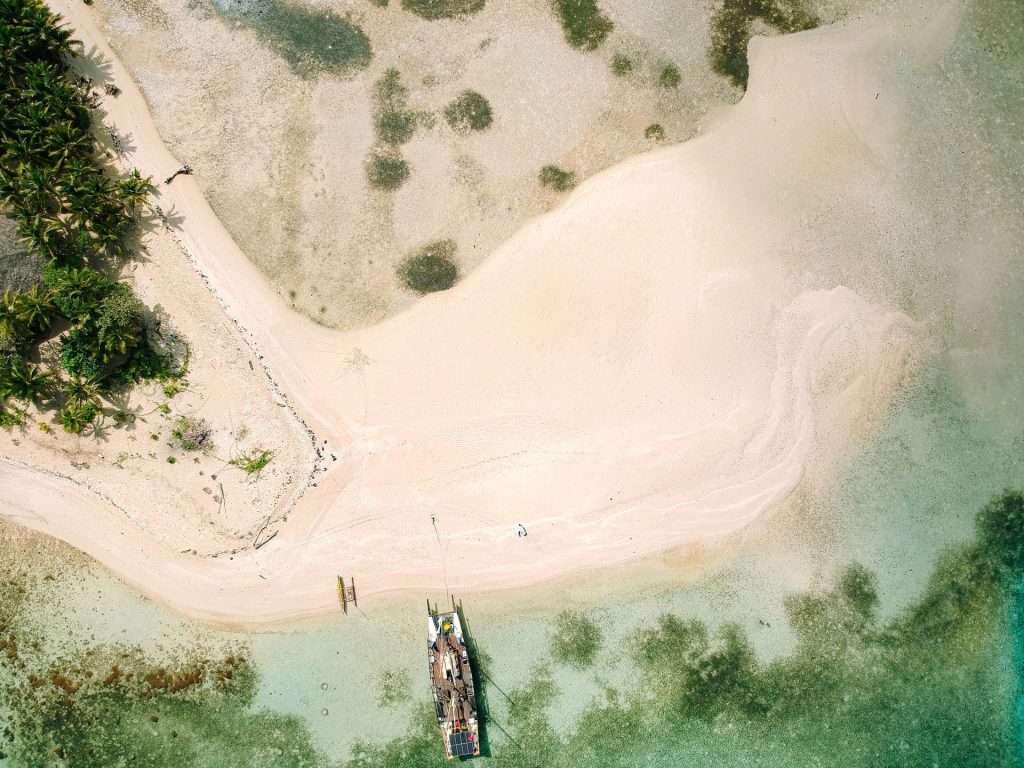
With Bula Coffee being one example, Tourism Fiji’s CEO Brent Hill notes that sustainability and supporting the development of meaningful experiences in the destination are two key corporate priorities going forward. 

“We’re very conscious of how tourism actually contributes to local life,” he shared. “I really want people to leave the resorts — you start to really experience what Fiji is all about.” 

Even the national carrier is making efforts when it comes to sustainability. Along with operational efficiency and having meals served in biodegradable containers, Fiji Airways is also offsetting its carbon footprint with the ‘A Tree For Every Take Off’ initiative. The airline has planted 55,000 mangroves to date and is targeting another 50,000 over the course of this year. 

“We’ve been here for 70 years… We want to be able to say we’ve left a legacy as an airline,” said Akuila Batiweti, executive manager, digital and marketing for Fiji Airways. “Fiji is our home.”

For travellers who want to take it one step further, Fiji Airways is set to launch a new day trip in June where customers will be able to go out and help plant mangroves to offset their carbon footprint.

Checking into Nanuku Resort

“Bula Ann” reads the personalized welcome message formed from rocks at the bottom of my private plunge pool after checking in at Nanuku Resort. But Bula, a Fijian greeting meaning hello/welcome, extends beyond the monogrammed pool to the sense of welcome from staff that kicks off upon arrival with a warrior welcome. 

Located on Fiji’s main island of Viti Levu, Nanuku Resort hones in on the cultural elements that make Fiji a unique destination from Kava ceremonies (a popular drink in the South Pacific not to be confused with cava) to traditional cooking classes and fire walking ceremonies. 

There are a range of memorable accommodation options to choose from, including the modern villas, newly opened in 2019, and the more traditional residences, which are expansive and are undergoing upgrades with new thatched roofing and refreshed interiors. 
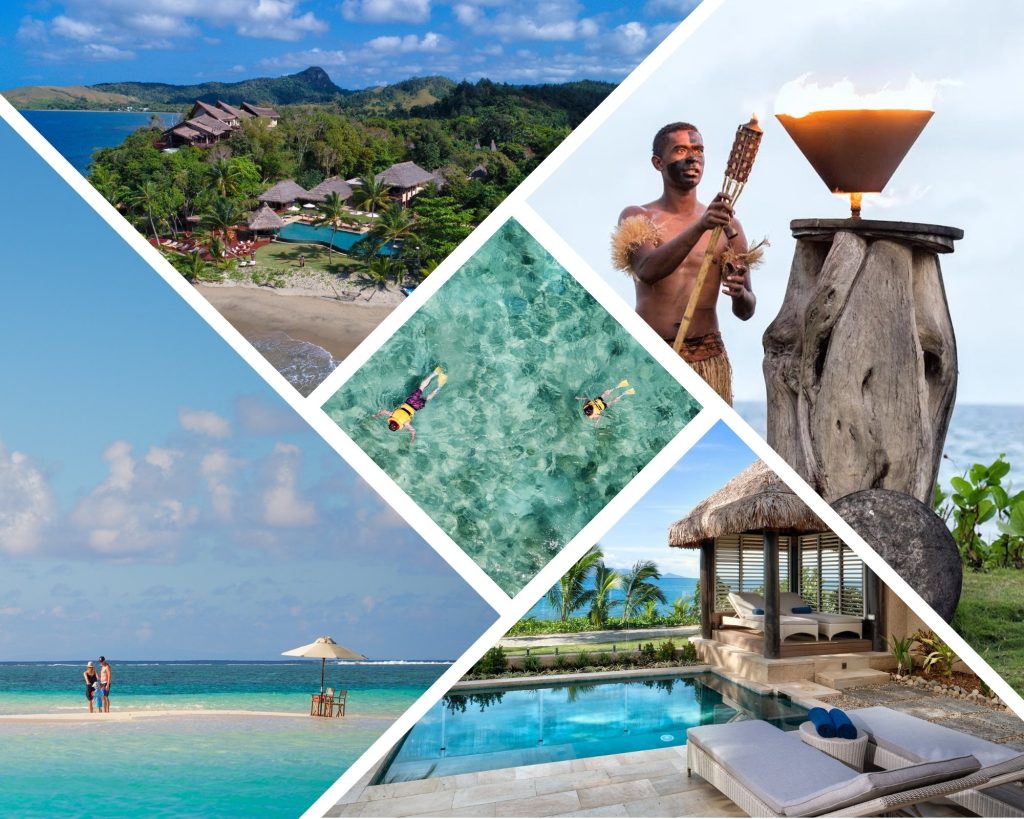
The resort runs a daily schedule of activities for guests like yoga sessions with Sisi Nasiga, a former Olympian wellness coach (if you’re lucky you’ll be the only one who registers to get a one-on-one training session on the beach) or hiking excursions to waterfalls. For a day trip to remember, travellers can’t go wrong spending time on Nanuku Island, the lush uninhabited island from where the property gets its name. Those who are so inclined can even opt to camp out for an evening under the stars.

For families: kids are assigned a Bula buddy to help keep them entertained and busy so that parents can truly enjoy some moments of calm during their stay.

While the resort is outstanding on all counts, what really sets it apart is the staff. From touches like having morning cappuccinos served with guest’s names to the team gathering to sing for those who are departing, Nanuku Resort is bound to leave a lasting impression on travellers and will have them wanting to come back.

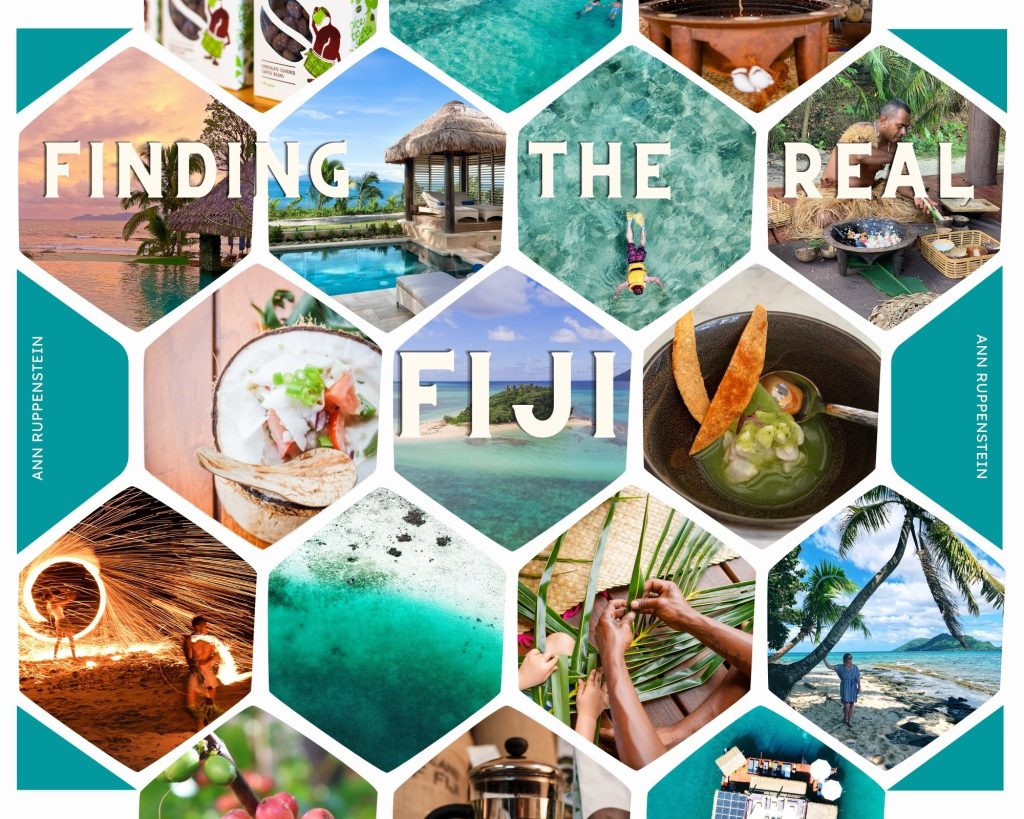
Photos courtesy of Fiji Tourism, Nanuku Resort and Ann Ruppenstein.

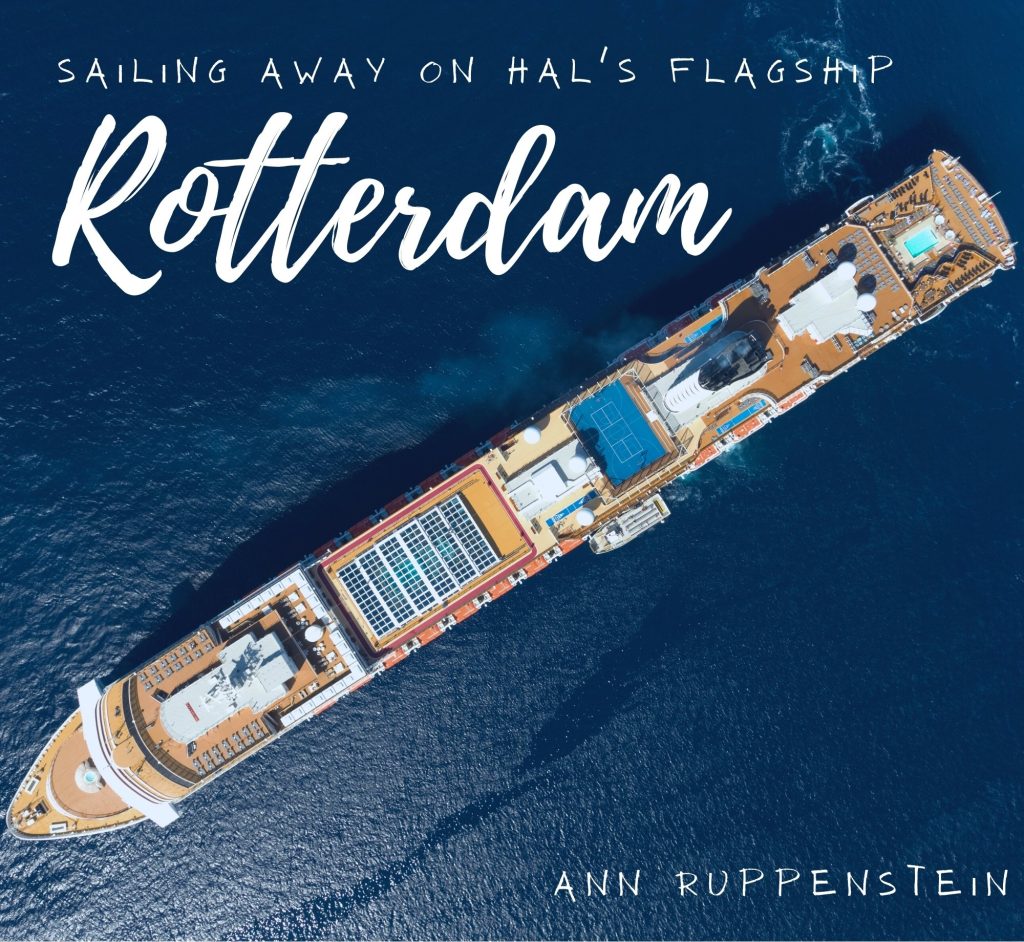
Sailing away with Holland America Line

As a company that’s been around for going on 150 years, Holland America Line is no stranger to adapting.

The premium cruise line started out as a shipping and passenger line, slowly gaining a reputation for safely bringing emigrants from Europe to North America. Nearly one million people made the journey to new beginnings and adventures on a Holland America ship — including Albert Einstein, Olympic boxing champion Bep van Klaveren, Alfred Hitchcock, Ernest Hemingway and Roald Dahl — to name but a few.

During the First World War, several ships were called upon to carry and transport soldiers. In the Second World War,, ships like Nieuw Amsterdam were even converted into troopships, eventually resuming regular operations after being refitted back to passenger ships post war.

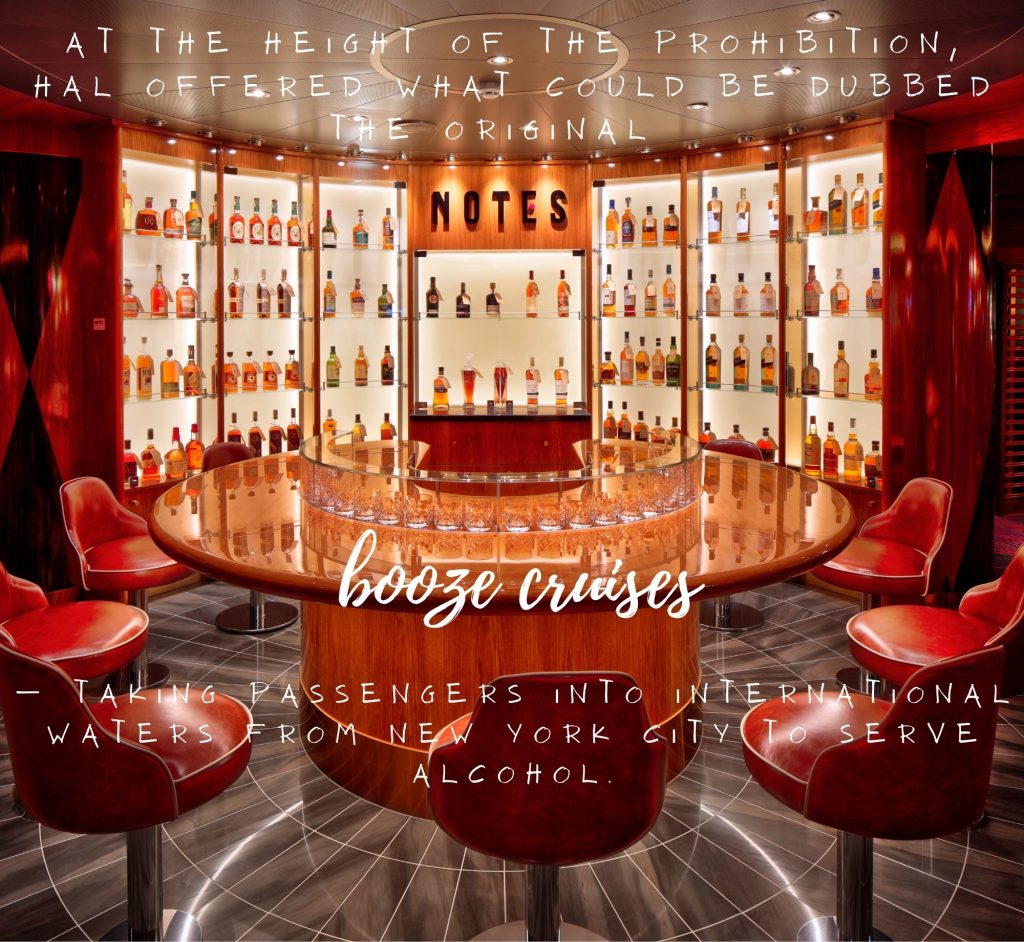
At the height of the prohibition, the company offered what could be dubbed the original booze cruises — taking passengers into international waters from New York City to serve alcohol. Now doesn’t that sound like a party?

Facing other challenges like stiff competition and the takeoff of trans-Atlantic air travel, HAL charted a course for new destinations in the Caribbean and Alaska, transitioning to a primary focus on cruise holidays.

And while the pandemic dealt another blow, the cruise line forged ahead to make sure the return to the waters would be strong by enhancing its content and putting in place new programming to mark its 75th year of operations in Alaska.

“The pandemic has been hard, but as I stand here today, I’m flooded with hope and filled with confidence that our best days are still ahead,” Michelle Sutter, vice president of North America sales, said kicking off a session during the Attitude of Gratitude trade appreciation cruise held on the Rotterdam from March 10 to 13.
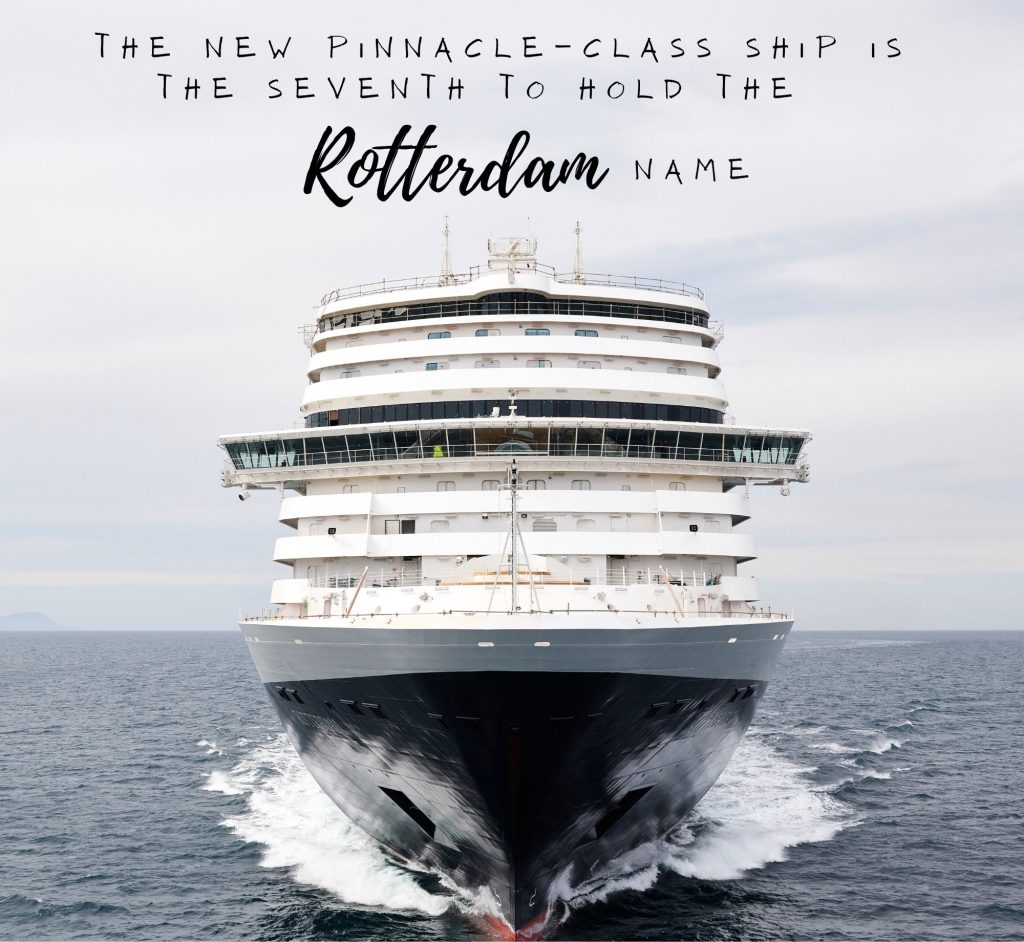
The new Pinnacle-class ship is the seventh to hold the Rotterdam name, including the company’s first ship, the original Rotterdam. Although the flagship has come a long way since those original cross Atlantic sailings with offerings like the Music Walk, featuring nightly entertainment ranging from B.B. King’s Blues Club to the Rolling Stone Rock Room, where a live band plays classic rock and roll hits, and a culinary scene with high-end options like Tamarind and Rudi’s Sel de Mer to quick bites like gourmet hotdogs and burgers, elements of the past are still evident throughout.

“Our first ship was Rotterdam. The company was headquartered in Rotterdam — it’s actually a hotel now,” explained Gus Antorcha, president of Holland America Line. “There’s always been a Rotterdam as part of the fleet. The history of the company is very important to us — it’s acknowledging our roots, where we’re coming from and where we started.”

The evolution of HAL plays out during an evening staged presentation called Origin Story on Rotterdam and look no further than the cocktail menu at Half Moon Bar for a drink called the Three Mile Run, in honour of the prohibition days.

And for those truly wanting to get back to HAL’s origins, Rotterdam will be replicating the first crossing from Holland to New York on a special itinerary set for Oct. 2, 2022. Although unlike the original crossing 150 years ago, there are added ports of call on the docket like Copenhagen and Paris.

“We’re adding a few other ports because just a straight-shot Rotterdam to New York wouldn’t be that interesting — but in October, this ship will go from the Netherlands to New York, we stop in Paris along the way, which is nice. That voyage in particular will have a lot of our history and some of the memorabilia,” said Antorcha. “It’s pretty cool when you’ve been operating 150 years and started around bringing emigrants and doing it in a way that was safe. It was safe passage, it was quality, but it was focused on emigration.”

And stay tuned for 2023, as the company marks a milestone 150 years of operations since officially being founded on April 18, 1873. More details about highlights and the celebrations that are in store will be released closer to the anniversary date.
“The not so obvious advantage for booking a cruise right now, at least in the short term, is service,” he said. “The ships are staffed up and the service is excellent. Compare it to other options today where costs may be high with service gaps due to staff shortages and supply chain issues. This was not a issue on board which was a delight to experience.”

As for the Rotterdam, Pearlman said the flow of the ship made sense and it was apparent that “HAL is just as delighted to be back to cruising.”
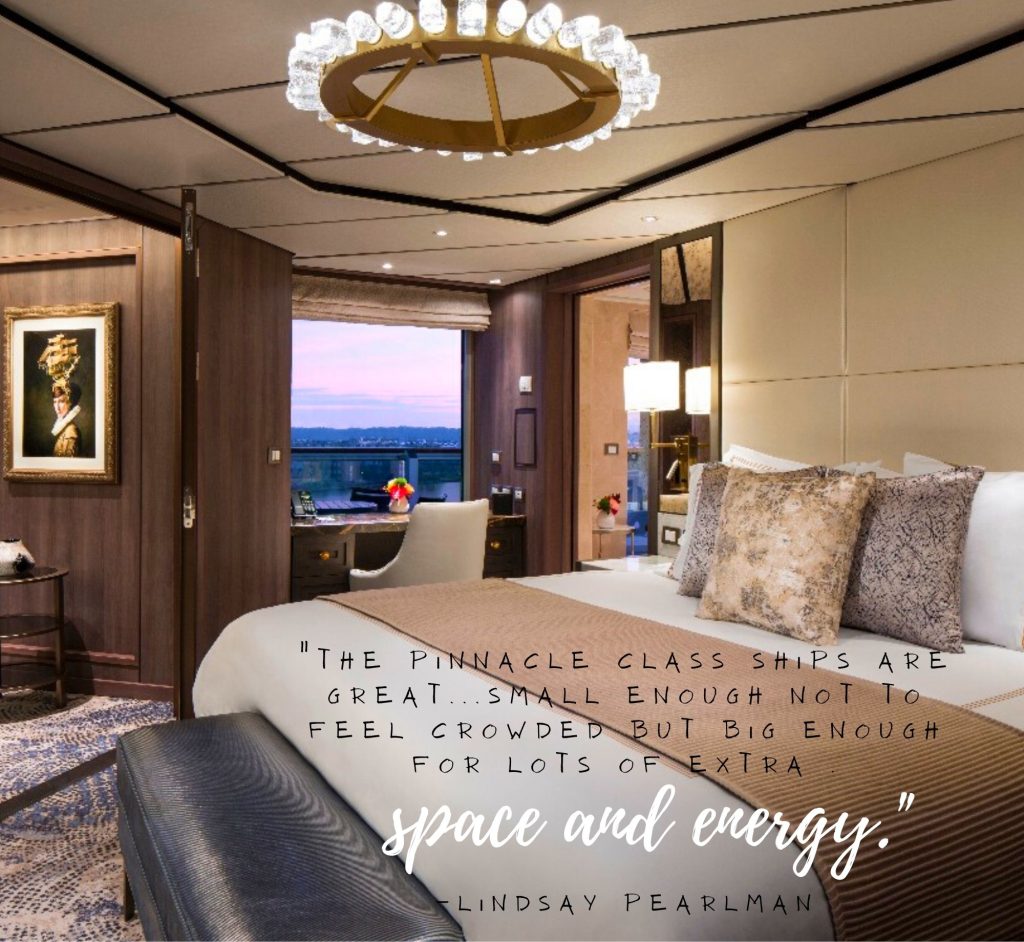
“The Pinnacle class ships are great,” he said. “Small enough not to feel crowded but big enough for lots of extra space and energy. I think there something for everyone but I would say it’s geared more towards adults — of any age — with an affinity for music and food.”

Explore the heart of Mexico with a visit to the colourful colonial city of Guanajuato

Known as the heart of Mexico, Guanajuato is home to boutique hotels, vibrant colonial cities, top notch tequila, gastronomical experiences, Instagrammable views and passionate people.

It’s hard to appreciate or understand just how much time goes into producing a bottle of tequila. That’s why one of the premium tequilas at the Tequila Corralejo distillery boasts the name 99,000 Hours to call attention to the lengthy amount of time it takes to create the añejo (old) spirit. 

“Eleven years and three months is the time of the whole process. From when the agave is planted until the harvest, it’s eight to 10 years. Then comes the process in the company [for roasting, distilling] and aging it for one year and a half,” says Nohemi Murillo, e-commerce manager and marketing executive at Tequila Corralejo. “The shape of this bottle is like a tree. It represents that we wait patiently to do something right. We are passionate and proud of the final result. We are so proud of our tequilas.”

The distillery is housed in a hacienda that’s roughly 1.5 hours from Guanajuato City and two hours from San Miguel de Allende, two colonial cities that are a must to visit in Guanajuato, which is also the name of the Mexican state. 
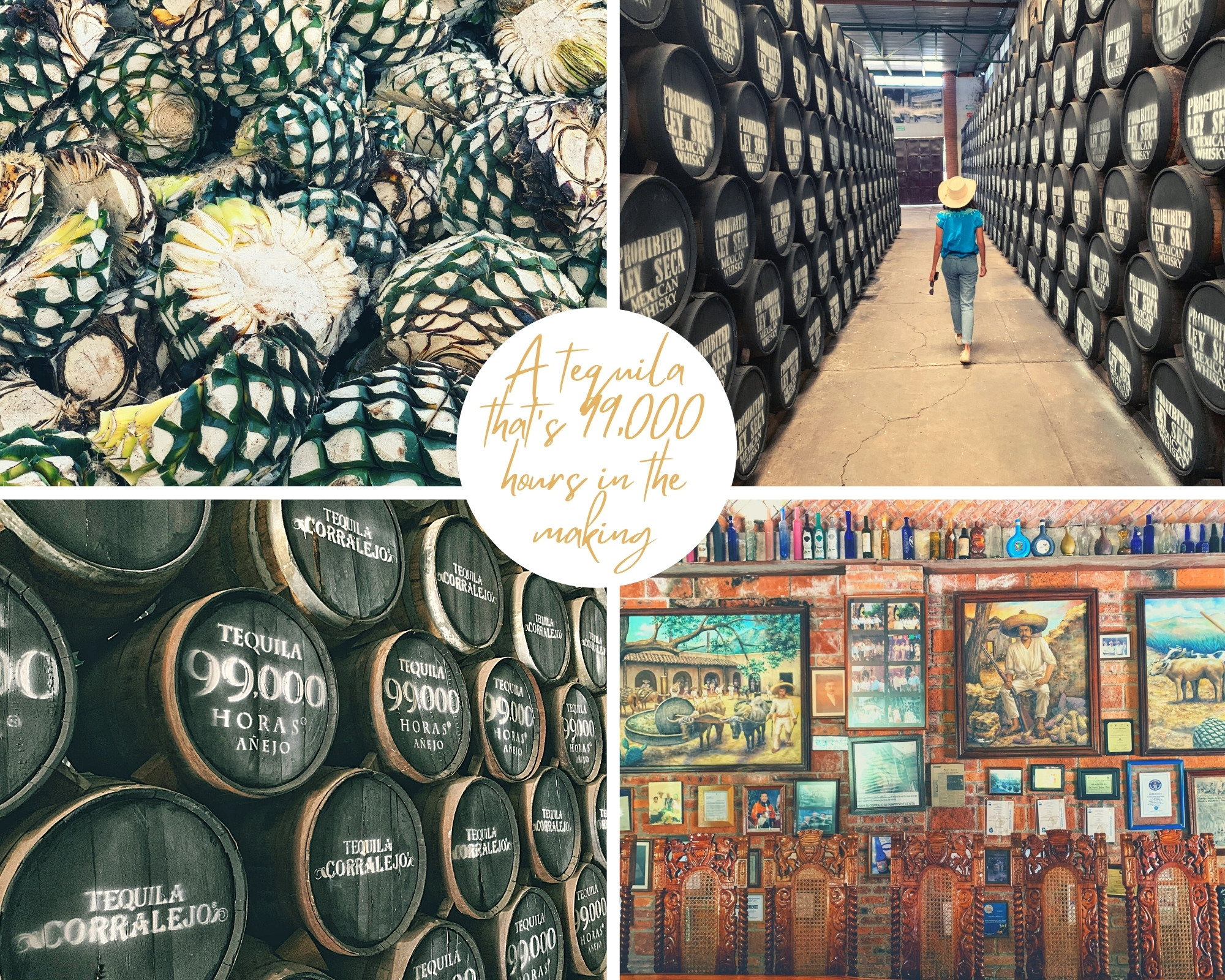
Here, a walking tour (free guided tours are available daily) reveals more insight into the process of making tequila, which can only be made using blue agave. Notably, you have to pass through a confessional to get to the storage area for Tequila Corralejo’s best tequilas, including 99,000 Hours.

The hacienda is open 365 days a year and produces its own bottles so along with an impressive collection of tequilas and whiskey to choose from, it’s an ideal spot to pick up glassware like vases and shot glasses. 

Murillo’s tour ends by sharing the product that’s at the heart of the business — the tequila that’s 99,000 hours in the making. With a smile on her face, she eagerly distributes a sample to everyone, passionately describing its smooth flavour profile. 

This passion winds up being a common theme across the people we encounter along the way over the next week across Guanajuato, from tour guides to restaurant owners to artists. Along with the highlights of the destinations themselves, it’s arguably the charm of the people that make the region known as The Heart of Mexico so special. 
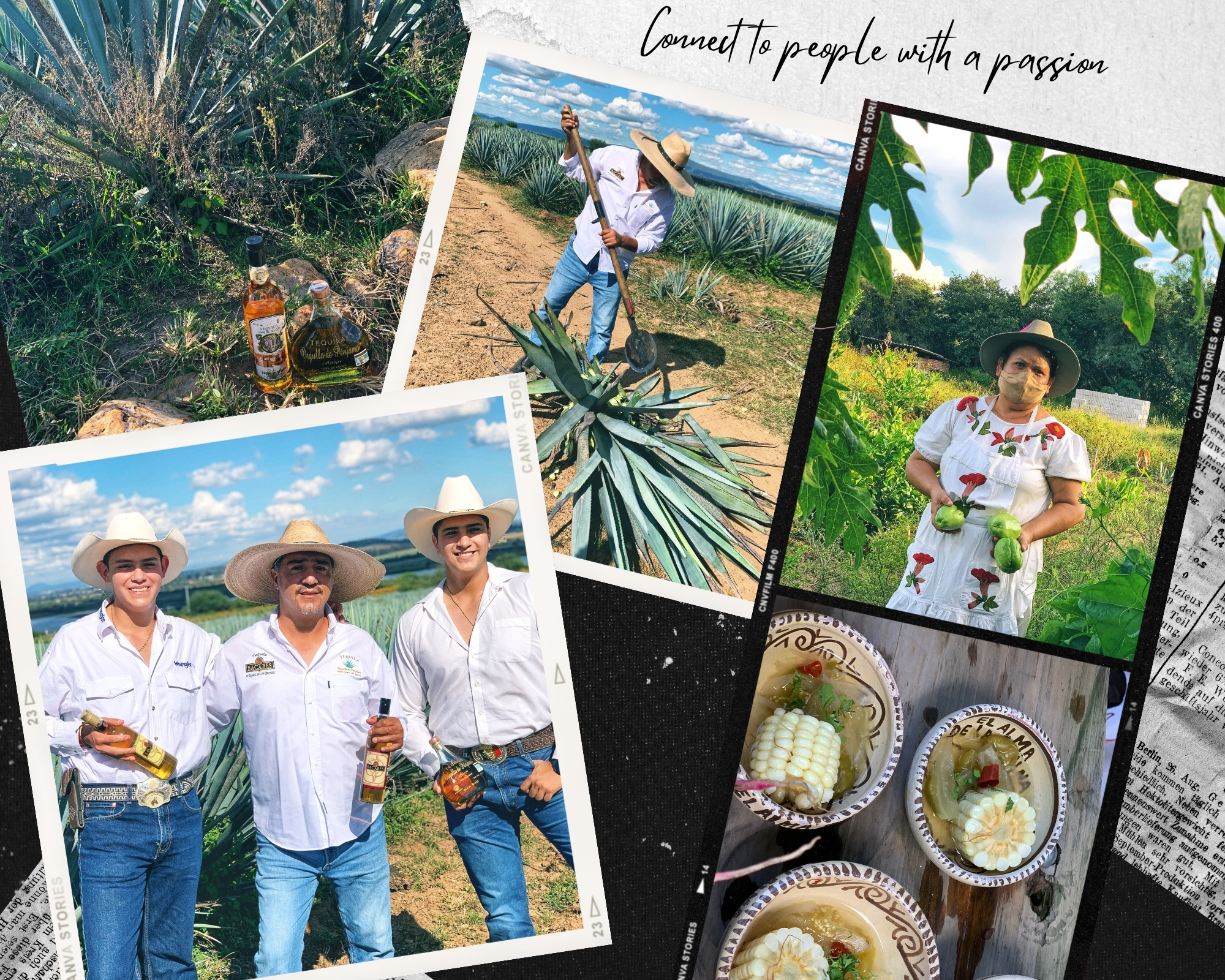
It’s easy to see why San Miguel de Allende has become a popular spot for North American travellers. This city has a thriving culinary scene, delightful colonial Spanish architecture and photogenic boutique hotels. 

While Guanajuato City isn’t yet all well known in the Canadian market — it likely won’t be that way for long. For anyone looking for an alternative to their beach getaways or to tag on an authentic destination to a sunny stay, this UNESCO designated city offers something for everyone. With over 3,200 alleys to meander through, it’s indeed a city that’s best discovered by foot — and there’s a photo opportunity around every corner. For a stunning view of Guanajuato from above, take the funicular or steps up to Al Pipila monument. From below, the vibrant city almost appears toylike. 

Boutique luxury hotels are the norm across Guanajuato. In Guanajuato City, a great option is Casa del Rector, which has an awesome courtyard restaurant and a hard to top view of the colourful city from its rooftop bar. The boutique hotel also offers experiences like tequila and chocolate tasting with Jonathan Martinez of Xocola-T. Be prepared for chocolates with a twist — his creations have some unexpected ingredients like grasshoppers or fried pork skin, which pair surprisingly well with the chocolates. 
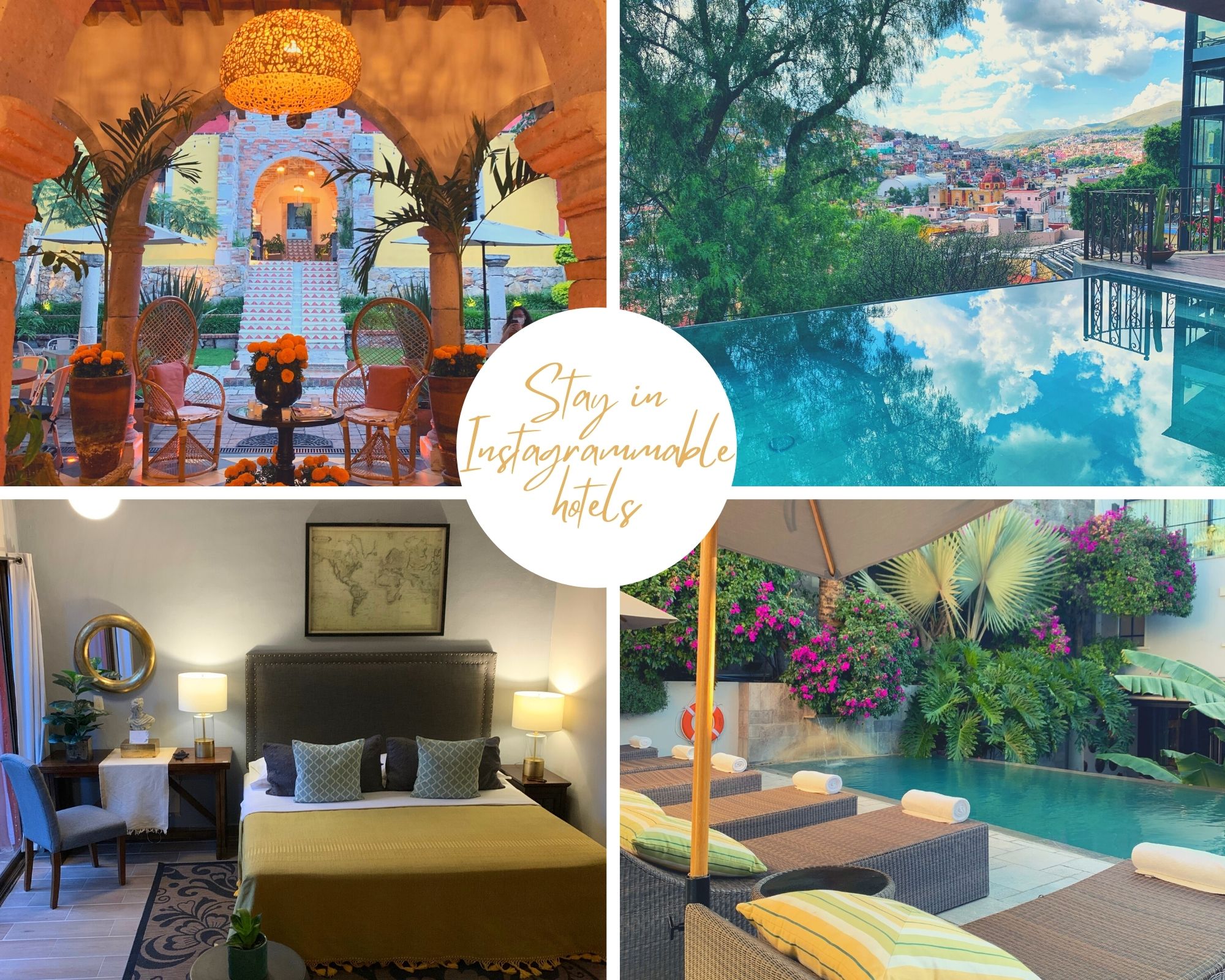
Another unique choice is Villa María Cristina, a member of Small Luxury Hotels of the World. The luxury villa has nineteenth-century roots and is like a labyrinth of discovery. For an Instagrammable stay near the tequila farms and plantations of Penjamo, look no further than Real de Piedra Hotel. If it looks straight out of a luxe magazine, it’s because the 20 room boutique hotel is owned by an interior decorator. For a modern hotel that’s steps away from the cobblestone street featuring one of the most iconic views of San Miguel, check into Hotel Matilda. Whether or not you spend the night, be sure to visit the rooftop Luna Rooftop Tapas Bar at Rosewood San Miguel de Allende for delicious tacos and spectacular views of the city. 

Travellers are drawn to Guanajuato for its boutique hotels, Spanish colonial architecture, gastronomical experiences and Instagrammable cities, but somewhere along the route you’ll discover it’s about so much more.  
Croatia..beautiful surprises are waiting for you

In Croatia, almost anywhere the land meets the water, rough steps carved from pure white limestone jut into the teal waters of the Adriatic Sea. The country’s impressive coastline is among the largest in the Mediterranean and has quickly gained recognition as one of Europe’s most beautiful.

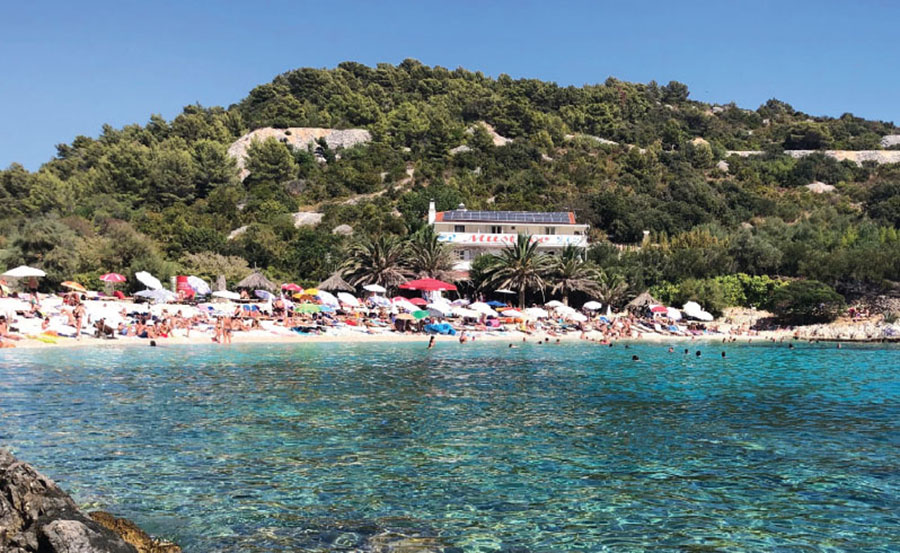
Here, white sand beaches and towering palms are scarce. Instead, in July and August, when the heat from the sun is at its strongest, locals young and old can be found sprawled out on the nearest rock ledge that hangs over the sea, the rays turning their skin to a deeper shade of burnt bronze, while fishermen set up their boats and inspect their nets in preparation for a day on the water.

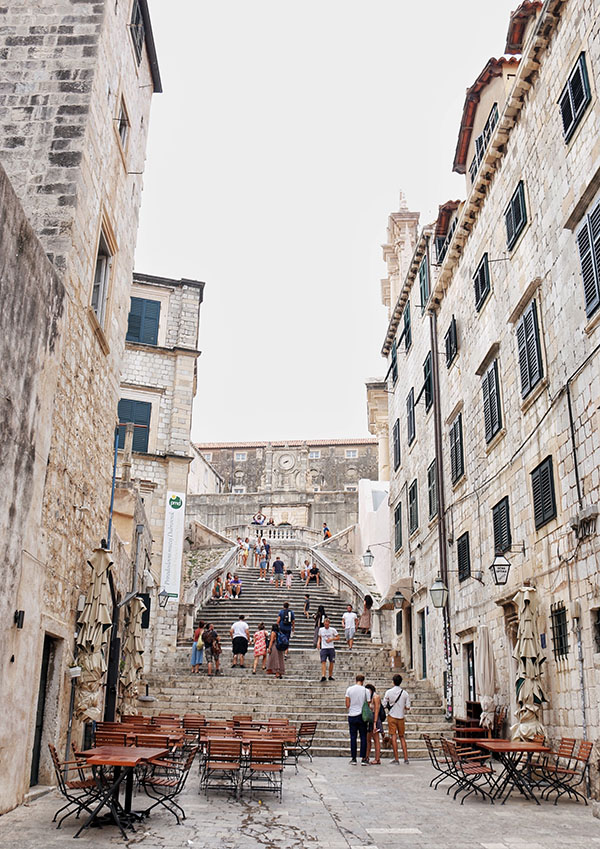
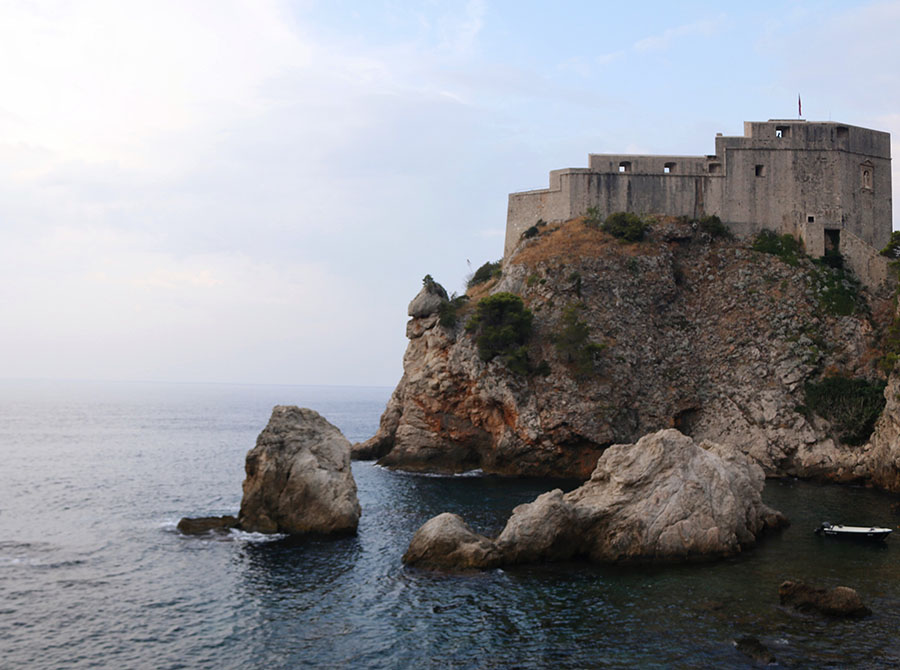
In 2011, 8.5 million international tourists trickled into Croatia. That year was also the same year that the first episode of what would eventually be one of HBO’s most popular television shows, Game of Thrones, aired with scenes filmed throughout the old town of the medieval city of Dubrovnik.

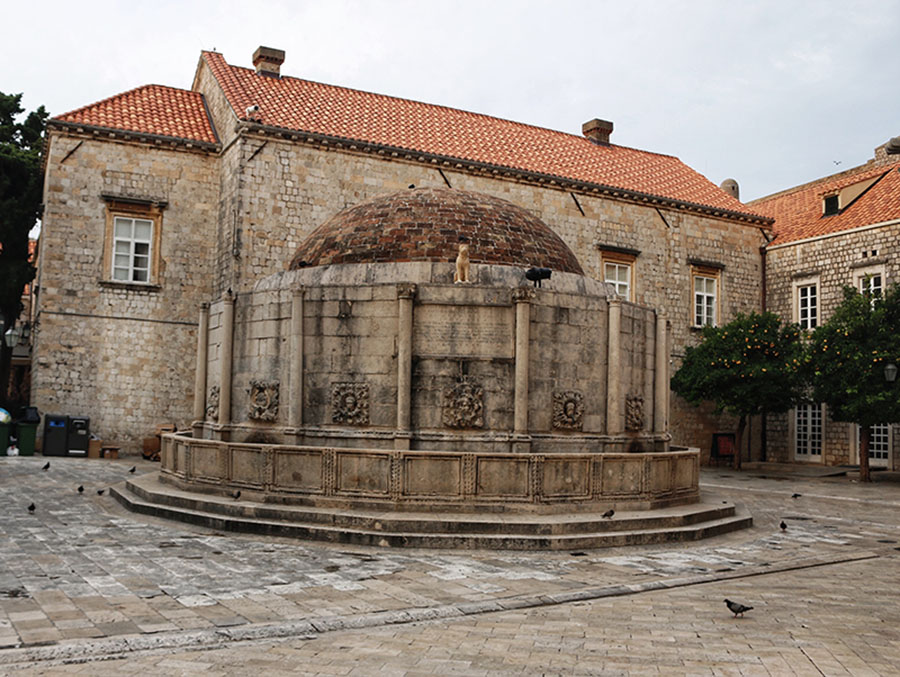
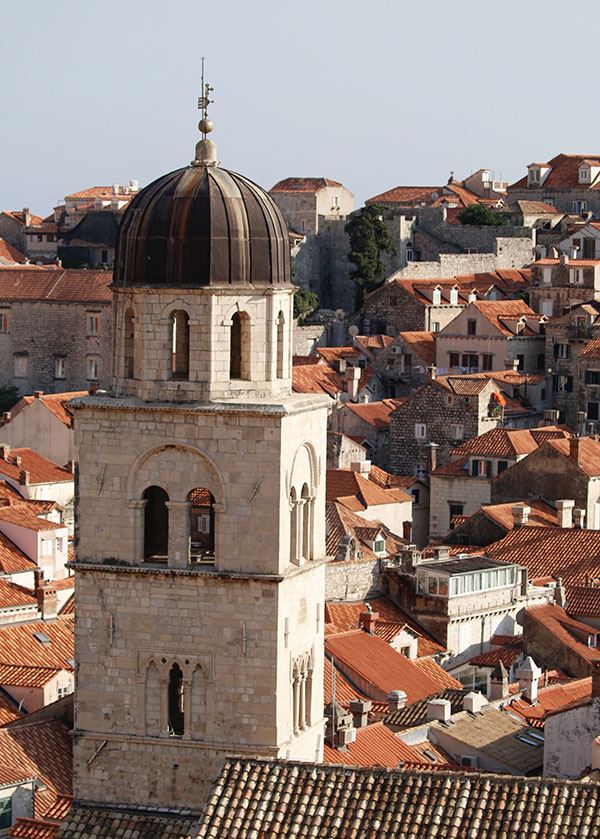
Now, a decade later, Croatia’s tourism numbers have more than doubled. Dubrovnik, though enchanting with its symmetrical orange clay roofs and ancient stone walls should by no means be the only city on your itinerary. As one of the five main airports in the country (Zagreb, Pula, Split, and Zadar being the others), Dubrovnik serves as the perfect jumping point for an extended Croatian holiday.

With its colourful coastal towns, balmy weather, and reputable culinary scene, Croatia is a country that can easily be explored from top to bottom.

Story & photos by CHRISTINE HOGG

HVAR

With more than 1,000 combined islands, reefs, and islets, Croatia’s archipelago is the largest in the Adriatic Sea, and the country has the second largest number of islands in the Mediterranean, second only to Greece.

The majority are inhabited, though some are home to only dense pine forests, wild boar, wolves, and bears, and secret beaches, whose crystalline waters can still be reached by boat for an exciting day trip.

Perhaps one of Croatia’s best islands, Hvar, is to Croatia what Ibiza is to Spain. Easily reached by ferry from Dubrovnik two times per day during the high season, Hvar is a destination that’s steeped in rich nightlife, making it an ideal spot to escape the larger crowds of Croatia’s landlocked regions, while still enjoying the social comforts a city can bring.

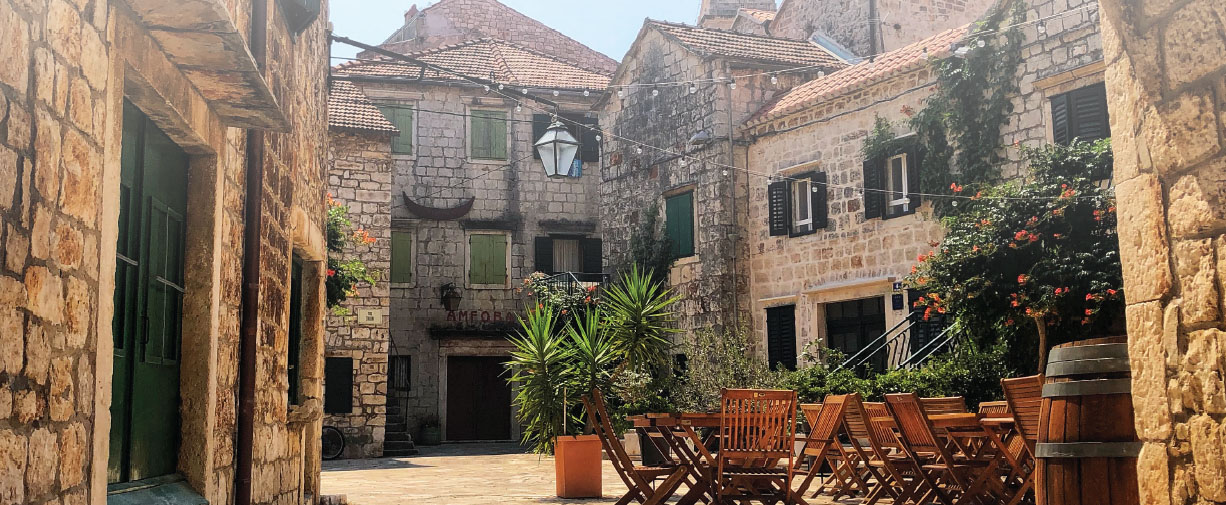
Hvar island is also home to the town of Hvar (not to be confused with the island itself ), which dates back to the 13th century. It’s the biggest settlement on the island, and where the majority of restaurants, bars, and shops are located. Hvar acts as an open-air museum to the past, with many well-preserved sites, like the Stari Grad Plains, an agricultural landscape that were constructed in the fourth century by the ancient Greeks.

One of the best ways to take in the entire island, including Stari Grad (just 25 minutes outside of Hvar town) is by renting a gaspowered scooter or a quad for the day.

From mid-June to mid-July, the island of Hvar is bathed in a sea of blooming, violet-coloured lavender fields, with the majority of the fields being on the stretch of road that connects Stari Grad back to Hvar town. When lavender is in season, the fragrant floral also makes its way onto the gelato menus all over the island, where a popular flavour combo is one scoop of lemon, and one scoop of lavender.

SPLIT

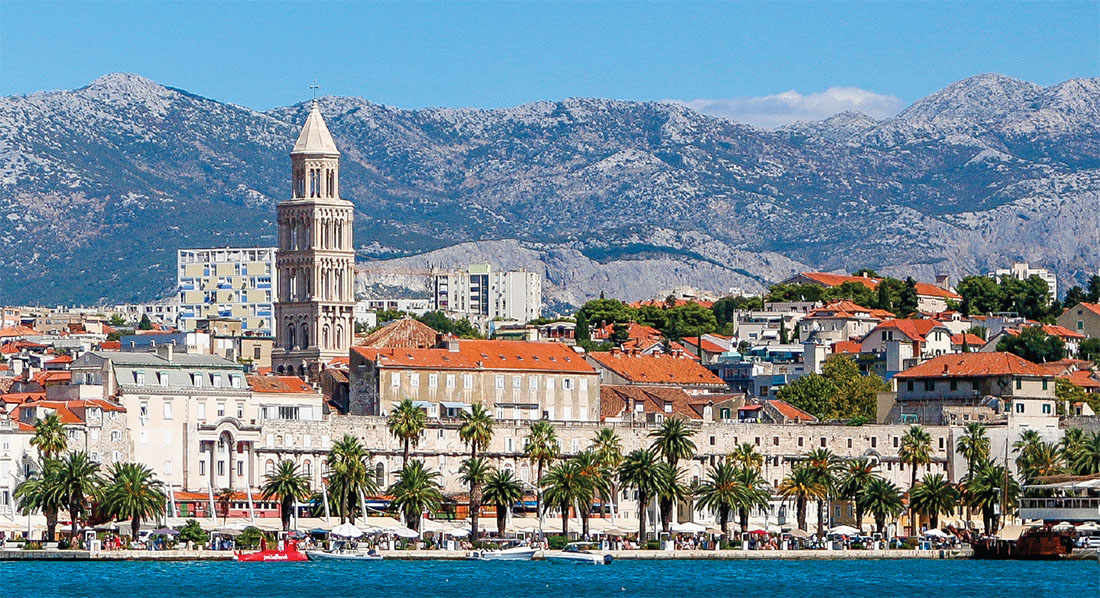
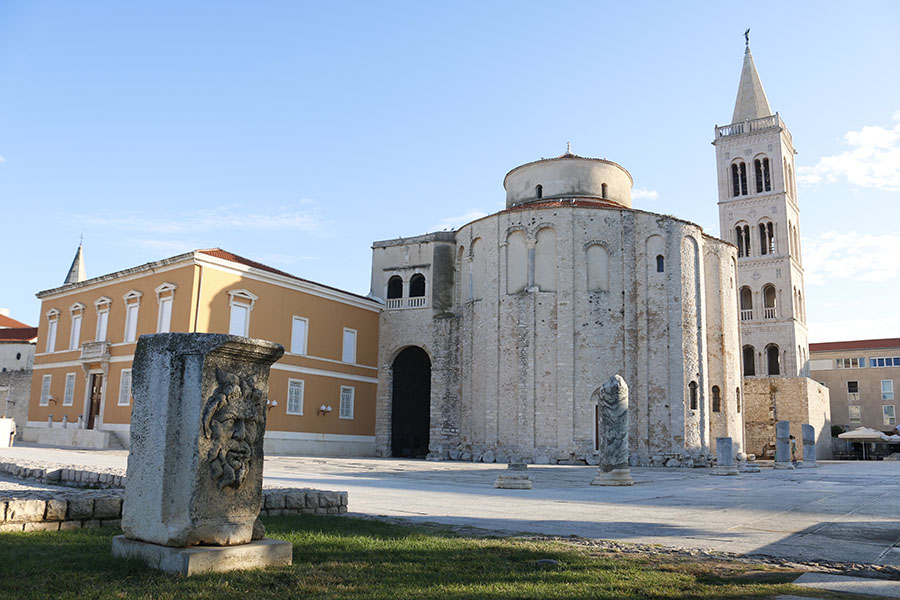
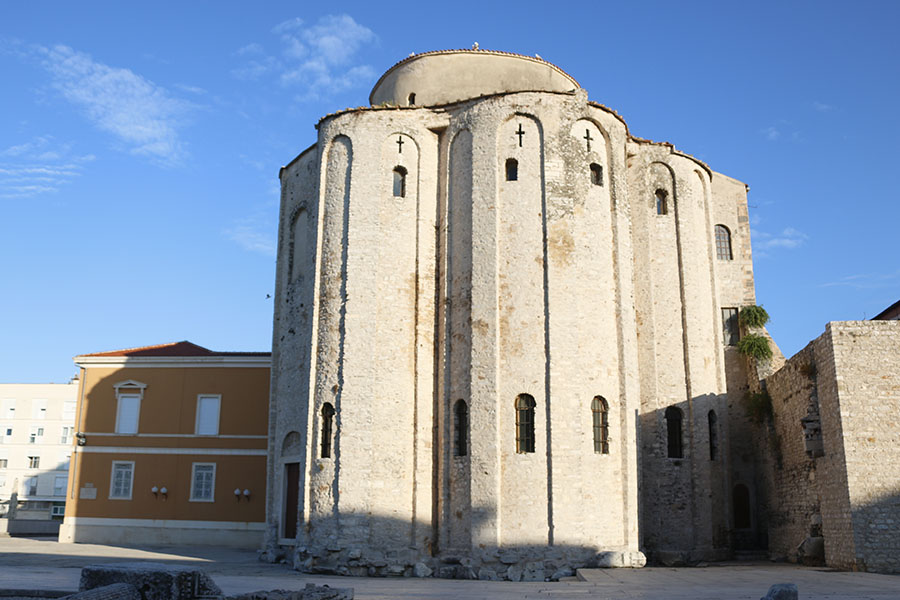
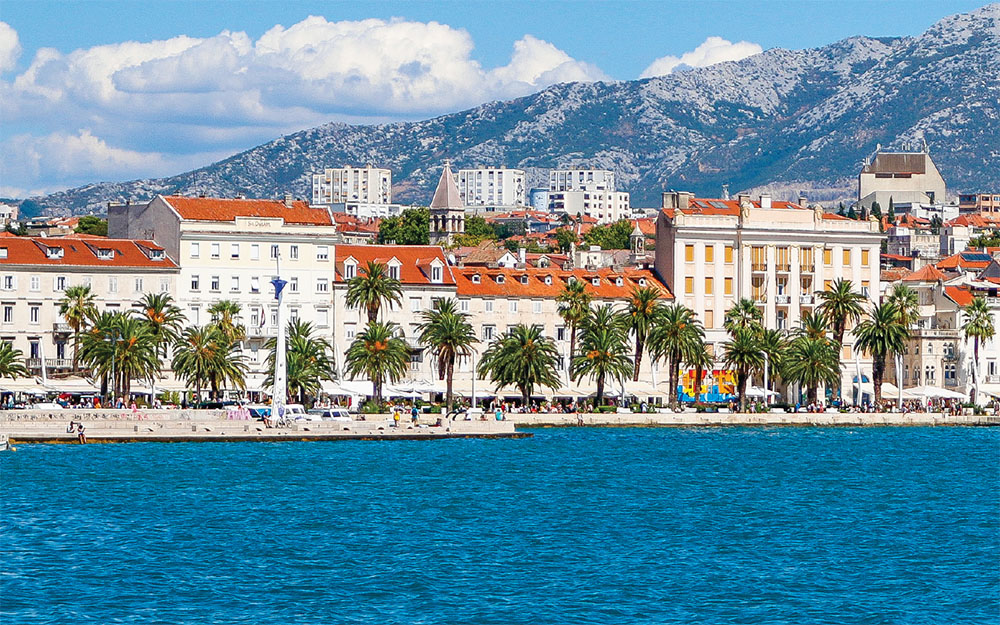
Split, Croatia's coastline from the Adriatic Sea features the towering white Cathedral of Saint Dominus

Head back to mainland Croatia for a brief visit by taking the ferry from Hvar to Split.

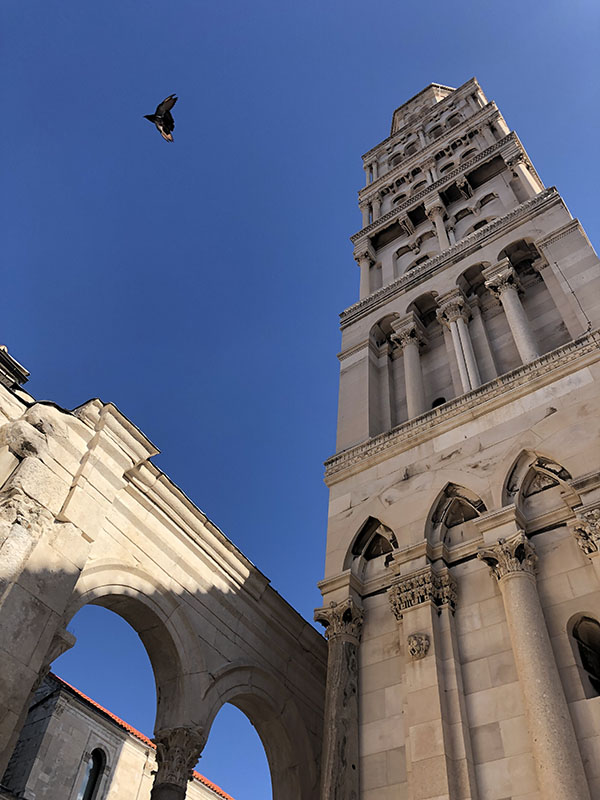
Arriving by water, Split’s picturesque skyline which features the towering white Cathedral of Saint Dominus, constructed in 305 AD, is the first glimpse visitors will have into the city’s thrilling past.

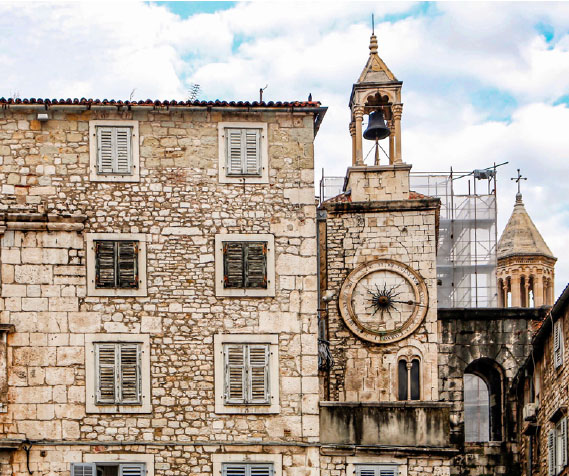
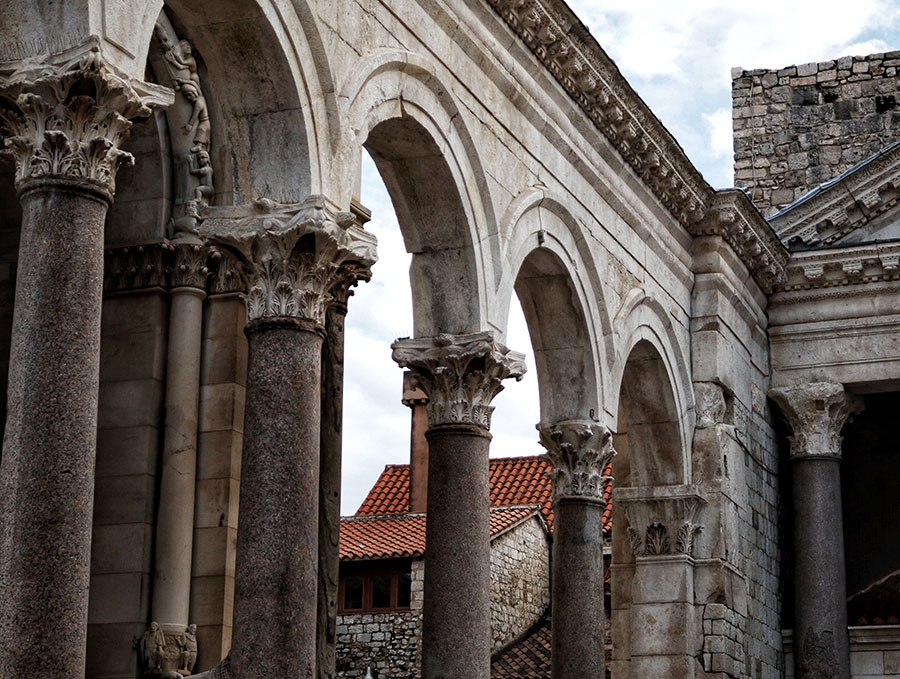
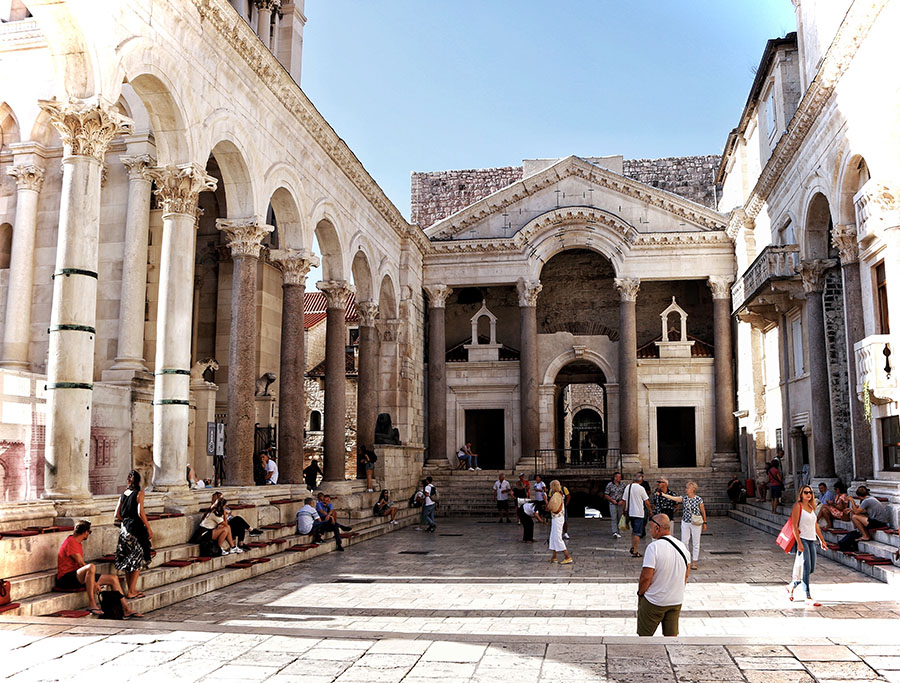
Split is Croatia’s second largest city and one of the country’s most popular tourist destinations, thanks to its easy link to the surrounding Adriatic islands. It’s a city whose history is as beautiful as it is complex, and in the heart of it all lies a nearly 2,000-year-old compound built for a former emperor, known as Diocletian’s Palace. Its immaculately preserved grounds form a protective rectangle around the historic city of Split, with hundreds of shops, bakeries,
and restaurants found on the grounds.

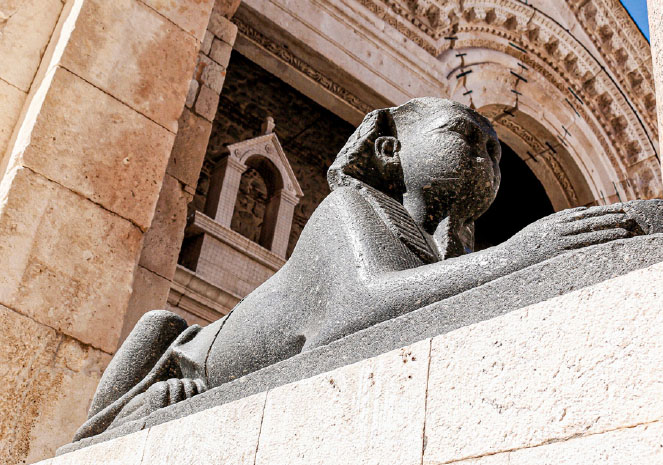
Visitors to the palace are greeted by a 3,000 year-old Egyptian sphinx made from black African granite, which is said to have been dragged all the way from Egypt to Croatia under orders from the emperor himself.

Don’t miss the massive underground market inside of Diocletian’s Palace where tourists can purchase anything from genuine coral jewellery to stuffed lavender pillows and silk ties.

ZADAR

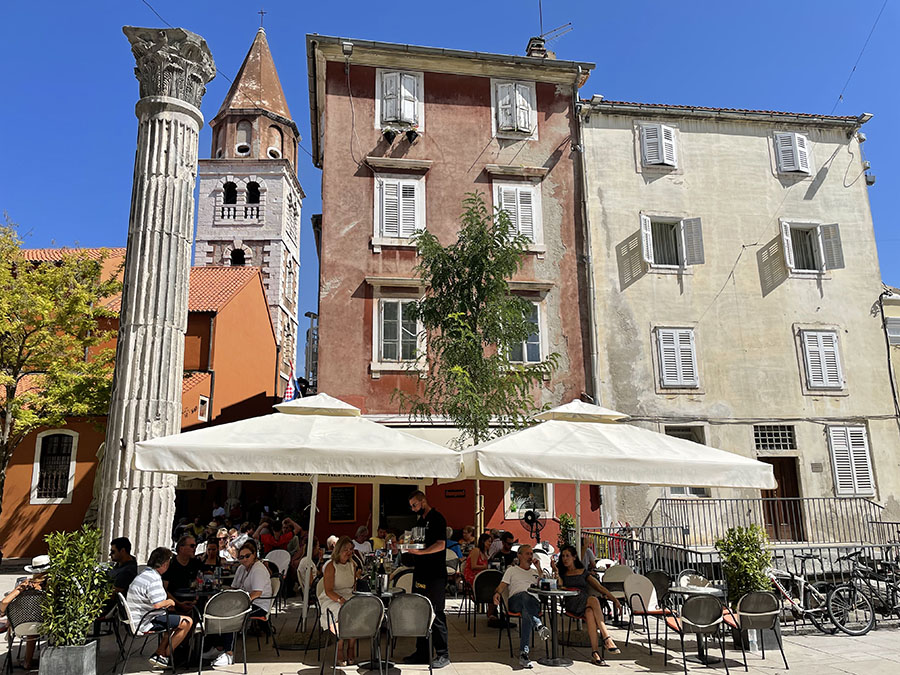
Continue heading north along Croatia’s Dalmatian coast to the city of Zadar, unmistakable for its dazzling white limestone streets and lively waterfront. In the evenings, listen along to the strums of soft guitar music and sing along to traditional Croatian songs that eventually lead to dancing in the streets.

The city of Zadar has a striking promenade with major fashion labels and an overwhelming restaurant scene that extends well beyond North America’s traditional palette.

A country that’s famous for its creative expression, whether through the visual arts, theatre, or, perhaps most importantly, music. Zadar is also home to several modern art installations, including the Sea Organ (2005), an experimental architectural instrument that uses the waves of the Adriatic Sea to produce randomized chords of music, which occur when the water flows into a series of pipes and a cavity constructed below a set of concrete steps, and the Greeting to the Sun (2008), a large circle made up of 300 glass solar panels. In the evening, the panels emit coloured lights, and the art installation transforms into a dance floor.

PULA

At one of Croatia’s northernmost points, and directly across The Adriatic Sea from Venice, Italy, lies one of Croatia’s best-kept gastronomical secrets —Pula.

Most easily reached by plane from Zadar aboard the regional carrier, Croatian Airlines, Pula is Croatia’s eighth largest city, located in the Istrian Peninsula. Much of its tourism stems from its impeccable food and wine offerings, which are much different than the cities further to the south.

The Istrian region gained even more recognition in 2012, when the late celebrity chef Anthony Bourdain traversed through Croatia to film an episode for his series, “No Reservations”. During the episode, Bourdain hunted for rare white and black truffles that nowadays can fetch upwards of 2,500 euro for even the smallest mushroom. 

While the restaurants found along the Dalmatian coast all serve the freshest catch of the day and a series of traditional pastas, including frutti di mare (grilled squid, clams, and shrimp done in white wine garlic or tomato sauce), in Pula, the diet becomes largely influenced by the proximity of Croatia’s next door neighbour, Italy.

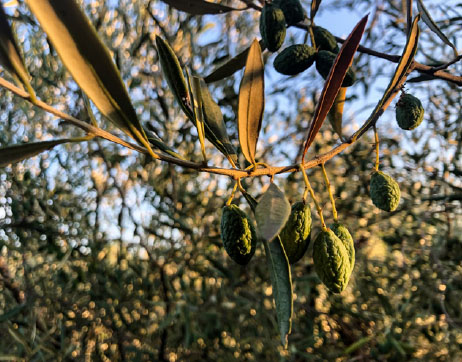
Here, the wine flows as freely as the olive oil, which is poured on everything from woodfired pizza crusts to hearty traditional stews and soups. Homemade olives make their way onto charcuterie boards and meat dishes are featured more prominently on the menus.

Croatia is home to more than 300 geographically-designated wine regions, with a history of winemaking that dates back 2,500 years when the Ancient Greeks inhabited the area and planted the first grapes. Istria’s rich, red soils and sub-Mediterranean climate enables the wines made here to be flavourful and full-bodied. Food and wine tourism continues to dominate the Istrian Peninsula, and many culinary tours are available for booking.

Eat Istria, led by Istrian-born Goran Zgrablić, is one such company that offers both private cooking classes and organized wine tours. Guests can try their hand at rolling out traditional Croatian pasta (fuži), or chopping vegetables and preparing meat to make a traditional žgvacet or brodet goulash.

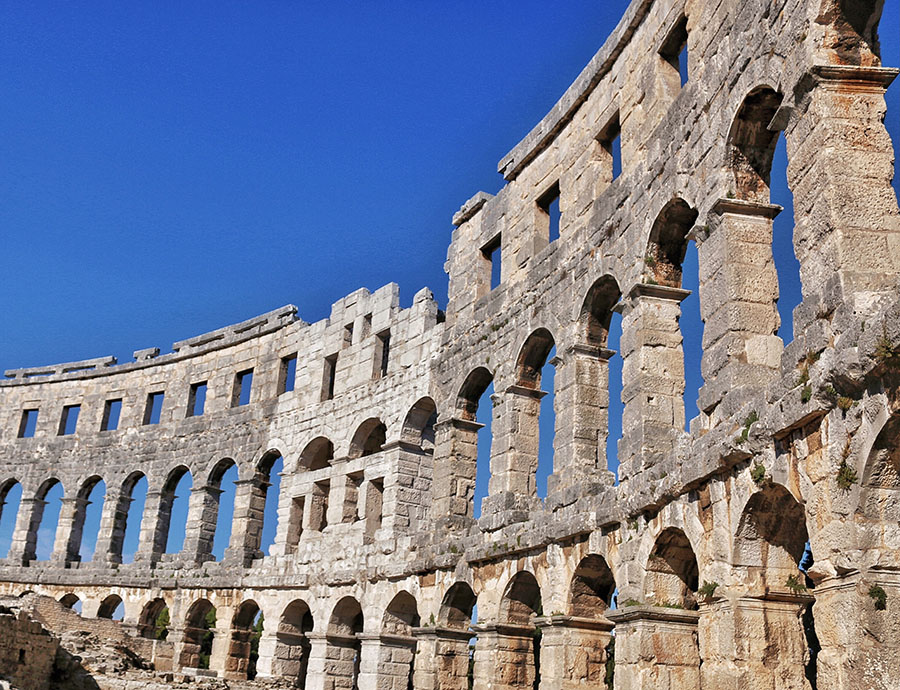
Not to be missed in the quiet city of Pula is the Pula Arena. Constructed between 27 BC and 68 AD, this Roman amphitheatre is one of the world’s largest six surviving arenas, and the only one of its kind to have all four walls preserved. Purchasing a ticket grants entry to the ancient seating area, where gladiators and beasts once faced off for royal entertainment, as well as a museum located beneath the arena where ancient artifacts can be viewed.

With their endless historic archaeological sites, modern attractions, breathtaking beaches, and culinary delights, these four regions are among Croatia’s most popular tourist destinations, and all provide yearround entertainment, whether visitors come in the high season or the low season.

Visit offshoretravelmagazine.com for more Croatia and updated information on travel arrangements.

Special spots to tie the knot

In 2020, newly-engaged couples were forced to rethink their wedding day plans. Some couples cancelled their celebrations completely while others embraced the idea of a smaller, more intimate celebration. Meanwhile, the pandemic caused a massive backlog in rebookings for wedding halls, churches, and other traditional venues. As a result, a spike in demand rose for unique venues that could house all the traditional components of a wedding, but at a smaller capacity. From beachfront ceremonies to exchanging vows with wild butterflies, here are several special spots to consider in 2022.

Story by Christine Hogg

Ashford Castle, Galway Ireland
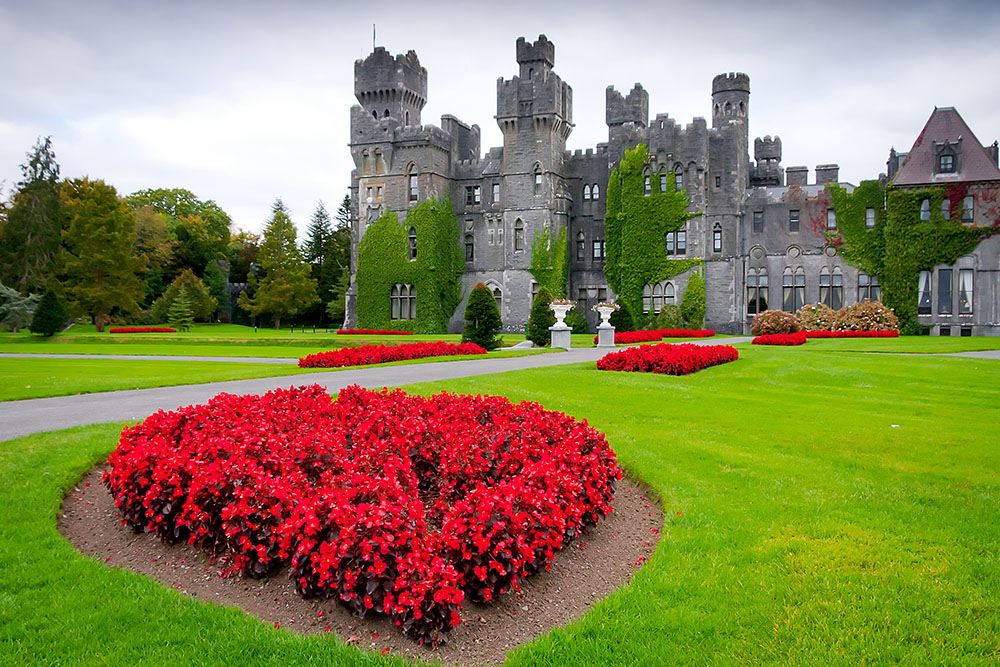
Ashford Castle with red foliage and a groomed lawn on its grounds

In Galway, Ireland, you can experience your very own fairytale at Ashford Castle, an 800-year old medieval castle that was built in 1228, and is now a world-famous luxury hotel. With its ancient stone gate, impeccably manicured gardens set across 350 acres, and exquisite interior that’s reminiscent of its colourful past, Ashford Castle excels in the business of creating magical wedding ceremonies.

The castle has welcomed and accommodated its share of royalty over the years, including the Prince of Wales. With its towering turrets that overlook the water, rooms furnished with antiques and heirloom textiles and paintings, there’s no shortage of spaces to delight couples on their big day. The grounds at Ashford Castle are ideal for supporting indoor or outdoor ceremonies big or small, whether you prefer an intimate setting with a few close friends or family, or a lavish party that’s reminiscent of centuries prior on the castle’s grounds. Ashford Castle also offers the option to book the entire estate — its 83 bedrooms, suites and Lakeside Hideaway Cottage will sleep up to 160 guests. The bridal suite, Reagan Presidential Suite (named after former president Ronald Reagan, who was a notable guest of the hotel), has two bathrooms and can be combined with two adjacent rooms to complete a private three-bedroom wing of the castle. The Hideaway Cottage is also an option, and is an exclusive, one-bedroom suite on the water’s edge of the lake. Ashford Castle also offers couples the opportunity to book exclusive access to the hotel’s restaurants and bars, including the underground wine cellar, which can make for an unforgettable pre-wedding event. As for the ceremony itself, there are plenty of options on the castle grounds, including outside in the castle gardens, or, for more traditional couples who prefer to be married in the Catholic church, Saint Mary’s Church Cong is a brisk three-minute drive from the Ashford Castle estate.
(ashfordcastle.com/weddings)

Kualoa Ranch, Oahu, Hawaii

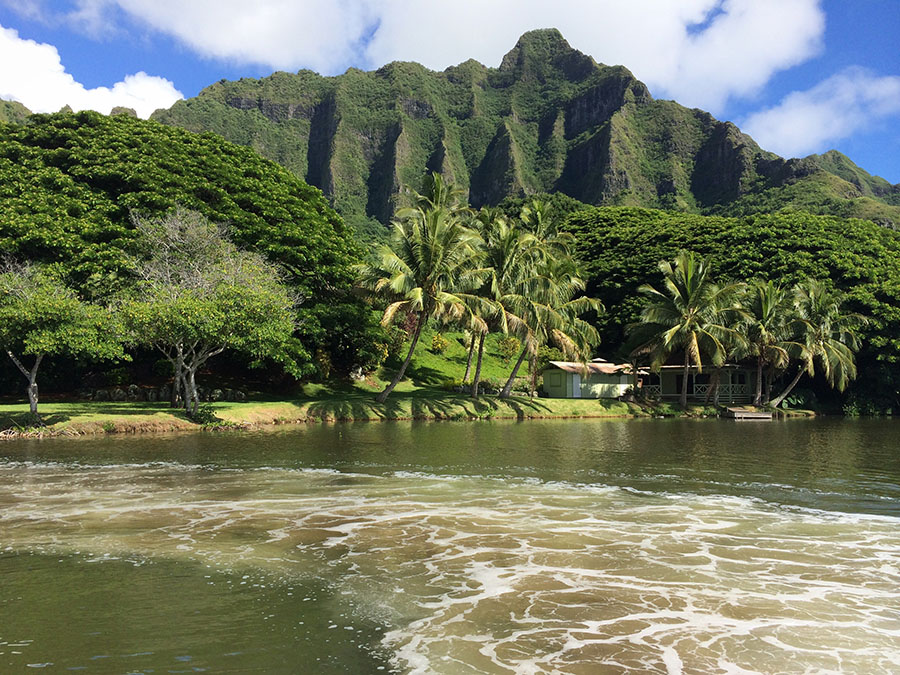
Kualoa Ranch Private Nature Reserve is a 4,000-acre natural park in Oahu, Hawaii (on Honolulu island), roughly 35 kilometres outside of Waikiki, on the eastern shores of the island. It offers several spectacular ceremony and reception locations within its property, from very remote, like Jumanji, (in the Ka`a`awa Valley) to spots like Moli’i Gardens, which features a beautiful two-tiered garden setting that borders an 800-year-old Hawaiian fishpond, and includes the use of an open-air cottage that’s perfect for cocktail hour, or for the bride or groom to get ready in. The site at Moli’i Gardens also includes a covered pavilion, a main lawn area and a grand staircase that leads down to a lower garden area. Managed and owned by eight generations of the Judd-Morgan family, who are committed to preserving the culture and natural beauty of the land, it is a beautiful and unique venue for weddings.

Kualoa Ranch offers a number of optional add-ons to make the big day even more special, including a “bridal boat” entrance, or the option of holding a beachfront ceremony at the nearby Secret Island, which includes a boat and driver to provide roundtrip transportation. If Kualoa looks familiar in pictures, it is probably because it has had over 170+ Hollywood movies and TV shows filmed there; perhaps most famously, its valleys were home to the dinosaurs from Jurassic Park. Two luxury hotels, the Four Seasons Resort Oahu and the Kahala Hotel and Resort are both just under an hour away from the ranch, and can provide accommodation for large parties.
(kualoa.com/weddings-events/ )

Sandals South Coast, Whitehouse, Jamaica
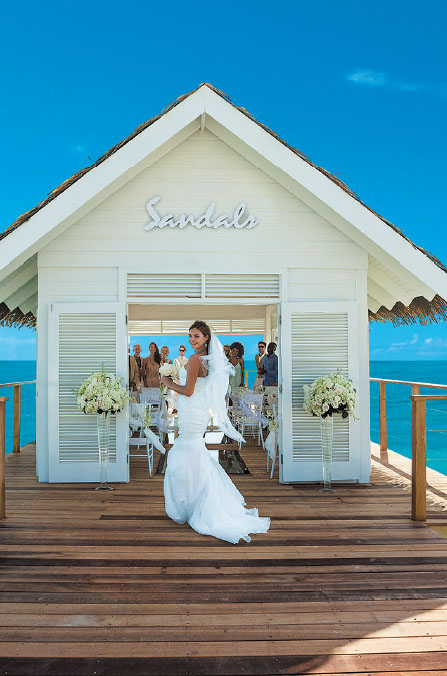
A bride stands in front of a white chapel on a dock leading out to a clear blue ocean and cloudless sky. The bride is smiling over her shoulder, bouquet in hand, and dress train flowing behind her on the dock. The bride is pictured at Sandals South Coast.

The newest resort on Jamaica’s south coast, Sandals South Coast is an adultsonly, all-inclusive luxury resort that’s part of a 500-acre nature reserve. It includes a two-mile stretch of white sand beach, as well as a series of included perks for couples that make a destination wedding to Jamaica even more magical.

Sandals South Coast is home to the brand’s first-ever Rondoval Swim-Up Suites, a private luxury oasis that features a private plunge pool, a spa-like bathroom with a soaking tub for two, over-the-water hammocks, and a private deck to soak up the Caribbean sun. Known as the go-to brand for romance, Sandals South Coast currently offers the Over the Water Butler Honeymoon Bungalow, which is a private cabin set amongst a series of other bungalows that jut out into the Caribbean Sea in the shape of a heart. Couples who stay in the honeymoon suite also unlock access to private roundtrip airport transfers from Sangster International Airport (MBJ) and Norman Manley International Airport (KIN).

On the big day, there are several stunning venues throughout the resort to choose from. The romantic over-the-water chapel features an aisle made of glass, allowing for a peek at the crystal ocean waters below. This picturesque wedding venue also features a wooden chapel deck, a wrap around balcony and railings, and a shaded/palm leaf covered roof. Couples can work with their Sandals wedding planner to customize the chapel with their own decorations as well.

The standard capacity for the Sandals South Coast Over the Water Chapel is 50 people. Every Sandals wedding includes a personal wedding planning team to ensure all details are taken care of, a selection of pre-recorded music, a one-hour cocktail reception with premium spirits and hors d’oeuvres, a romantic honeymoon breakfast in bed, and more.
(sandals.com/south-coast/)

Private chicken farm, Prince Edward County, Ontario

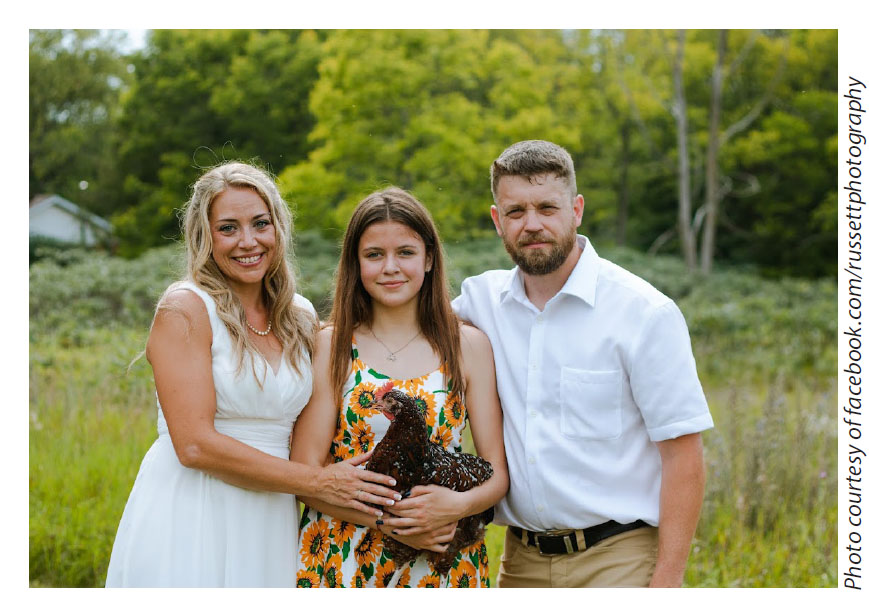
Under the shady branches of a 100-year old oak tree, couples can exchange their vows in a small, intimate ceremony led by wedding officiant Susan Laurin. Following a successful 40-year career in the travel and tourism sector, Laurin decided to become an officiant in 2019, and currently offers small receptions on her private two-acre residence in Prince Edward County. The property also features a gazebo, a greenhouse, and, perhaps best of all, 17 hens, which couples can pick up and hold for wedding photographs done on site. The property can accommodate both indoor and outdoor wedding venues that are more intimate in nature, usually with no more than 15 guests. “I find in the last few years, this is what people are really looking for,” Laurin says. Laurin is also the official wedding officiant for Signal Brewery (the site of the old Corby Distillery), located in nearby Belleville, Ont. While vineyard weddings continue to be a popular choice in venues for couples, brewery weddings are also gaining steam, thanks to their ability to house large groups of guests. Signal Brewery’s kitchen and patio has a capacity of 240 and can seat 130 guests.
(facebook.com/SelebrationsBySusan)

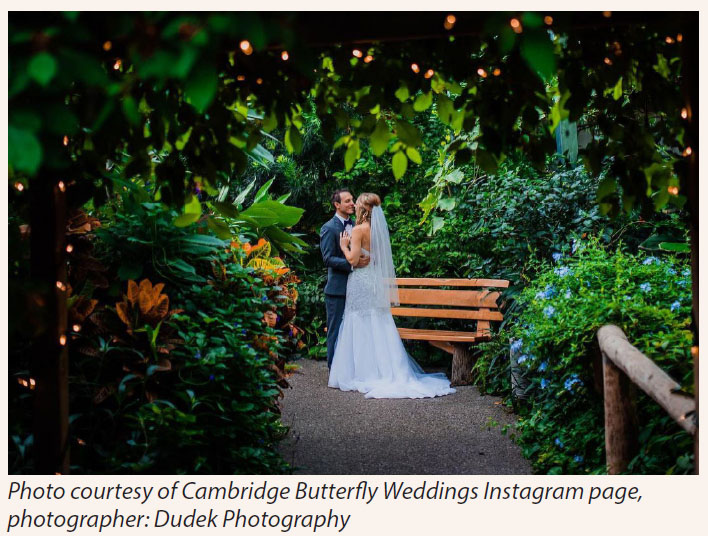
A newlywed couple stands beneath the lush, green foliage at the Cambridge Butterfly Conservatory holding each other in a close embrace. The groom is wearing a grey suit and the bride a long white gown with a veil. There are lights hanging within the branches of the trees around them.

A dreamy, whimsical venue that needs little to no decorations, the Cambridge Butterfly Conservatory is set on 107 acres, and is home to hundreds of tropical plants, waterfalls, ponds, and of course, nearly 2,000, dainty wild butterflies from Costa Rica and the Philippines. The 25,000 squarefoot venue includes the 10,800 square-foot garden, which is a popular spot for couples to exchange vows and pose for wedding photos, amidst the fluttering of free-flying butterflies and moths and fragrant flowers. The Cambridge Butterfly Conservatory offers a wedding ceremony package that provides exclusive, private use of the entire butterfly conservatory for the reception and photographs, as well as a commemorative release of the wild butterflies inside the conservatory.

A two-hour time frame is offered in the morning or in the evening, freeing up the afternoon for an off-site cocktail reception or picture-taking. The wedding reception package, on the other hand, includes exclusive use of the entire facility including the butterfly conservatory, front foyer, both galleries, dining room, and private bridal suite. Chairs, linens, a dance floor area, menu customization, wedding cake service (including cutting) and more
are all included. Depending on the venue the couple chooses, current capacity can accommodate up to 160 guests. Both the wedding ceremony and the wedding reception packages offered by Cambridge Butterfly
Conservatory have included a photography permit.
(www.cambridgebutterfly.com/wedding-packages-2/)

Switzerland Dreaming

Insider tips from local experts

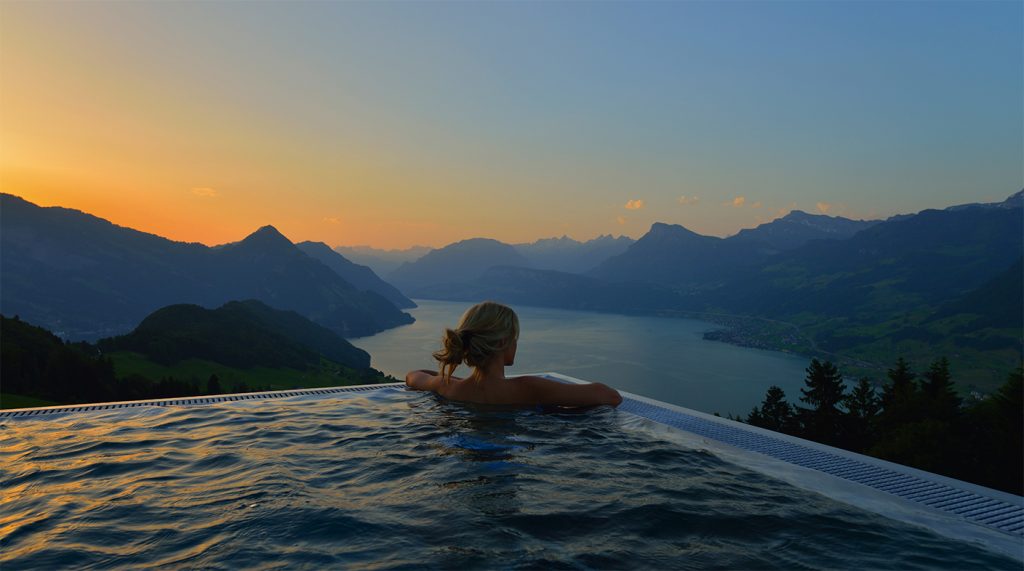
It only took one glance out across the heated infinity pool overlooking Lake Lucerne to understand why this spot lives up to  its reputation as a highly Instagrammable location. Here, the water blends into the sky, giving way to a captivating bird’s eye view of the entire scenic region below.

In its glory days the likes of Audrey Hepburn and Sophia Loren frequented this mountain-side locale. Today, it’s been reborn as Bürgenstock Resort, a destination in and of itself, home to multiple high-end resorts, mouthwatering restaurants, and the Bürgenstock Alpine Spa, an indoor and outdoor retreat featuring one-of-a-kind mountain and lake views.

More than $500 million and nine years in the making, Bürgenstock is just one example of how to soak up a memorable time in Switzerland. For anyone dreaming of visiting the European nation soon, here are some inspiring ideas, all chosen by locals. 

RAISE A TOAST FROM THE TOP OF THE WORLD

Like the name suggests, Jungfraujoch – Top of Europe – offers sweeping views of the Swiss Alps from high above — 3,454 metres above sea level to be precise. But the highest train station in Europe, which is connected by rail to the scenic villages of Grindelwald, Lauterbrunnen, and Wengenis, is also home to some ice-cold experiences. In the middle of the glacier, there’s an Ice Bar to discover, where everything, even the bar, is made of ice.

“The Ice Bar is an exclusive experience in the Swiss glacier on Jungfraujoch – Top of Europe,” says Dario Gross, Sales Manager for Jungfrau Railways. “Be sure to taste some Swiss single malt whiskey, which is stored in the glaciers!” 

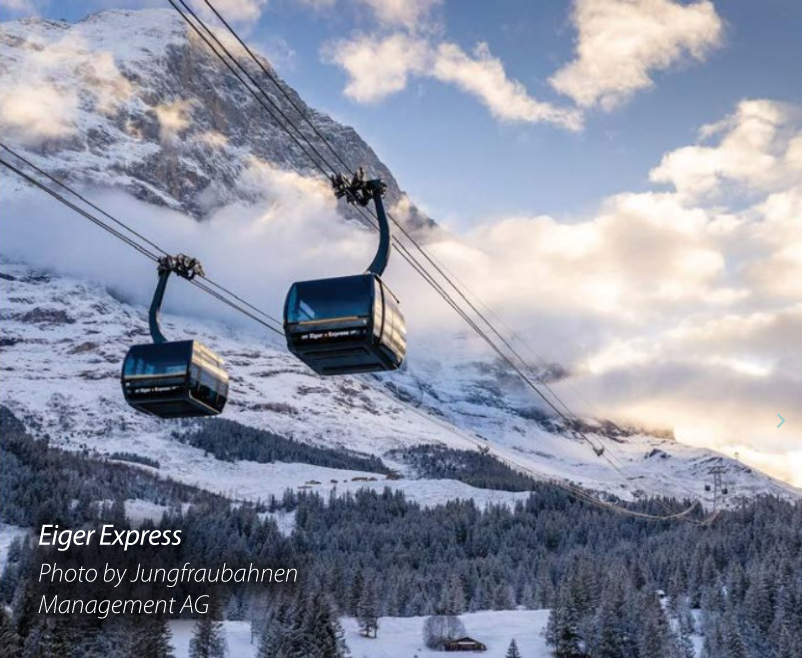
Insider tip: If you’re short on time, it’s now possible to reach the Top of Europe in 15 minutes — 47 minutes faster than before — on the new Eiger Express tricable aerial cableway.


TRAVERSE AN ENTIRE COUNTRY BY FOOT

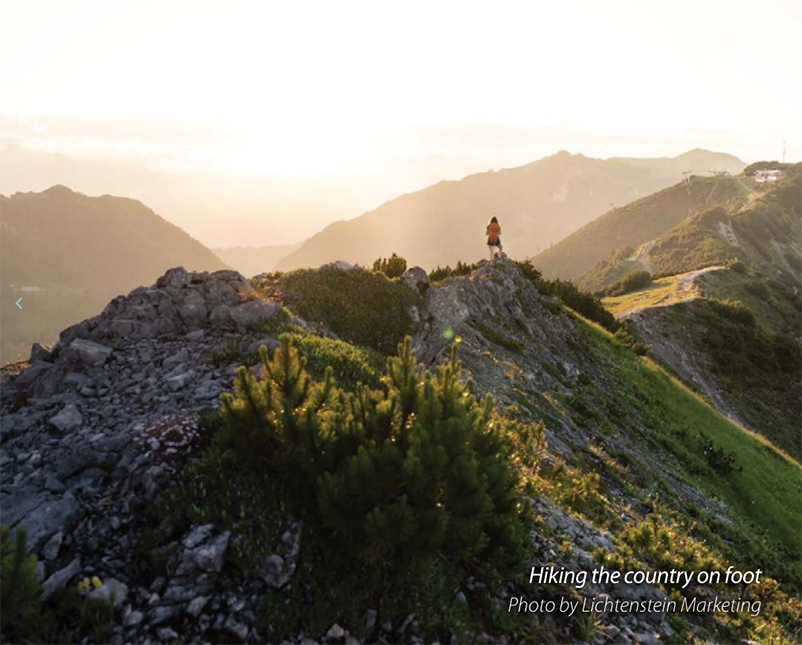
Switzerland borders Liechtenstein, one of the smallest countries in the world.the world at a mere 25 kilometres in length. Matthias Kramer, Head of Tourism & Economy, Liechtenstein Marketing, suggests those looking for a bucket-list–worthy adventure consider “crossing a whole country by foot.” Packages are available along the Liechtenstein Trail to arrange luggage transfers, overnight stays, and meals along the route. 

“The unique Principality of Liechtenstein is the sixth smallest country in the world. It is easily accessible from Switzerland, Germany, and Austria and lies about a two-hour drive from the Italian border,” he says. “It is easy to discover several experiences during your visit, since distances are close: looking at artwork by Picasso or Monet at the Museum of Fine Arts in the capitol, Vaduz, and then heading up to the mountain resort of Malbun in only 20 minutes by car, where hiking trails, and pristine Alpine nature are waiting and a chairlift brings you up to the panoramic restaurant of Sareis.”

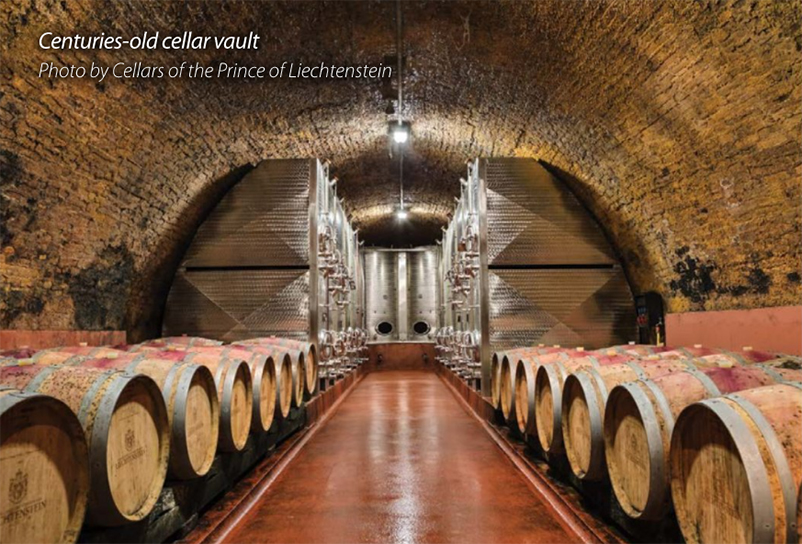
Insider tip: Wine enthusiasts should pay a visit to the Prince of Liechtenstein Winery, where travellers can walk through the vineyards and sample excellent wines. 


TAKE YOUR GOLF GAME TO THE NEXT LEVEL

Those who have their sights set on visiting the UNESCO-recognized Jungfrau-Aletsch-Bietschhorn region, known for being the most glaciated part of the European Alps, can also play a round of golf at Europe’s highest 9-hole golf course. 

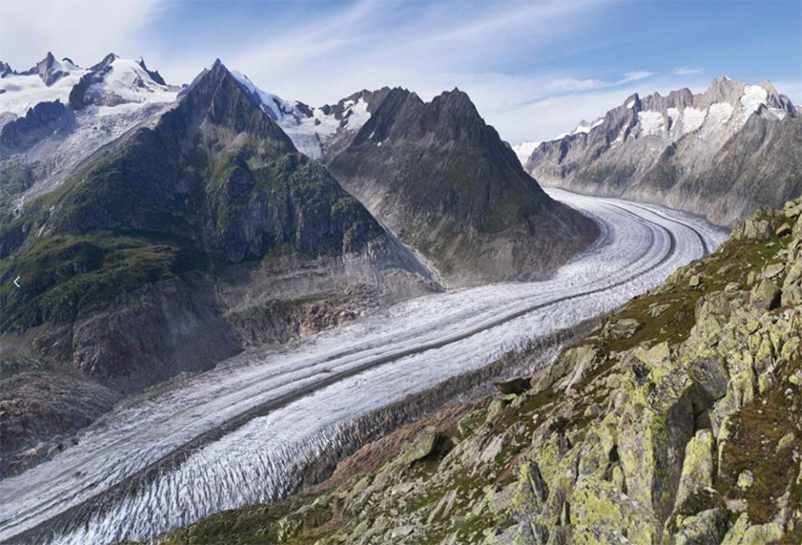
“Aletsch Arena is the home of the highest 9-hole golf course in Europe — 2,000 metres above sea level,” says Jasmine Noti, Product and Market Management, Aletsch Arena AG, home of the 14 miles-long Aletsch Glacier. “The idyllic golf course with its breathtaking panorama of the Valais peaks is a joy for beginners and experienced golfers alike.” 

Insider tip: First-time visitors should embark on a guided glacier tour of the 23-km Aletsch Glacier. “It’s a once-in-a-lifetime experience where you can feel the effects global warming will have and how it will change our world as the guides also tell fascinating facts about glaciers, the ice ages, and the flora and fauna of the Aletsch Arena,” she says. “For me, it was like walking on the moon. Something magical.”

FOLLOW IN THE FOOTSTEPS OF JULIE ANDREWS

Acting legend Julie Andrews, who notably starred in The Sound of Music, once said: “Gstaad is the last paradise in a crazy world.” 

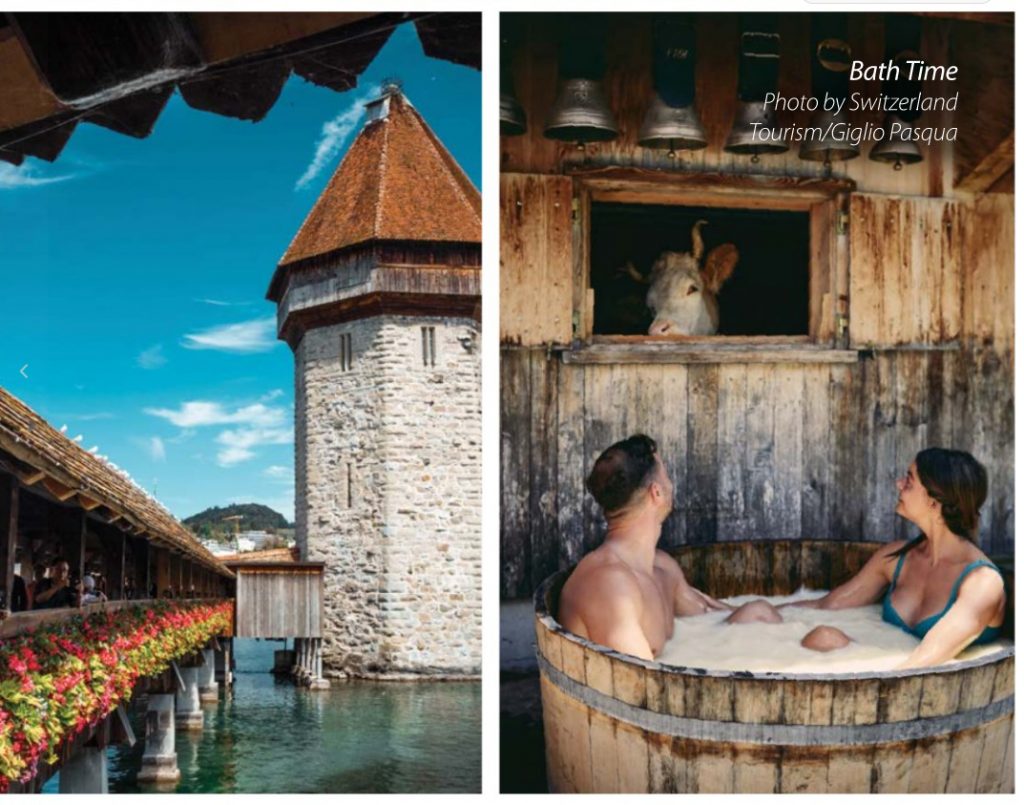
This charming town has as many residents as it has cows — 7,000 — and is known for producing some top-quality cheese. 

“It’s true, the number of people and cows are the same in the destination Gstaad,” muses Thomas Schetty, Head of Markets and Sales at Destination Gstaad. “And we have no traffic lights in the whole destination. Furthermore, we have only chalet-style architecture, because it’s a law since the 1960s that every construction has to be made in a very strict way and form. It feels like a fairy tale!” 

Insider tip: One unique thing to do here is order a Fondue Backpack, which contains all the fixings to have a fondue in the wild, including crusty bread made fresh by local bakeries and a fondue pot to use on the go. Simply decide between a traditional thick fondue or a truffle fondue, and indulge wherever you desire. “It’s a unique and unforgettable experience out in the nature,” Schetty says. “You prepare your own fondue in summer or winter and enjoy the local sustainable products in incredible ambiance.” 

Cheese, please! 

Story by Ann Ruppenstein

Land of Lore and the Midnight Sun

Here comes the sun – in a major way. The Northwest Territories is now basking in long, sunny days, with summertime hikers, paddlers, and adventurers enjoying the midnight sun and exploring the Great Outdoors. 

But take note, winter also brings advantages for outdoor  enthusiasts, including spectacular viewings of the Northern Lights, with the celestial show available on average 240 nights a year, thanks to a combination of generally clear nights, low humidity, and the Northwest Territories being ideally located for maximal Aurora activity.

And all that underscores how the Northwest Territories is a dream location for those seeking a pristine part of the planet. 

The sprawling territory is home to only 42,000 people, nearly half of whom are Indigenous. Topography includes Arctic islands, huge swaths of forest, the barrenlands, and rugged mountain ranges. The Northwest Territories has six national parks and national park reserves, including Nahanni, home to towering Virginia Falls, and Thaidene Nene, Canada’s newest national park. 

Nahanni is steeped in legend, home to the likes of Deadman Valley, so named for two brothers who set off in 1905 in hopes of gold, but were later found dead, minus their heads, fueling all kinds of speculation about their fate. Another draw is Wood Buffalo National Park, which straddles the NWT-Alberta border and is a summer home to endangered whooping cranes, bison, and other intriguing wildlife. Both Wood Buffalo and Nahanni have UNESCO World Heritage Status. 

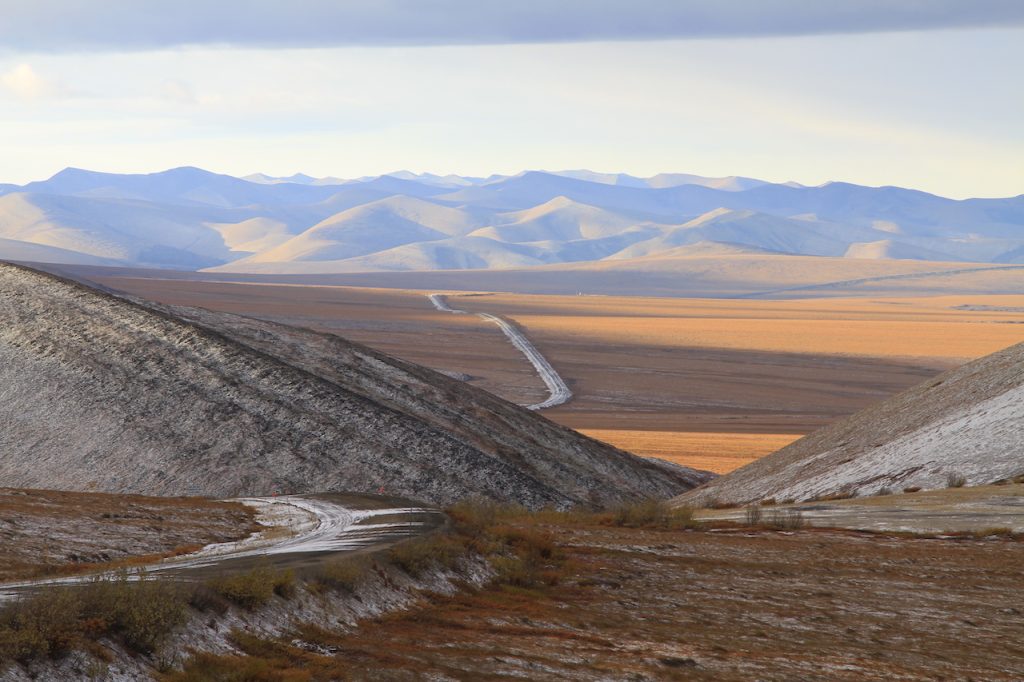
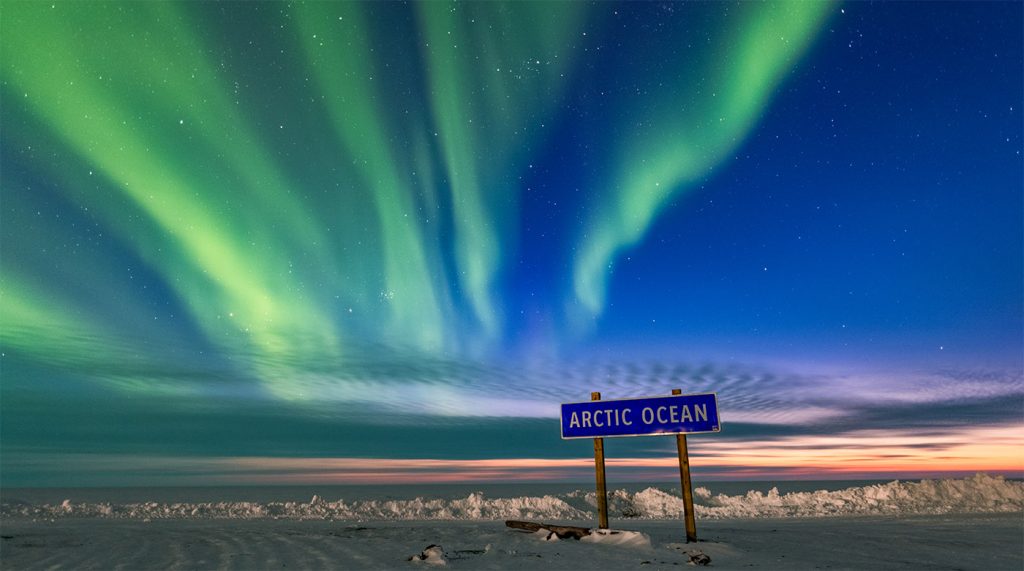
One option for exploring the North is road tripping the Dempster Highway, a 737-kilometre-long journey that begins just outside Dawson City, Yukon Territory, and works its way over rugged mountain ranges, crossing the Yukon-Northwest Territories border and the Arctic Circle before arriving in the Arctic community of Inuvik, NWT From Inuvik, you can continue onto the Hamlet of Tuktoyaktuk where you can dip your toes in the Arctic Ocean. This road is the only highway to the top of the world and connects Canada from coast to coast to coast.

With wide-open spaces, spooky stories, the world’s best Aurora, fantastic fishing, a world of waterways, and rich Indigenous cultural experiences, the Northwest Territories is nothing short of spectacular. 

Story by Ian Stalker

Standing on the Shoulders of Giants

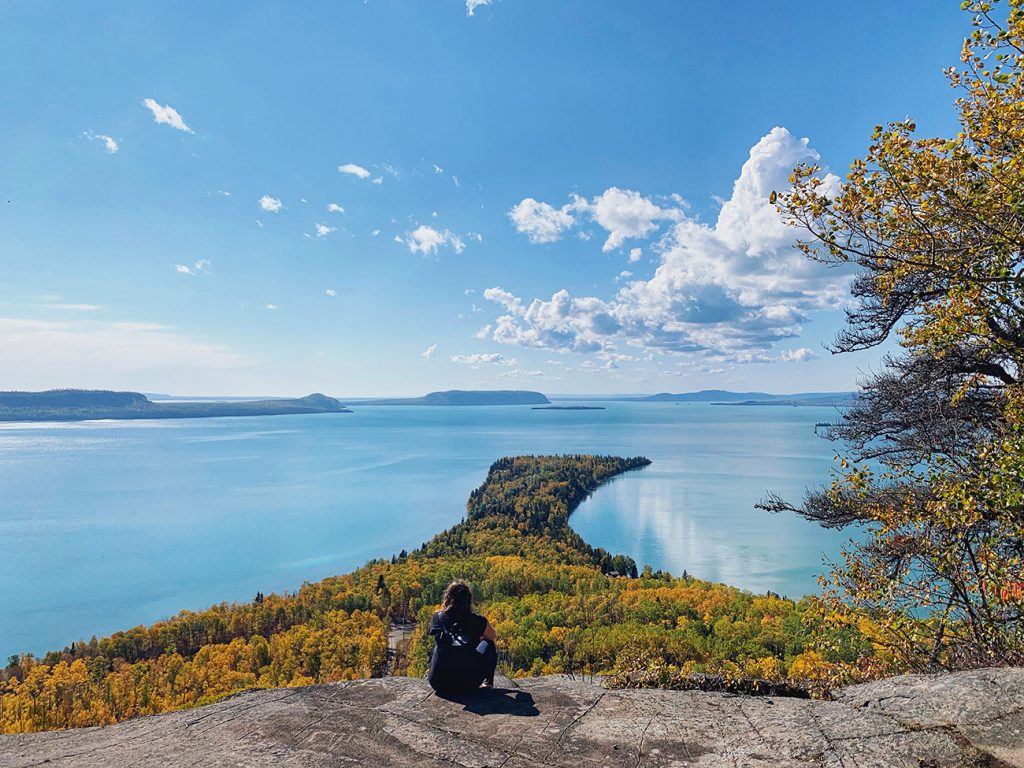
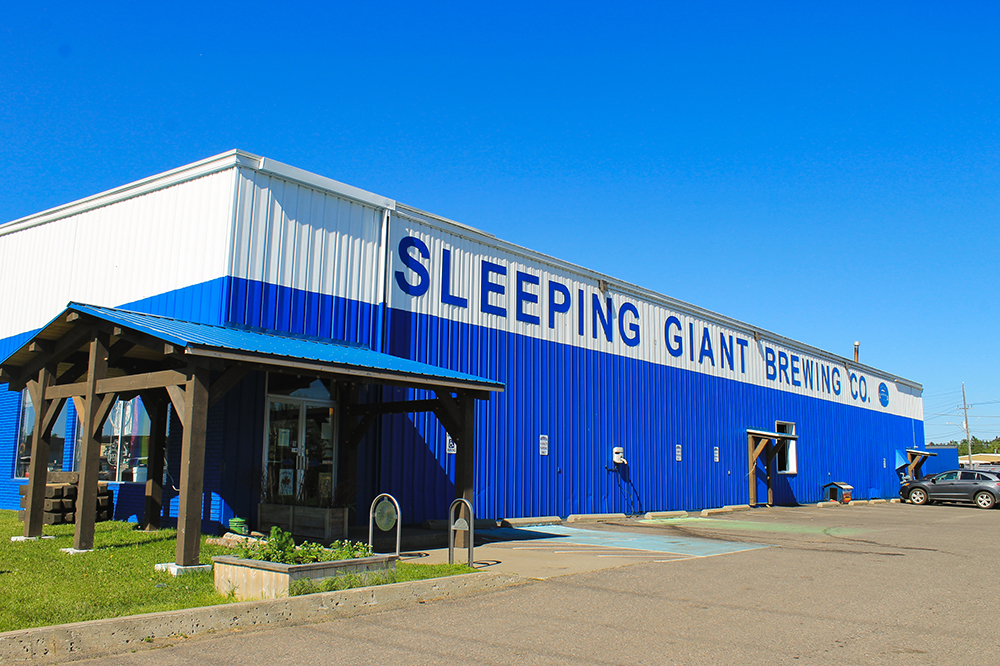
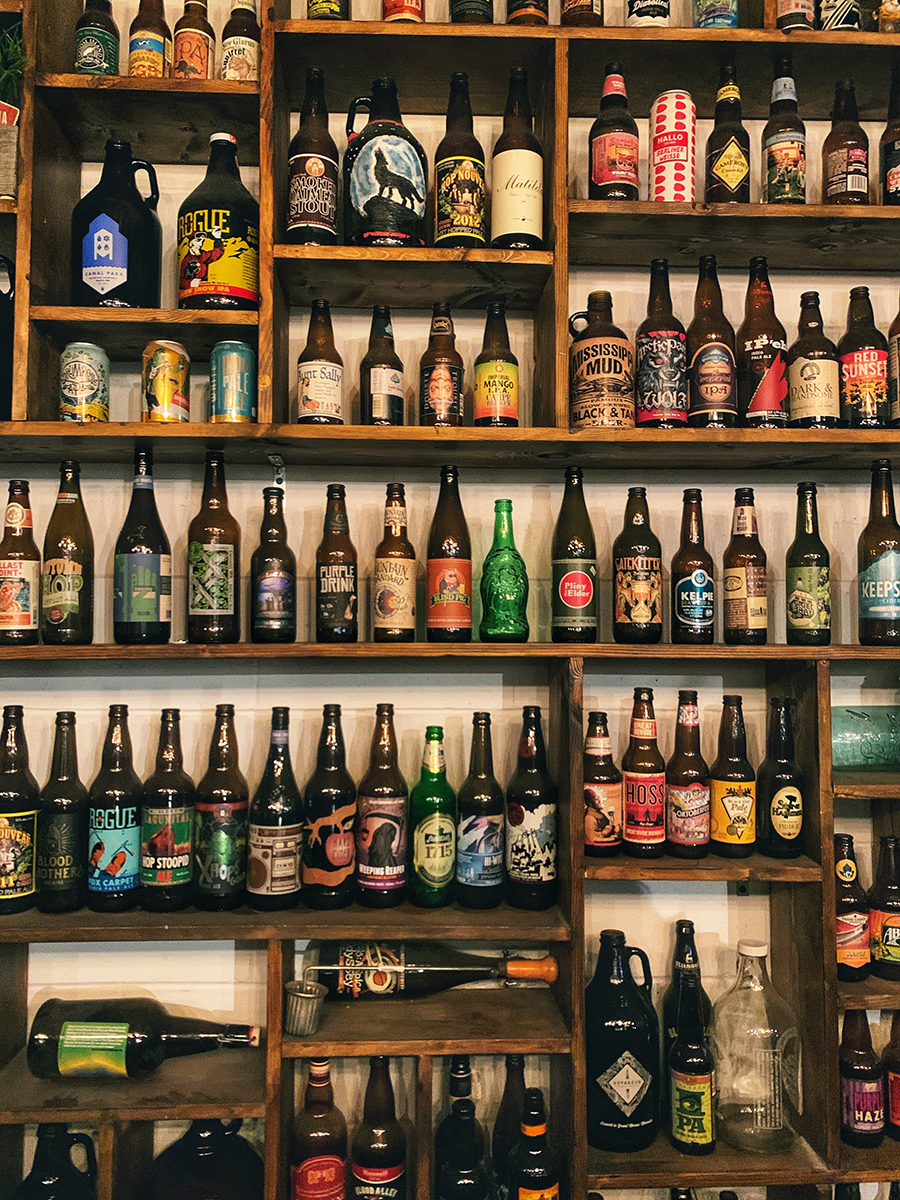
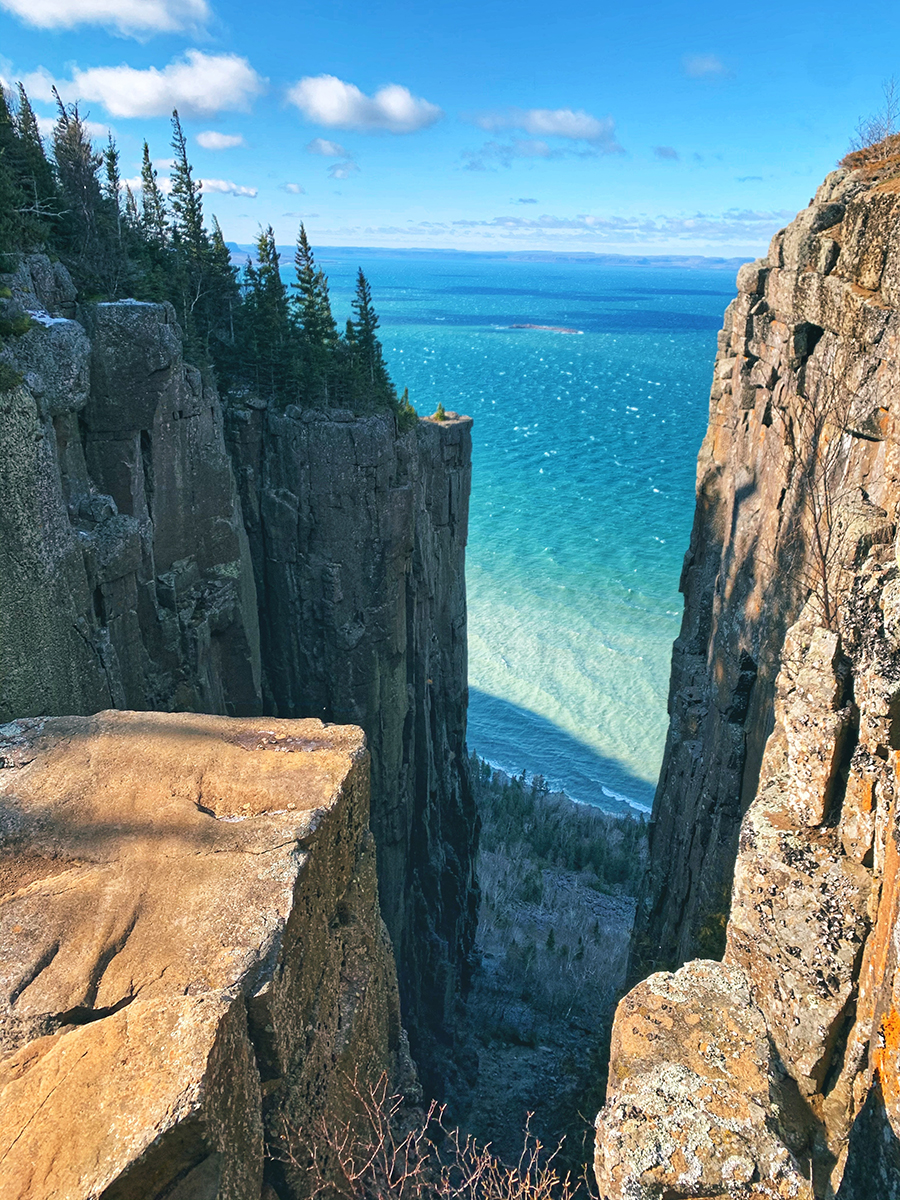
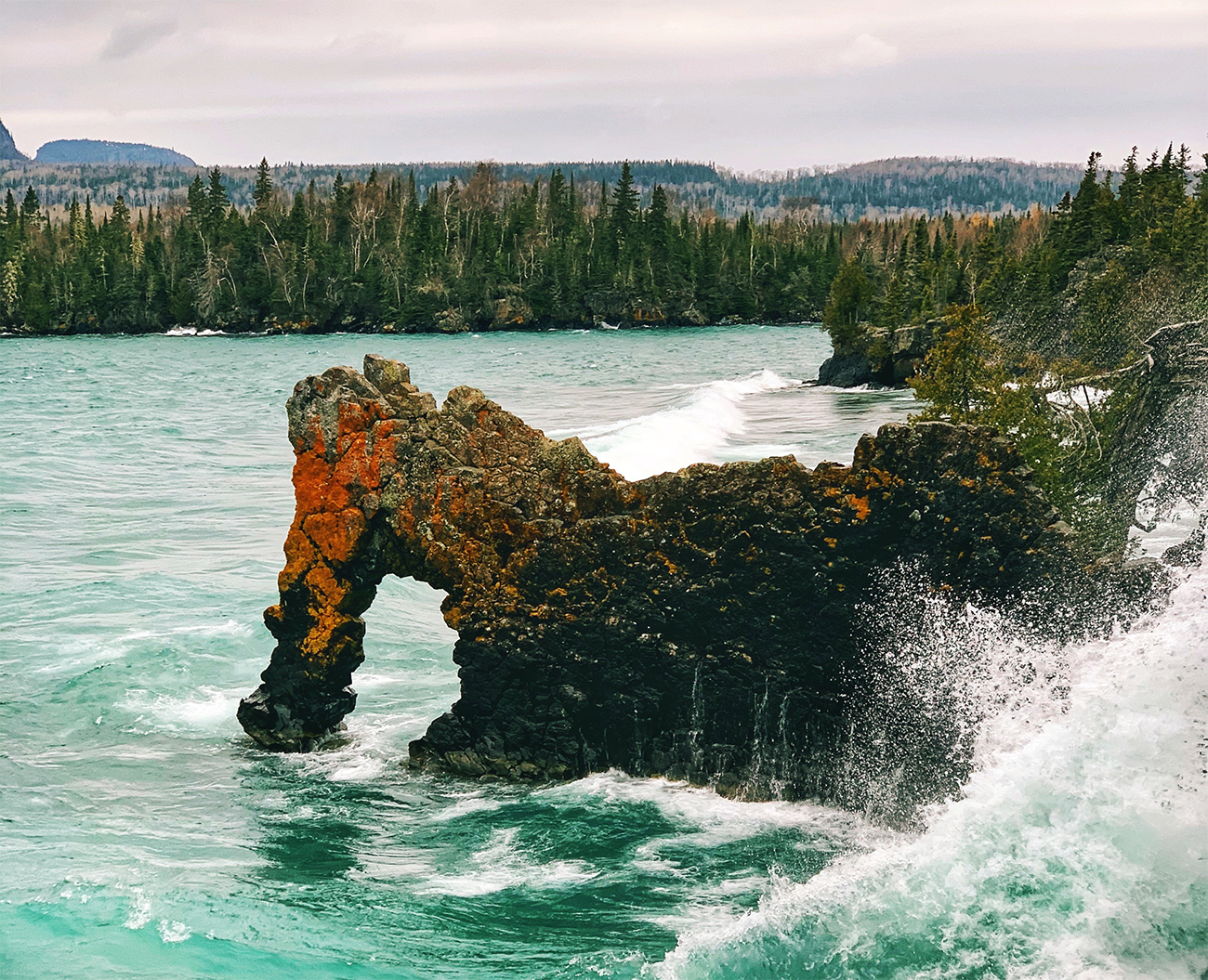
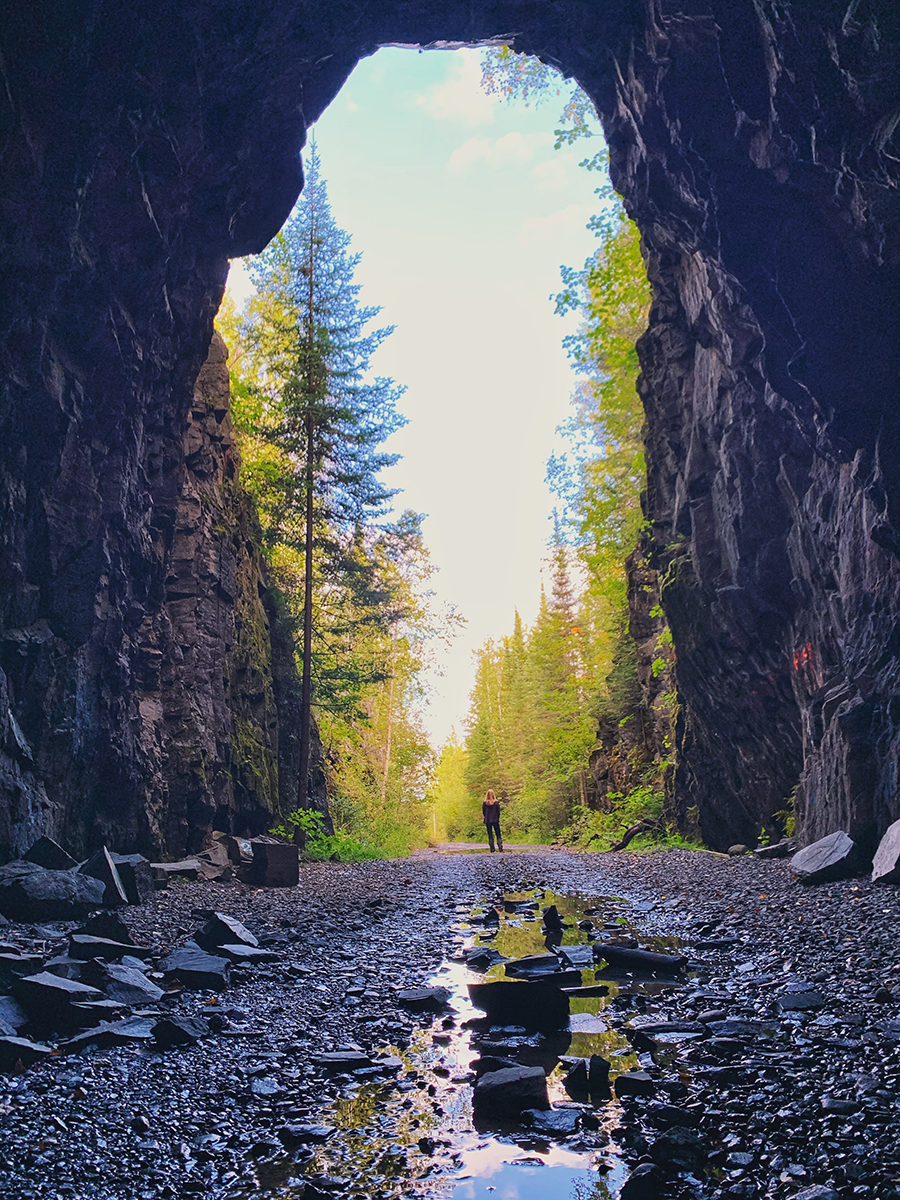
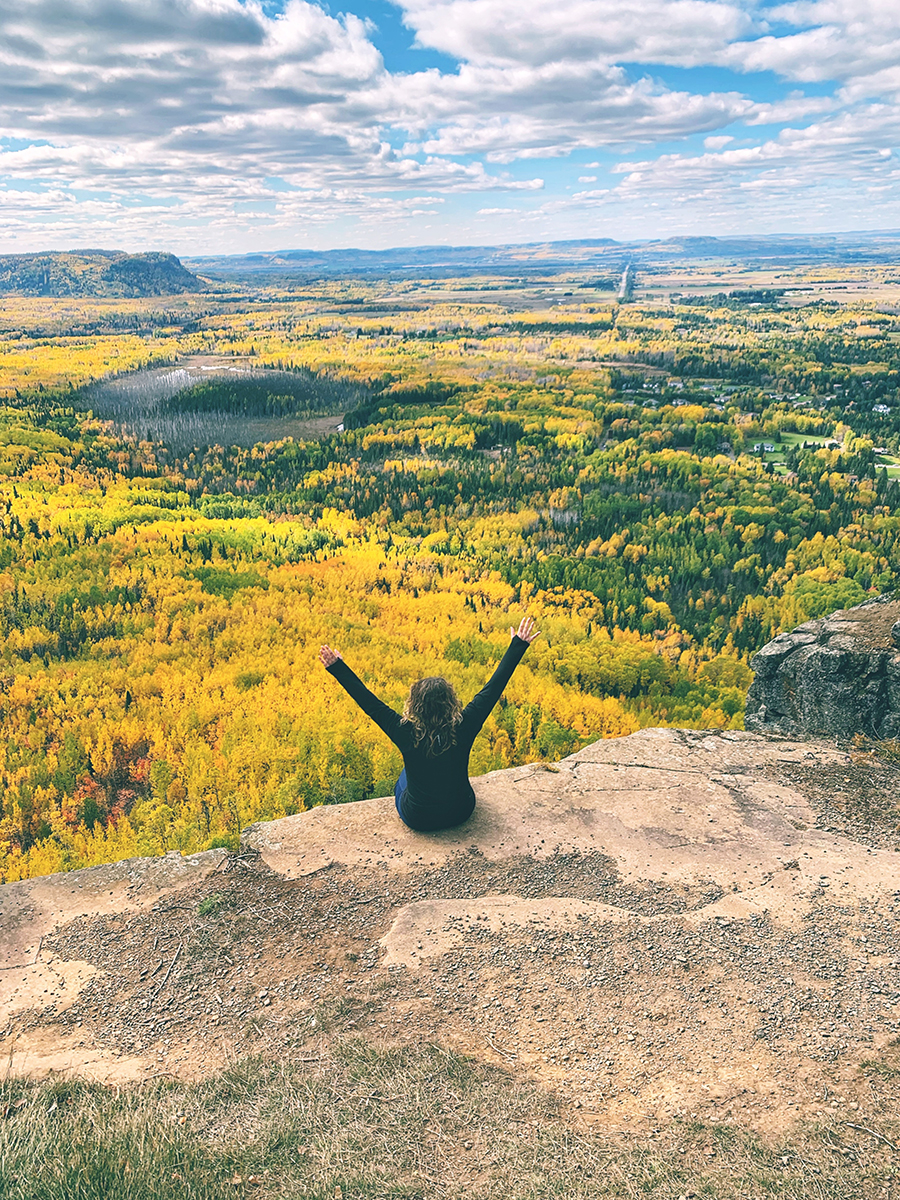
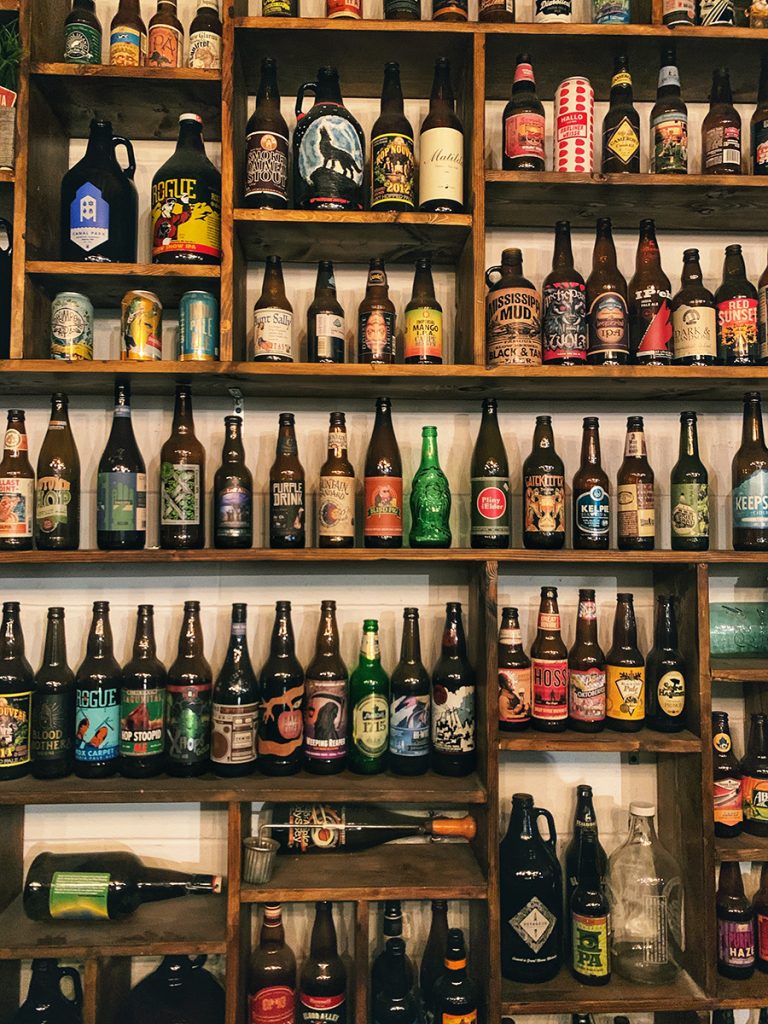
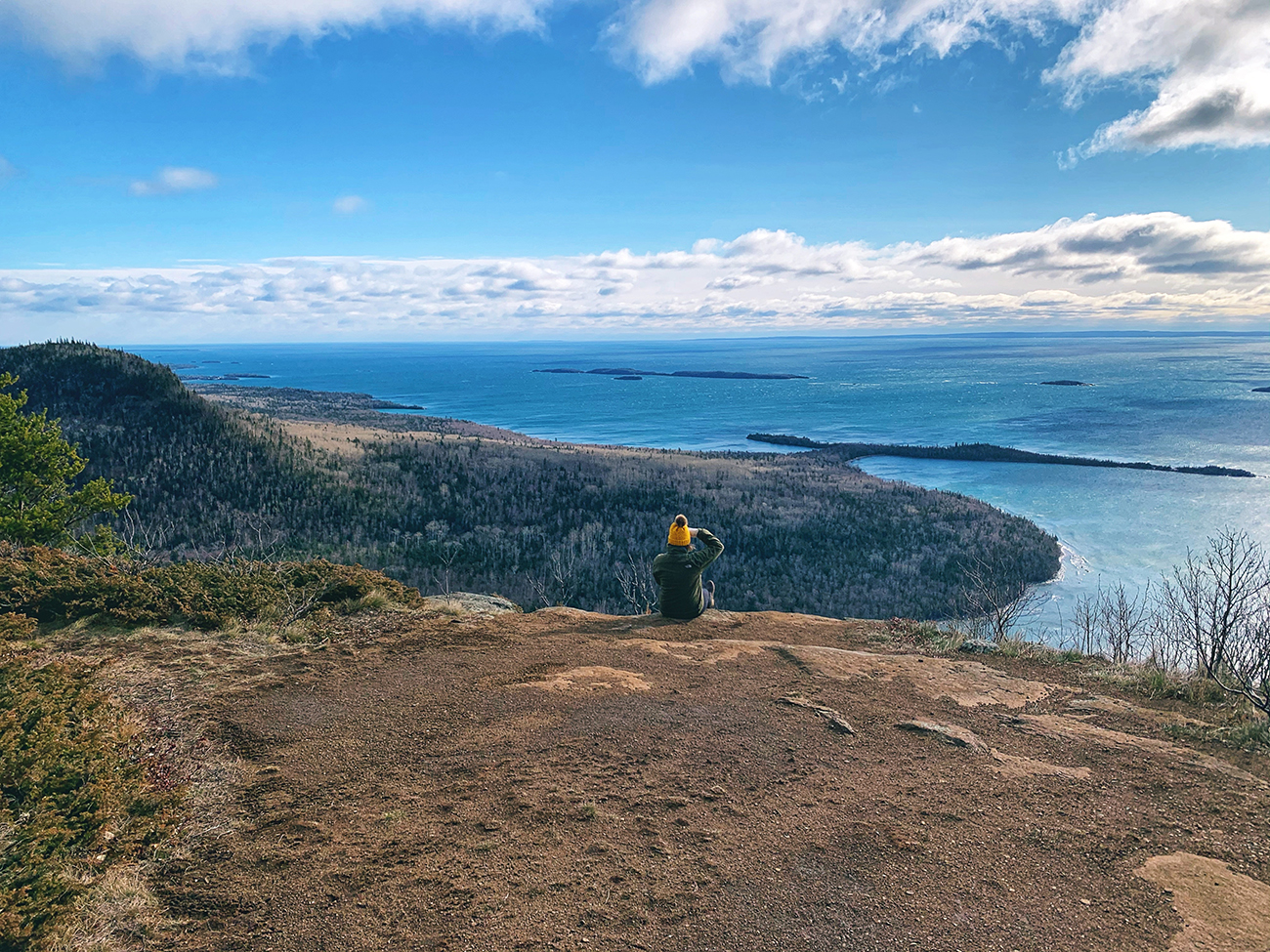
“We’re almost at the top!” I exclaimed out loud — more so to motivate myself than my dad who appeared to be effortlessly leaping up the top of the Giant trail, whereas my legs felt like I had bricks strapped to my shoes with each step upwards. Standing on the shores of the Thunder Bay marina, it’s easy to make out the outline of the Sleeping Giant in the distance, but the sheer magnitude of the natural landmark truly comes to life when you’re faced with climbing some of the tallest cliffs in Ontario. According to an old Ojibway legend, the giant is Nanabijou, who was turned to stone when the secret location of a nearby silver mine was revealed to greedy white men. Today’s mission, climbing to the top of the mesa to reach the Giant’s knees, is no small task — the trail is 22.4 km round trip — but as I get a bird’s-eye vantage of Lake Superior shimmering in Caribbean-like hues between a dramatic gorge from nearly 1,000 feet below, I get the overwhelming sense that every single step of the elevation gain was worth it. Out of hundreds of kilometres of trails found in Sleeping Giant Provincial Park, this is the view that continues to draw people in from far and wide. Howling winds on a crisp November morning mean we don’t linger too long, but I know that this shared experience will stay with us for much longer. The following afternoon, I’ve come full-circle settling in for a rewarding flight of beer in the Sleeping Giant Brewing Company’s taproom next to a wall lined with an assortment of beer bottles from around the world. The craft brewery utilizes locally-sourced fresh water from Lake Superior and malt from Canada Malting Co. to create its flavourful beers. For anyone looking for inspiration for their next great post-pandemic road trip, Thunder Bay, should be a top contender. While people often drive through the city on the way out West, it’s worth more than just a stopover.
WALK IN THE FOOTSTEPS OF THE GROUP OF SEVEN
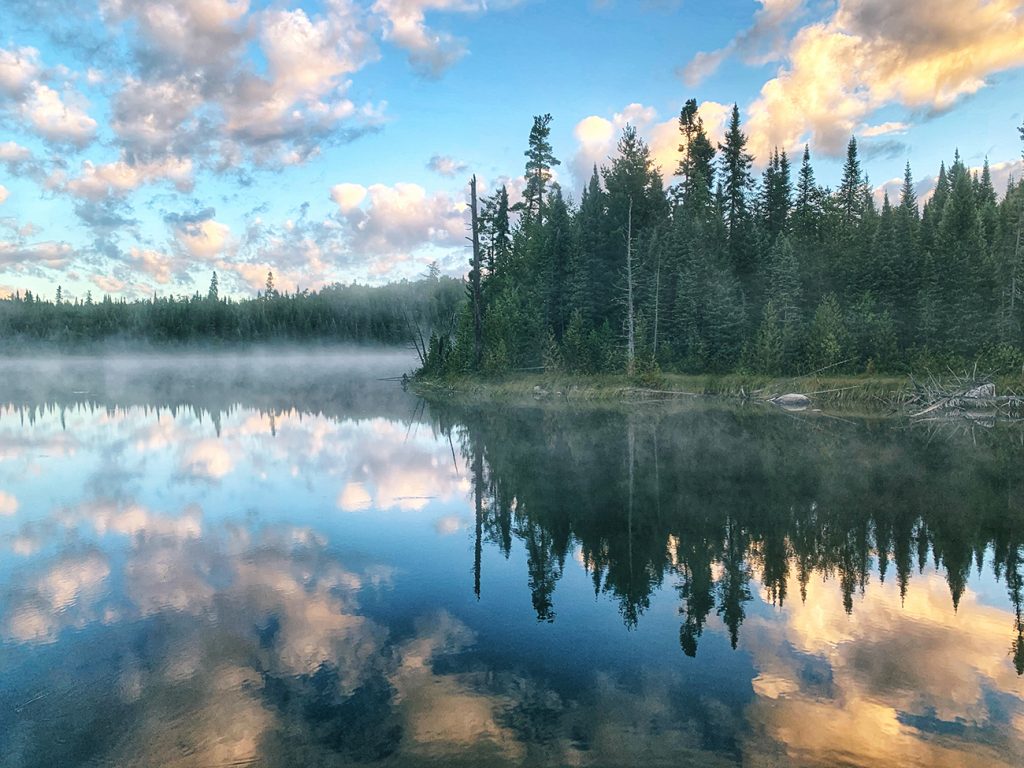
The impressive landscapes in the region are what first drew the legendary Group of Seven to the north shore of Lake Superior nearly 100 years ago. Today, some of the places that inspired the iconic artists can be discovered along a new self-drive route that traces the places and scenery that inspired their paintings. “Having experienced the rugged beauty of Algoma from 1918 to 1921, Lawren Harris and A.Y. Jackson decided to push further on to the north shore of Lake Superior in the fall of 1921,” explains Art Historian and Artist Michael Burtch. “From revelling in the riot of autumn colour on Superior’s east side to meditating on the broad mystical expanse of sky and inland sea on the north shore, Harris and Jackson, along with many other members of the Group of Seven, continued their annual painting expeditions to the region until 1928, and there produced many of their most iconic works, including Harris’ celebrated ‘North Shore, Lake Superior’ in 1926.” The Group is renowned for paintings that are inspired by the Canadian landscape, and initiated the first major Canadian national art movement. “Driving the route today from Marathon to Thunder Bay, the breathtaking beauty of the many vistas over the lake make it easy to understand the Group’s fascination with the region,” says Burtch. “The constantly shifting moods of the lake, the dramatic sky and the towering, majestic landscape make the north shore one of the most scenic areas in Canada.”
NORTHERN DELIGHTS
While it may be the scenery that attracts travellers to this part of the country, there are no shortage of delicious things to taste while here. One local delight is the Persian, a pastry that the owner of Bennett’s Bakery and The Persian Man says can best be described as a rich cinnamon bun with an incredible icing topping. “This pastry has been a staple in Thunder Bay since the 1940s and has grown from there,” says Danny Nucci. “People that have lived here and moved away, have not forgotten [Persians]. They phone our office wanting us to ship Persians to them. We have shipped them all over the country.” On the average, the bakeries produce 100 dozen Persians a day from a secret recipe. The story goes that the treat was meant to be named after General Pershing of the First World War. Despite the wrongful spelling, the name stuck, and it indeed has nothing to do with the Middle East. Another must-try is Heartbeat Hot Sauce Co., a local business that started off as a hobby and quickly developed into a full-fledged small batch hot sauce production company. These also make for a great gift to bring back for friends and family back home. Finally, a notable option for those seeking a meal out on the town is Tomlin restaurant, which works alongside local producers to create seasonal family-style sharing plates. At the beginning of the pandemic, the restaurant got a plug from Brian Baumgartner, the actor who played Kevin Malone on The Office.
 

IF YOU GO…

A WALK IN THE PARK

Sleeping Giant Provincial Park, which was founded in 1944 as Sibley Provincial Park, has 200 campsites at the Marie Louise Lake Campground suitable for tents and RVs that make a great home base for embarking on hikes. The Park is also home to five full-service cabins that can be rented for a minimum of two nights that are available year-round. Advanced reservations are recommended, especially during prime summer season. For those seeking a shorter alternative to the Top of the Giant trail, which provides spectacular views of Lake Superior and the surrounding area, consider the Sean Lion trail, a 2.4km round trip from the parking lot to a unique geological feature that got its name for resembling a sea lion.
CHASE WATERFALLS

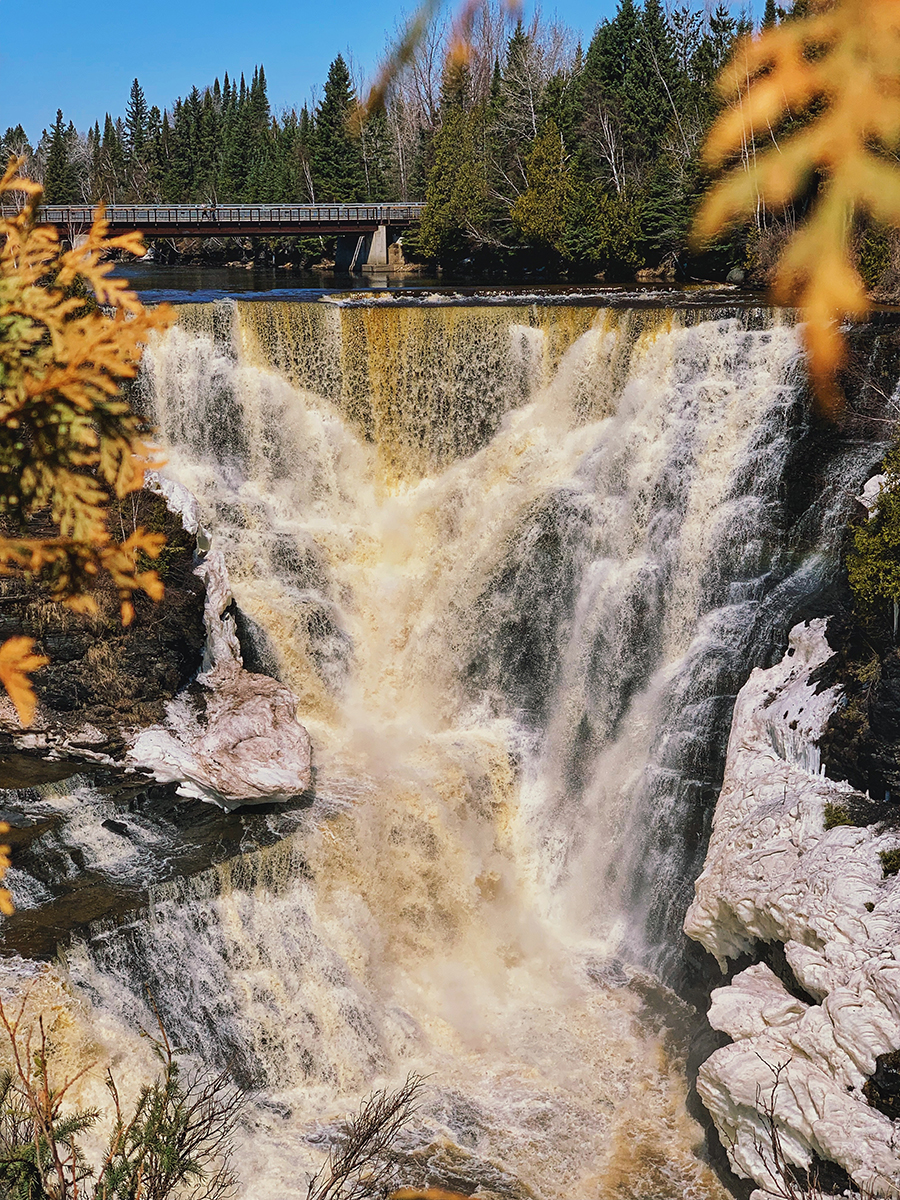
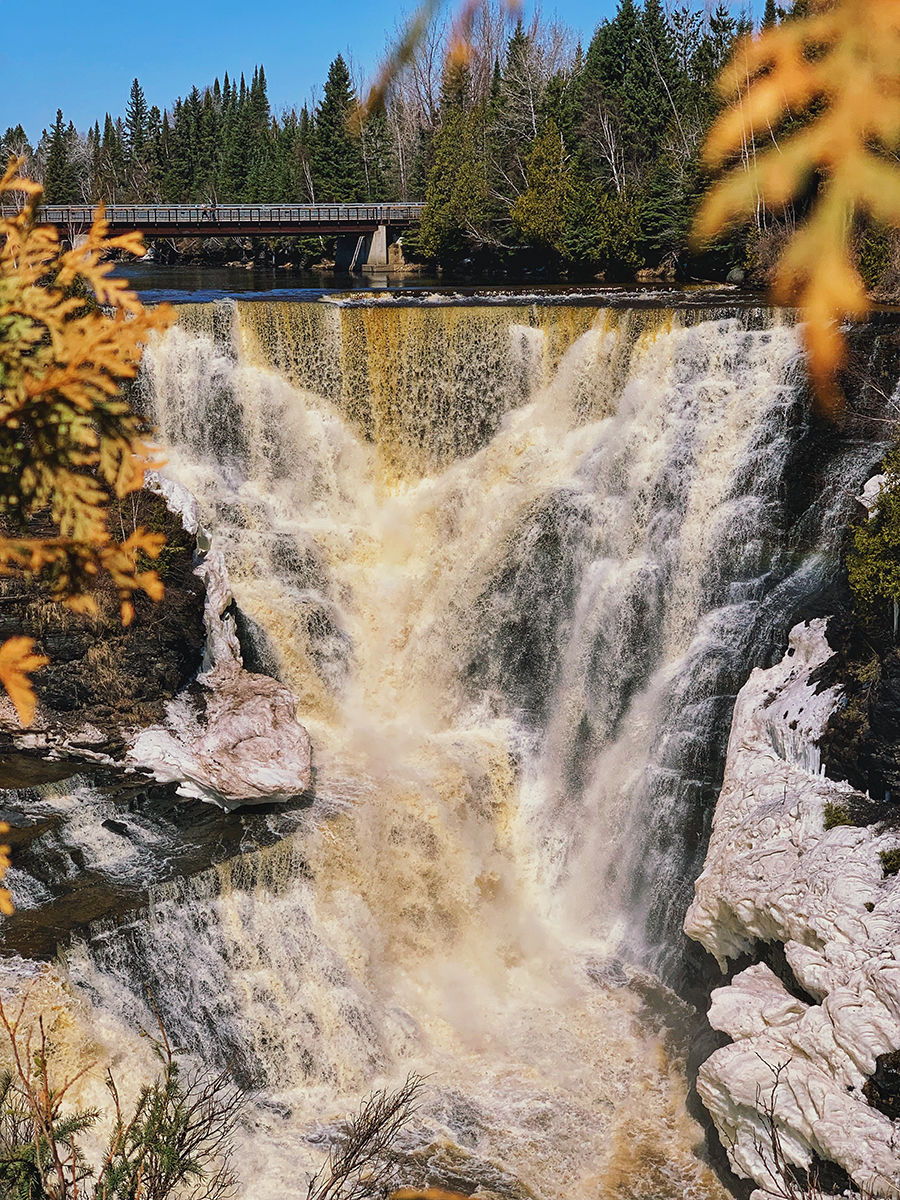
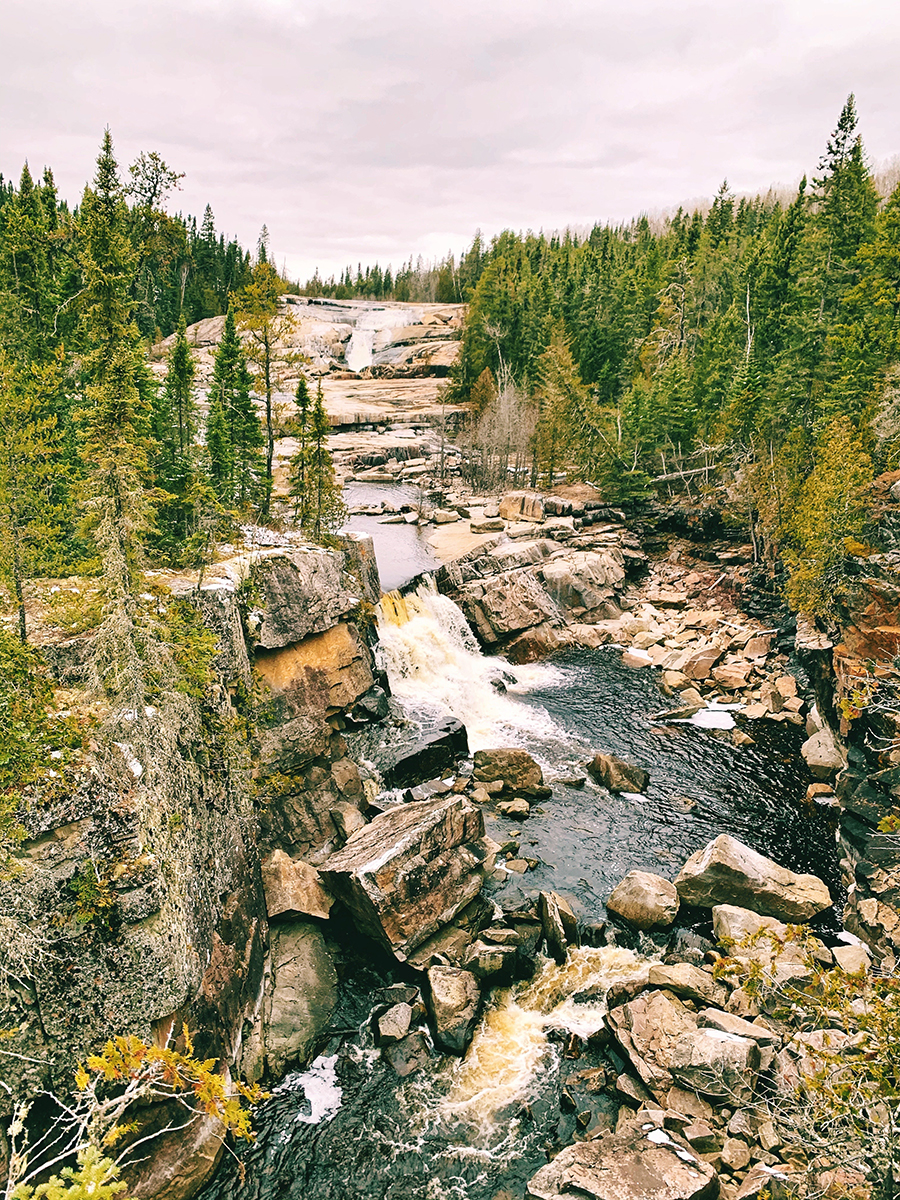
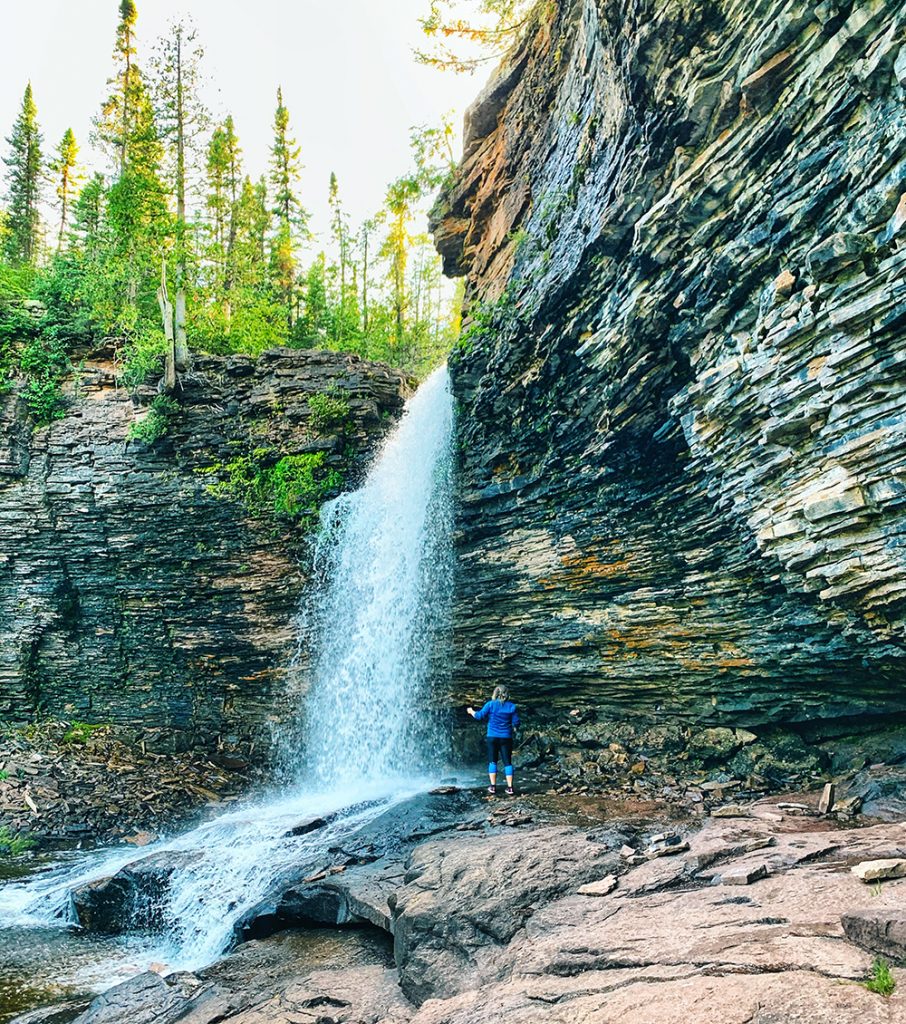
While the 40-metre-high Kakabeka Falls are the most wellknown waterfalls in the region and mark the second highest in Ontario, don’t miss out on the adjacent Little Falls, while visiting the Provincial Park. Those seeking a lesser-known spot to discover should head over to Silver Falls Provincial Park, which is known for its Holocene-era features. For the opportunity to stand behind a waterfall, visit Wolf River Falls.

DO IT FOR THE ‘GRAM
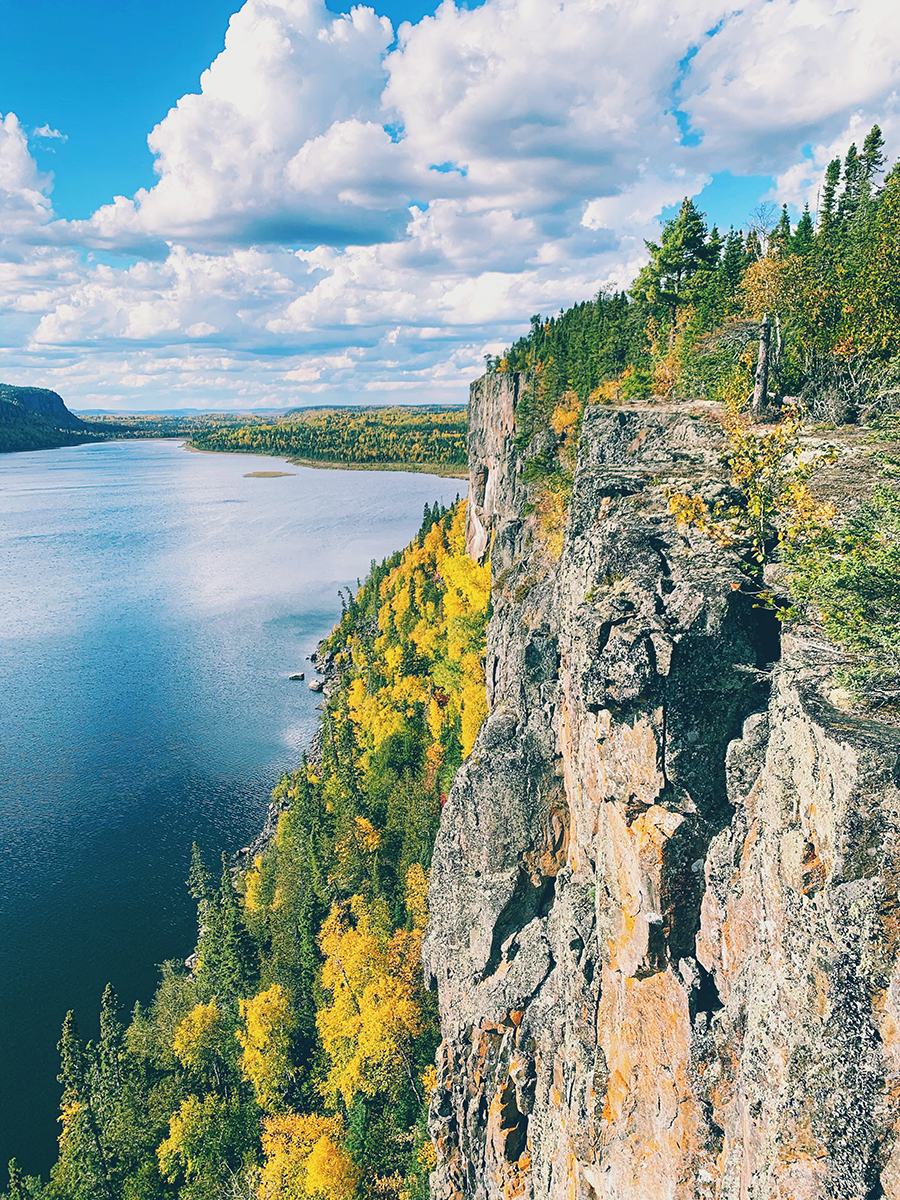
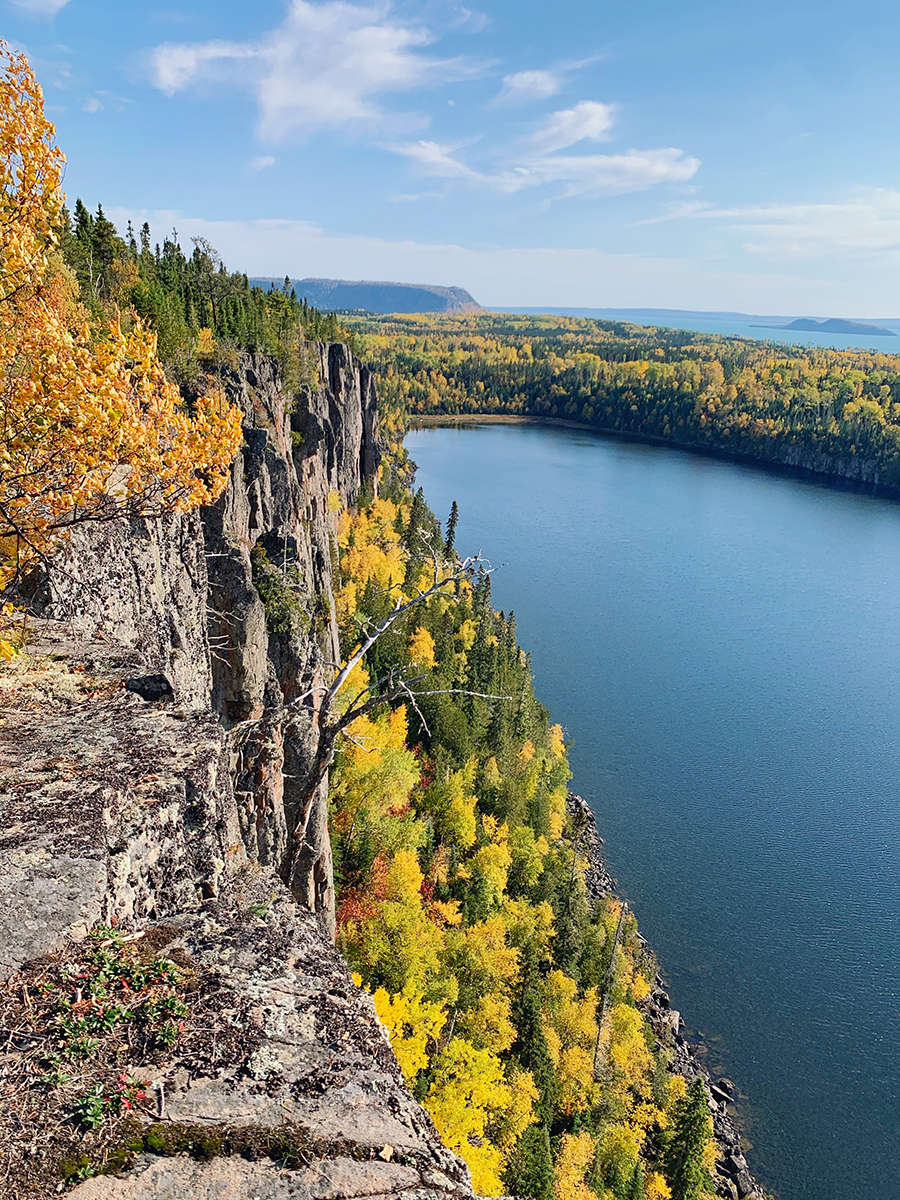
Situated on the north shore of Lake Superior near Nipigon — about 100km from Thunder Bay — Ruby Lake Provincial Park is a non-operating park that is like discovering a hidden gem. The trail offers multiple stunning viewpoints overlooking the lake and Lake Superior from steep cliffs. Another surefire bet is the Kama Cliffs trail, which also offers sweeping views of the surrounding area.

Story and photos by ANN RUPPENSTEIN